Introduction to Proximity Sensing Technology
Proximity sensors are indispensable components in modern industrial automation, providing non-contact detection and precise position measurement of objects. These devices operate by emitting an electromagnetic field or a beam of electromagnetic radiation and looking for changes in the field or return signal. The primary advantage is the absence of physical contact with the target, which eliminates mechanical wear and tear, ensuring high reliability and longevity. They are crucial for tasks such as counting, positioning, inspection, and end-of-travel detection in high-speed production lines. The technology's robustness allows it to function effectively in harsh environments with presence of dust, oil, and moisture, where traditional mechanical switches would fail.
Core Operating Principles and Types
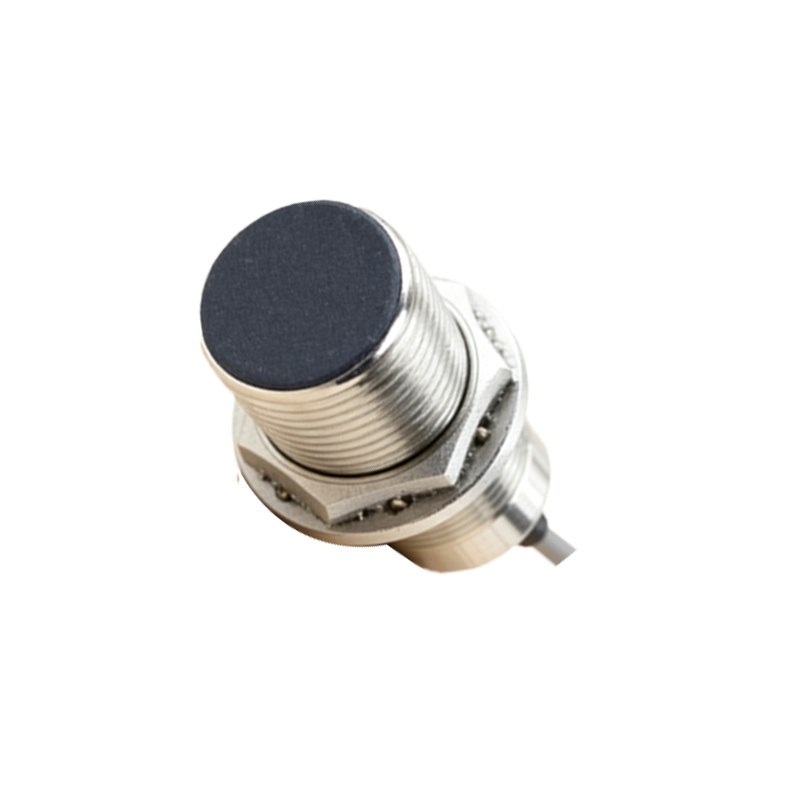
The functionality of proximity sensors is based on several physical principles, leading to distinct types suited for different applications. Inductive proximity sensors are the most common, detecting metallic objects without physical contact. They generate an oscillating electromagnetic field from a coil. When a metallic target enters this field, eddy currents are induced, causing a change in oscillation amplitude, which is detected by the sensor's circuitry. Capacitive proximity sensors can detect both metallic and non-metallic materials, including liquids and powders. They measure changes in capacitance between the sensor and the target. Ultrasonic sensors use sound waves beyond human hearing, calculating distance based on the time-of-flight of the reflected echo. Finally, photoelectric sensors utilize light beams (visible, infrared, or laser) to detect the presence or absence of an object, offering very long sensing ranges.
Key Parameters for Position Measurement Accuracy
Selecting the right sensor for precise position measurement requires careful consideration of several technical parameters. The sensing distance, or nominal range, is the maximum distance at which the sensor can reliably detect a standard target. Repeatability, perhaps the most critical factor for positioning, refers to the sensor's ability to consistently detect an object at the exact same point under identical conditions. It is typically specified in micrometers. Response time defines how quickly the sensor can react to the presence or absence of a target, which is vital for high-speed applications. Environmental factors like temperature fluctuations, supply voltage variations, and electromagnetic interference can affect performance. Shielding type (shielded or unshielded) also influences the sensing field shape and installation requirements, impacting positional accuracy in tight spaces.
Application Scenarios in Industrial Systems
In practice, proximity sensors are deployed in myriad ways for position measurement. On conveyor systems, they are used for precise part positioning before a robotic arm picks or places a component. In machine tools, they serve as limit switches to define the end points of axis travel for CNC machines, ensuring operational safety and precision. Rotary encoders often incorporate proximity sensors to determine angular position and speed of shafts. In automated assembly, sensors verify the correct presence and orientation of parts before a critical operation, such as welding or screw driving. They are also fundamental in material handling for pallet positioning and in packaging machinery for label and fill-level detection.
Installation and Alignment Best Practices
Proper installation is paramount to achieving the specified measurement performance. The sensor must be mounted securely to prevent vibration-induced errors. Alignment relative to the target is crucial; for inductive sensors, the approach direction should be perpendicular to the sensing face. Maintaining the correct gap between the sensor and the target, typically within 0-80% of the nominal sensing distance, is essential. Installers must account for the "hysteresis" zone—the difference between the switch-on and switch-off points—to prevent chattering or unstable signals. For applications involving different metals, compensation factors must be applied, as the sensing distance varies with material conductivity and permeability. Environmental protection, using appropriate IP-rated housings, safeguards the sensor from contaminants.
Integration with Control Systems and Signal Output
Modern proximity sensors are designed for seamless integration into Programmable Logic Controller (PLC) based systems. They primarily provide discrete digital outputs, either as a Normally Open (NO) or Normally Closed (NC) switch signal. The common output types are NPN (sinking) and PNP (sourcing) transistor configurations, which must be matched with the controller's input card specifications. Analog output sensors (4-20 mA or 0-10 V) are available for applications requiring continuous distance measurement, providing a variable signal proportional to the distance to the target. IO-Link, a point-to-point serial communication protocol, is becoming increasingly standard, enabling the transmission of detailed sensor status, parameterization data, and process values, facilitating predictive maintenance and advanced diagnostics.
Maintenance, Troubleshooting, and Future Trends
While known for durability, proximity sensors require periodic inspection. Common issues include false triggering due to accumulation of metallic swarf on inductive sensor