Introduction to the SX674 Photoelectric Sensor
The SX674 photoelectric sensor represents a significant advancement in industrial automation sensing technology. Engineered for reliability and precision, this sensor utilizes a modulated infrared LED light source to detect the presence or absence of objects without physical contact. Its core principle involves emitting a light beam; when an object interrupts this beam (in through-beam mode) or reflects it back (in retro-reflective or diffuse modes), the sensor's receiver detects the change and triggers an output signal. The SX674 is particularly noted for its robust housing, designed to withstand harsh industrial environments characterized by dust, moisture, and mechanical vibration. Its versatility makes it a cornerstone component in countless material handling, packaging, and assembly applications, providing a critical interface between the physical world and control systems.
Key Technical Specifications and Performance
Delving into the technical specifications reveals why the SX674 is a preferred choice. It typically operates on a 10-30V DC supply, making it compatible with standard industrial control voltages. The sensing distance varies depending on the operating mode: it can achieve a long-range detection of up to 15 meters in through-beam mode, while the diffuse reflective mode offers a shorter, adjustable range suitable for proximity detection. The output configuration is often a solid-state NPN or PNP transistor, providing a clean switching signal to programmable logic controllers (PLCs). A critical feature is its high immunity to ambient light interference, thanks to the modulated light signal. Furthermore, models are available with both light-on and dark-on operation logic, and many include a sensitivity adjustment potentiometer or teach-in function for fine-tuning the detection threshold to specific application needs.
Primary Operating Modes Explained
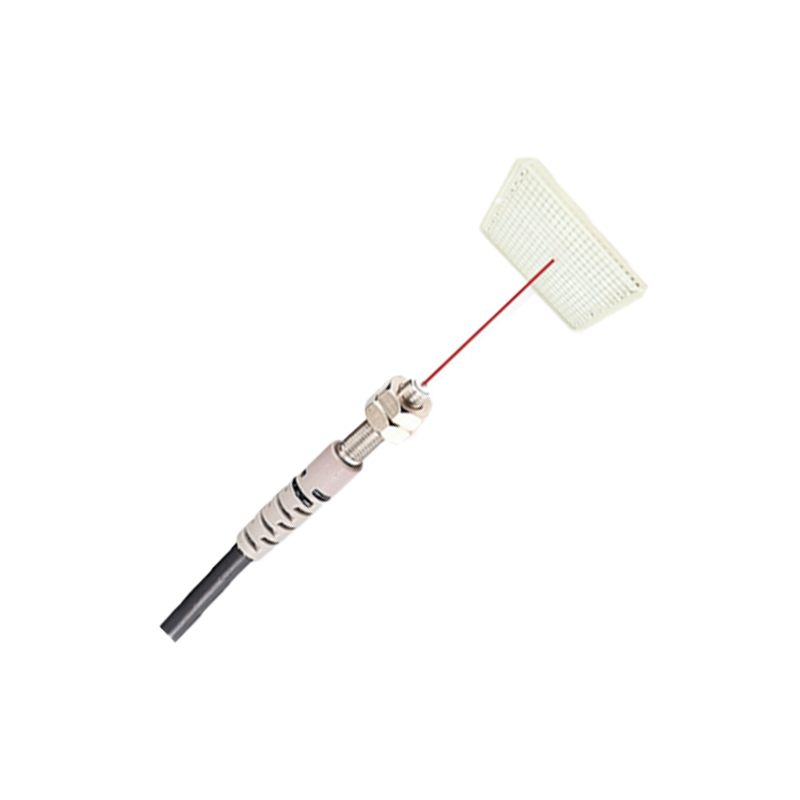
The functionality of the SX674 is defined by its selectable operating modes. The Through-Beam mode employs a separate transmitter and receiver unit. This mode offers the longest sensing distance and highest reliability, as it is less affected by the object's color, texture, or surface angle. The Retro-Reflective mode uses a single unit that emits light towards a dedicated reflector; the sensor detects the object that breaks the beam to the reflector. This mode simplifies wiring but requires a clean reflector. The Diffuse Reflective mode is the most common for proximity sensing. The sensor emits light and detects the portion reflected directly from the target object. While convenient, its sensing range is shorter and can be influenced by the object's color and reflectivity. Understanding these modes is crucial for optimal sensor deployment.
Robust Design for Industrial Durability
Industrial sensors must endure challenging conditions, and the SX674 is built precisely for that. The housing is commonly constructed from nickel-plated brass or high-grade plastic, offering excellent resistance to corrosion and impact. It boasts a high Ingress Protection (IP) rating, such as IP67, which guarantees protection against dust ingress and temporary immersion in water. This makes it suitable for washdown environments in food and beverage or pharmaceutical industries. The sensing head is sealed to prevent contamination from oils, coolants, and metal shavings common in machining centers. Additionally, the electrical connections are secure, often utilizing M12 quick-disconnect connectors for easy installation and maintenance, minimizing downtime in fast-paced production lines.
Typical Application Scenarios in Automation
The application spectrum for the SX674 photoelectric sensor is vast. In conveyor systems, it is ubiquitously used for object detection, counting, and positioning. It can verify the presence of a product before a robotic arm picks it up or trigger a diverter to route packages. In packaging machinery, it ensures correct carton flap positioning or detects label presence. On assembly lines, it confirms component insertion. It also plays a vital role in security and access control as part of safety light curtains or door monitoring systems. Its ability to detect transparent objects, like glass or plastic bottles, when properly configured, extends its utility to bottling and filling operations. Each application leverages its non-contact, fast-response, and reliable characteristics.
Installation and Alignment Best Practices
Correct installation is paramount for sensor performance. For through-beam sensors, precise alignment of the transmitter and receiver is critical; a built-in alignment indicator (often an LED) greatly aids this process. The sensor should be mounted securely to avoid misalignment from vibration. For diffuse sensors, the background must be considered; mounting the sensor at an angle can help avoid false triggers from a reflective background surface. Environmental factors like dust accumulation on the lens should be mitigated with periodic cleaning schedules or by using sensors with built-in lens cleaning warnings. Ensuring a stable power supply with proper filtering protects the sensor from electrical noise, which is common in plants with large motors and drives.
Troubleshooting Common Operational Issues
Even robust sensors like the SX674 can encounter issues. Intermittent operation often points to poor alignment, a dirty lens, or a fluctuating power supply. Consistent failure to detect may indicate the sensing distance is exceeded, the object is outside the detectable size or reflectivity range, or the sensitivity is set incorrectly. False triggering is frequently caused by reflective backgrounds, stray light from other sources, or electrical interference. A systematic approach—checking alignment, cleaning optics, verifying power, and re-teaching the sensitivity—usually resolves most problems. Understanding the status indicator LEDs is the first step in any diagnostic procedure, as they provide immediate feedback on power, output state, and signal strength.
Selection Criteria and Comparison Considerations
Selecting the right SX674 variant requires a detailed analysis of the application. Key questions include: What is the required sensing distance? What is the size, color, and material of the target object? What is the required response speed? What are the environmental conditions (temperature, humidity, contaminants)? The required output type (NPN sinking vs. PNP sourcing) must match the controller's input card. Comparing the SX674 to other sensor technologies, such as inductive or capacitive proximity sensors, highlights its advantages for non-metallic object detection and longer ranges. However, for detecting only metals in dirty environments, an inductive sensor might be more appropriate. This comparative analysis ensures optimal system performance and cost-effectiveness.
Future Trends and Integration with Industry 4.0
The evolution of sensors like the SX674 is moving towards smarter, more connected devices. Future iterations may incorporate IO-Link communication, a point-to-point serial protocol that allows for detailed parameter setting, real-time diagnostics, and process data reporting directly to the control system. This transforms the sensor from a simple switch into a intelligent node in an Industry 4.0 network, enabling predictive maintenance by monitoring parameters like lens contamination or LED intensity degradation. Enhanced diagnostics and remote configuration capabilities will further reduce machine downtime and improve overall equipment effectiveness (OEE), solidifying the role of photoelectric sensors as fundamental data sources in the smart factory of the future.