Understanding Hall Effect Proximity Sensors
Hall Effect proximity sensors are solid-state devices that detect the presence or absence of a magnetic field. They operate based on the Hall Effect principle: when a current-carrying conductor is placed in a magnetic field, a voltage (the Hall voltage) is generated perpendicular to both the current and the field. In a sensor, this voltage is processed to provide a clean, digital or analog output signal. Unlike inductive or capacitive sensors, Hall Effect sensors specifically require a magnetic target, typically a permanent magnet. They are renowned for their non-contact operation, high reliability, long operational life, and immunity to environmental factors like dust, oil, and moisture. Common applications include position sensing in automotive systems (e.g., camshaft/crankshaft), speed detection in industrial fans and motors, and limit switching in machinery.
Key Specifications to Evaluate
Before purchasing, engineers must scrutinize several critical specifications. First, the sensing distance or range. This indicates how far the sensor can reliably detect the magnetic field. Ensure it meets your application's mechanical clearance requirements. Second, the output type: digital (e.g., NPN/PNP open collector, push-pull) or analog (voltage or current proportional to field strength). Digital outputs are for simple on/off detection, while analog provides continuous position data. Third, the supply voltage range (e.g., 3.3V DC, 5V DC, 10-30V DC) must be compatible with your control system. Fourth, consider the response time and switching frequency; high-speed applications like RPM measurement demand fast sensors. Finally, don't overlook the operating temperature range, especially for harsh environments.
Selecting the Correct Output Configuration
Output configuration is paramount for system integration. For digital outputs, the choice between NPN (sinking) and PNP (sourcing) is fundamental and depends on your PLC or controller input module's wiring. A push-pull output combines features of both and is often more versatile. For analog outputs, decide between voltage (e.g., 0-5V, 0-10V) or current (e.g., 4-20mA) based on noise immunity and transmission distance needs; 4-20mA signals are superior for long runs in electrically noisy industrial settings. Some sensors offer programmable outputs or IO-Link communication for advanced diagnostics and parameter setting, adding significant value for smart factory applications.
Considering Environmental and Mechanical Factors
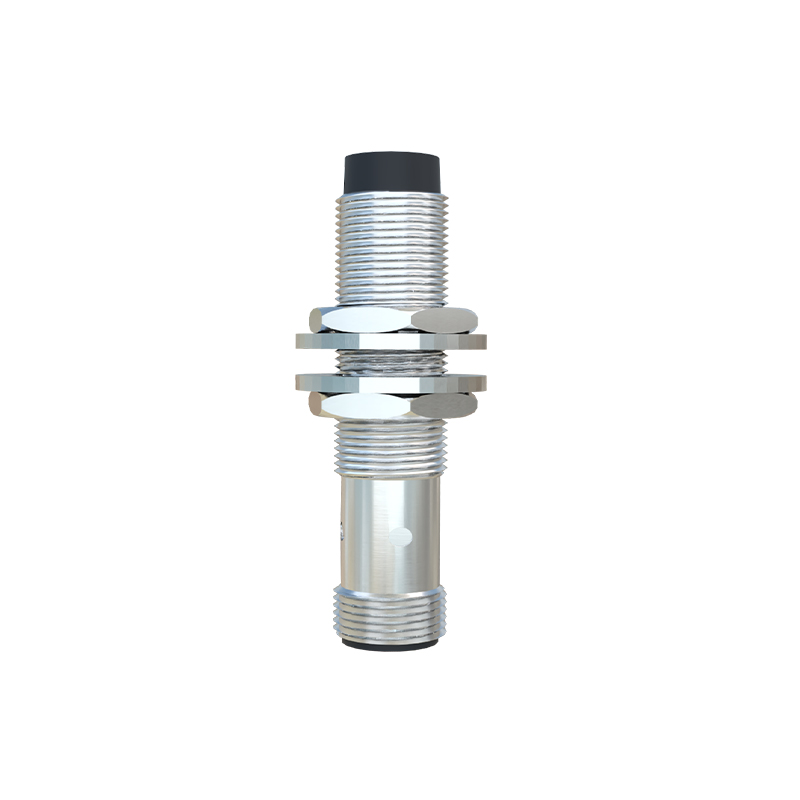
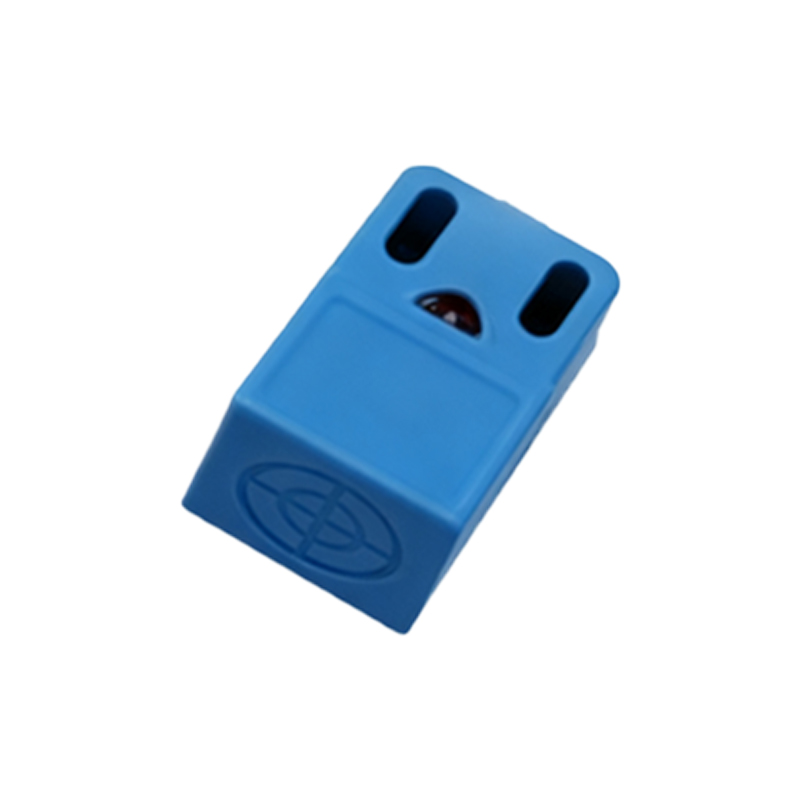
The sensor's housing and protection ratings are non-negotiable. The IP (Ingress Protection) rating defines protection against solids and liquids. An IP67 rating, for instance, ensures the sensor is dust-tight and can withstand temporary immersion, suitable for washdown areas. The housing material, typically stainless steel, nickel-plated brass, or PBT plastic, must resist corrosion from chemicals or seawater. Vibration and shock resistance are critical in mobile equipment or heavy machinery. Additionally, consider the mounting style (threaded barrel, rectangular block, slot-style) and connection type (pre-wired cable, quick-disconnect M12 connector) to simplify installation and maintenance.
Target and Magnetic Field Considerations
The performance is intrinsically linked to the target magnet. You must know the magnet's strength (often in Gauss or Tesla), polarity, and orientation. The sensor's data sheet will specify the magnetic field strength required for activation. Using a magnet that is too weak leads to unreliable switching, while one that is too strong might not cause damage but is unnecessary. Also, decide if you need a unipolar sensor (activates with a single south or north pole), bipolar (responds to both poles), or omnipolar (activates with either pole). For precise linear or angular position measurement, a linear Hall sensor that outputs a voltage proportional to field strength is required, and the magnet's field gradient becomes a key design factor.
Application-Specific Selection Tips
Tailor your choice to the application. For high-volume, cost-sensitive consumer electronics, miniature surface-mount SMD Hall sensors are ideal. For automotive under-hood applications, prioritize sensors with extended temperature ranges (-40°C to 150°C) and high EMC robustness. In factory automation for counting or limit detection, a standard 3-wire DC sensor with an M12 connector is often the most practical. For safety-critical functions like door interlocking, consider redundant or failsafe sensor designs. Always request samples to test in the actual application with the real magnet and mounting setup to validate performance before finalizing the purchase order.
Supplier and Quality Assurance Checks
Choosing a reputable supplier is as important as choosing the right sensor