Introduction to Photoelectric Sensor Technology
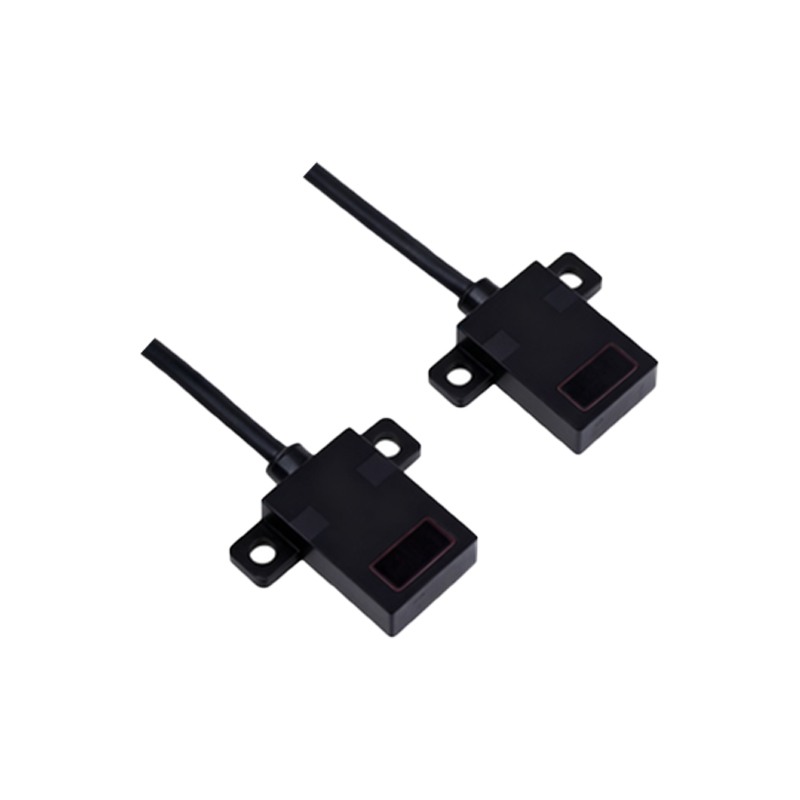
Photoelectric sensors are pivotal components in modern automation systems, leveraging light beams to detect the presence, absence, or distance of objects. These sensors operate by emitting light from a transmitter and receiving it with a receiver, with variations including through-beam, retro-reflective, and diffuse reflective types. The core principle relies on changes in light intensity or reflection patterns, which are converted into electrical signals for processing. In industrial applications, photoelectric sensors are favored for their non-contact nature, high speed, and reliability, making them essential in manufacturing, packaging, and robotics. The software design for these sensors plays a critical role in enhancing functionality, enabling precise control, and integrating with broader systems like PLCs or IoT networks. As industries advance toward smart factories, the demand for sophisticated sensor software that supports real-time data analysis and adaptive responses has surged, driving innovation in this field.
Key Software Design Principles
Effective software design for photoelectric sensors hinges on several foundational principles. First, real-time processing is paramount, as sensors must respond swiftly to environmental changes to avoid delays in automation cycles. This involves optimizing algorithms for minimal latency, often using interrupt-driven routines or dedicated microcontrollers. Second, robustness and error handling are crucial; software should include mechanisms for noise filtering, calibration routines, and fault detection to maintain accuracy under varying conditions like dust or ambient light interference. Third, modularity allows for scalability and customization, enabling developers to adapt sensor firmware for different applications without overhauling the entire codebase. Additionally, energy efficiency is a growing concern, especially in battery-operated sensors, necessitating power management features such as sleep modes or adaptive sampling rates. By adhering to these principles, engineers can ensure reliable performance and longevity in diverse operational settings.
Algorithm Development for Signal Processing
At the heart of photoelectric sensor software lies signal processing algorithms that interpret raw data from the receiver. Common techniques include threshold-based detection, where a predefined light intensity level triggers an output signal, and more advanced methods like pulse modulation to distinguish sensor signals from background noise. For distance measurement, time-of-flight or triangulation algorithms may be employed, requiring precise timing and mathematical computations. Machine learning approaches are also emerging, allowing sensors to learn patterns and adapt to complex environments autonomously. In practice, software must balance accuracy with computational efficiency; for instance, using fixed-point arithmetic instead of floating-point can reduce processing time on resource-constrained embedded systems. Testing these algorithms under simulated and real-world scenarios is essential to validate performance, often involving iterative refinement based on feedback from prototype deployments.
Integration with Control Systems and Networks
Modern photoelectric sensors rarely operate in isolation; they are integrated into larger control ecosystems. Software design must facilitate communication protocols such as IO-Link, PROFINET, or EtherNet/IP, enabling seamless data exchange with PLCs, SCADA systems, or cloud platforms. This integration involves implementing driver libraries, configuring network parameters, and ensuring compatibility with industry standards. For IoT applications, sensors may transmit data via wireless protocols like Bluetooth or LoRaWAN, requiring software to handle encryption, packetization, and low-power networking stacks. Additionally, software should support diagnostic features, such as logging operational status or sending alerts for maintenance, which enhances system reliability. By designing with interoperability in mind, engineers can create sensors that contribute to cohesive, data-driven automation solutions, supporting trends like Industry 4.0 and predictive maintenance.
Testing and Validation Strategies
Rigorous testing is vital to ensure the software meets performance specifications and operates safely in industrial environments. This process begins with unit testing of individual code modules, followed by integration testing to verify interactions between hardware and software components. Environmental testing assesses sensor behavior under extreme temperatures, humidity, or vibration, often using automated test benches to simulate conditions. Software validation also includes user acceptance testing, where end-users evaluate functionality in real applications, providing feedback for improvements. Tools like static analyzers and emulators aid in identifying bugs or inefficiencies early in development. Moreover, compliance with standards such as IEC 61131-3 for programming or ISO 13849 for safety must be verified through documentation and audits. A comprehensive testing regimen reduces risks, enhances product quality, and builds trust in sensor systems for critical operations.
Future Trends and Innovations
The evolution of photoelectric sensor software is shaped by technological advancements and market demands. Edge computing is gaining traction, allowing sensors to process data locally for faster decision-making, reducing reliance on central servers. Artificial intelligence integration enables predictive analytics, such as anticipating equipment failures based on sensor trends, while enhancing object recognition capabilities. Cybersecurity is becoming a priority, with software needing built-in protections against hacking in networked systems. Additionally, the rise of digital twins—virtual replicas of physical systems—requires sensors to provide high-fidelity data for simulation and optimization. As sustainability concerns grow, software may incorporate features for energy harvesting or eco-friendly materials monitoring. By staying abreast of these trends, engineers can design forward-looking software that extends the utility and lifespan of photoelectric sensors in an increasingly connected world.