Understanding the Core Principles
In industrial automation and control systems, the distinction between sensor types is fundamental. A resistive sensor, fundamentally, is a transducer that converts a measured physical quantity into a change in electrical resistance. Common examples include potentiometers for position, strain gauges for force, and thermistors for temperature. Its operation relies on direct physical contact or a change in the material property being measured, which in turn alters the resistance in a circuit. This change is typically analog and requires signal conditioning to be interpreted by a controller. The core function is to provide a continuous or semi-continuous measurement proportional to the stimulus.
The Nature of Proximity Sensing
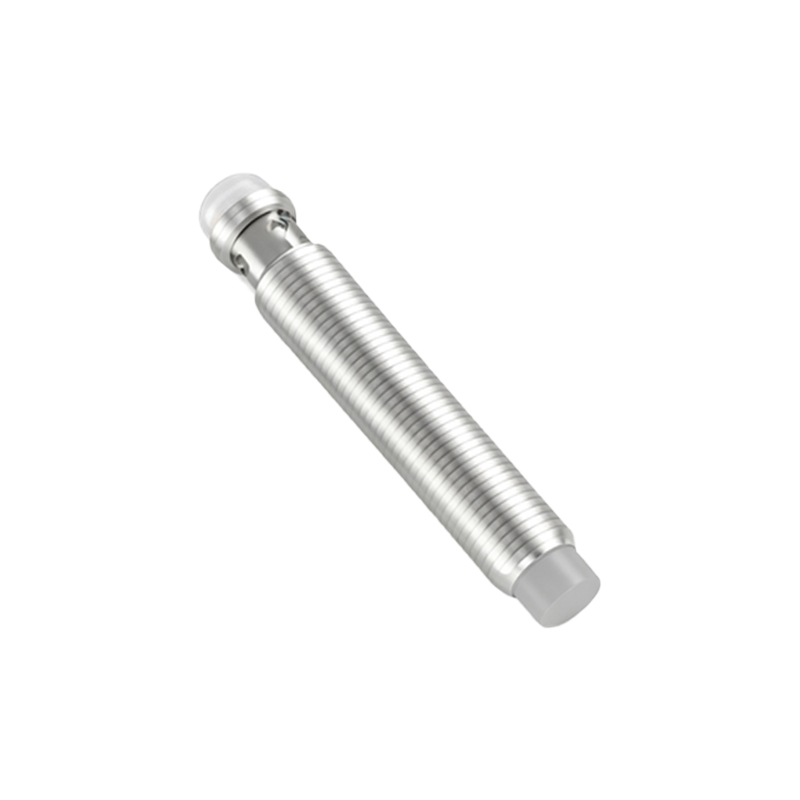
A proximity switch, on the other hand, is a discrete (digital) sensor designed to detect the presence or absence of a target within a specified range without physical contact. It operates on principles like electromagnetic induction (inductive sensors for metals), capacitance (capacitive sensors for various materials), or light (photoelectric sensors). Its output is typically a simple on/off signal, making it ideal for counting, positioning, limit detection, and safety interlocks. The key characteristic is non-contact detection over a defined sensing distance.
Direct Functional Comparison
Given these definitions, a standard resistive sensor cannot directly function as a true proximity switch. The primary limitation is the requirement for contact. A potentiometer-based position sensor, for instance, needs a mechanical linkage to touch and follow the target's movement. It measures displacement, not presence at a distance. Similarly, a force-sensitive resistor requires physical pressure. There is no inherent mechanism in a basic resistive element to detect an object remotely through air or space. The output is also mismatched; proximity switches provide clean digital switching, while resistive sensors yield an analog resistance value needing interpretation.
Indirect and Hybrid Configurations
However, within an engineered system, a resistive sensing element can be part of a device that achieves proximity-like functionality. Consider a system where a target's presence causes a mechanical actuation, which then changes a resistance. For example, a pneumatic cylinder with a built-in potentiometer: when an object is detected by a separate true proximity sensor, the cylinder extends, and its internal resistive sensor reports the extension position. Here, the resistive sensor is not the proximity detector but a downstream position verifier. Another hybrid is a conductive foam-based sensor used in some touch-sensitive applications; it detects proximity of a finger through a change in resistance caused by capacitive coupling and pressure, but this is a specialized, short-range application.
Key Technical Limitations
Several technical factors solidify this distinction. First is sensing range. Proximity switches have reliable ranges from millimeters to several meters. Resistive sensors have effectively zero range without a mechanical interface. Second is response time. The mechanical linkage or property change for a resistive sensor is often slower than the electronic switching of a proximity sensor. Third is durability. Contact-based resistive sensors suffer from wear, friction, and eventual failure, whereas non-contact proximity switches offer higher longevity in harsh environments. Finally, target material dependence is stark; inductive proximity sensors only detect metals, while a resistive sensor's target is defined by the mechanical interface, not its material composition.
Selecting the Right Sensor for the Application
The choice between using a resistive sensor or a proximity switch is application-driven. Use a resistive sensor when you need to measure a continuous variable like precise linear/angular position, pressure magnitude, or temperature. Use a proximity switch when you need a reliable, fast, and wear-free detection of an object's presence/absence within a zone. Attempting to force a resistive sensor into a proximity role typically results in a complex, unreliable, and maintenance-prone mechanical system. For instance, use a linear potentiometer to measure the exact stroke of a machine arm, but use an inductive proximity switch at the end of the stroke to confirm "home" position without contact.
Conclusion and Practical Outlook
In summary, while their electrical outputs (a change in a circuit parameter) may seem superficially similar, a resistive sensor and a proximity switch are fundamentally different tools. A resistive sensor is not a proximity switch. It lacks the inherent non-contact detection capability. Engineers must select based on the primary need: continuous measurement of a physical quantity versus discrete detection of presence. Understanding this boundary prevents design inefficiencies and ensures robust system performance. The evolution of smart sensors and IO-Link technology may further blur lines by integrating measurement and switching diagnostics, but the core physical principles of sensing will remain distinct.