Introduction to Capacitive Sensing Technology
Capacitive proximity sensors operate on a fundamental principle of physics: the ability to detect changes in capacitance. At their core, these sensors function as an open capacitor. The sensor's active surface, or sensing face, acts as one plate of the capacitor. The target object acts as the other plate, and the air gap between them serves as the dielectric. The sensor's internal oscillator generates an electrostatic field emanating from this sensing face. When a target enters this field, it alters the dielectric constant and thus the capacitance of the system. The sensor's circuitry detects this change, triggers a threshold switch, and produces an output signal. This mechanism allows for the detection of a vast array of materials, not just metals, which is a key distinction from inductive sensors. Virtually any material that affects the electrostatic field can be detected, including liquids, powders, plastics, wood, and glass, making them exceptionally versatile in complex industrial environments.
Key Performance Parameters and Specifications
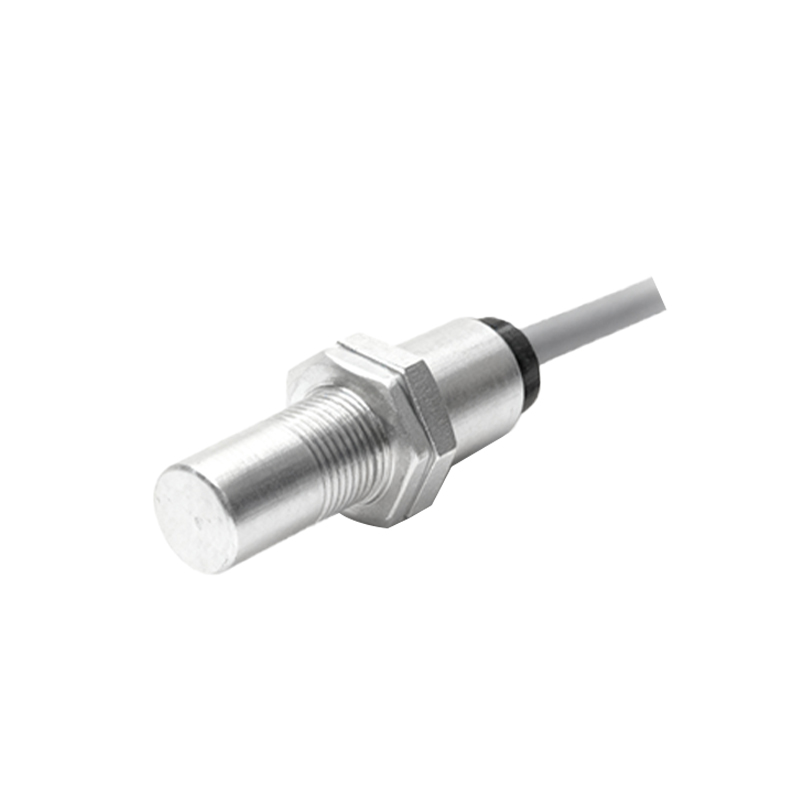
Evaluating the performance of a capacitive sensor requires a detailed understanding of several critical specifications. The nominal sensing distance (Sn) is a standardized value under defined conditions (typically a metal target). Real-world sensing distance (Sr) can vary based on the target material's dielectric constant; materials with higher constants (like water) are detected at greater distances than those with lower constants (like plastics). A crucial performance metric is the temperature drift, which indicates how much the sensing distance changes over the operating temperature range, typically expressed as a percentage of Sn. Repeat accuracy defines the sensor's consistency in switching at the same point under unchanged conditions. Another vital parameter is the hysteresis (H), a built-in differential between the switch-on and switch-off points, which prevents output chatter when a target is at the exact sensing limit. Furthermore, the response frequency dictates how quickly the sensor can detect objects in high-speed applications, while the protection rating (e.g., IP67, IP69K) defines its resilience against dust and liquid ingress.
Factors Influencing Sensing Performance
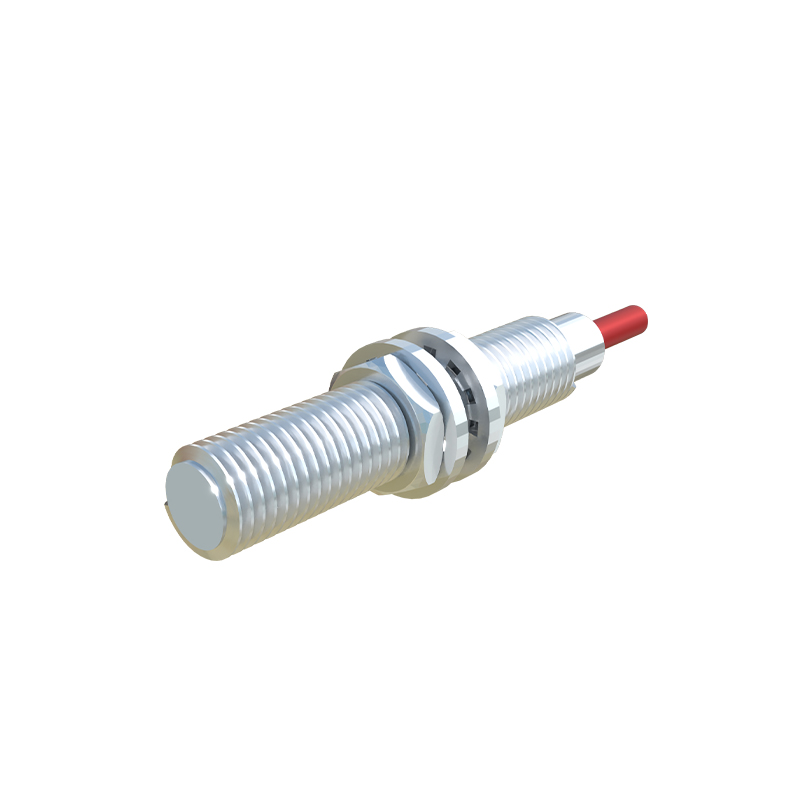
Several environmental and installation factors significantly impact sensor performance. The most prominent is the target material's dielectric constant (εr). A higher εr means the material is more easily polarized by the electric field, resulting in a longer effective sensing range. For instance, water (εr ≈ 80) is detected much farther away than PVC (εr ≈ 3). The size and shape of the target also matter; a target smaller than the sensor's sensing face or one with a curved surface will reduce the effective sensing distance. Installation in metallic surroundings presents a challenge, as the sensor's field can be attracted to the surrounding metal (a "ground effect"), potentially causing false triggering or reduced range. Manufacturers combat this with shielding designs. Flush-mounted sensors have a shielded field that extends only forward, making them suitable for installation in metal. Non-flush sensors have a larger, unshielded field and offer longer ranges but require non-metallic surroundings. Ambient conditions like humidity, condensation, dust, and chemical vapors can also affect the dielectric properties of the air gap, necessitating sensors with appropriate housing materials and protection ratings.
Optimization and Adjustment Techniques
To ensure reliable operation, capacitive sensors often feature a sensitivity adjustment potentiometer. This allows the user to fine-tune the sensing field's strength to suit the specific application. The procedure typically involves presenting the target at the desired sensing distance and adjusting the potentiometer until the output indicator just switches on. It is critical to then test the sensor with the target removed to ensure it switches off, confirming a stable operating point within the hysteresis band. For applications involving non-homogeneous materials or varying material thicknesses, the sensitivity may need to be set with a margin to account for these variations. In challenging environments with airborne contaminants, a routine cleaning schedule for the sensing face is a simple yet effective optimization step, as buildup can act as a permanent target. For detecting materials with very low dielectric constants, selecting a non-flush sensor and ensuring a large, flat target area will maximize performance.
Industrial Application Examples
The unique ability to detect non-metals unlocks a wide spectrum of industrial applications. In packaging, they are indispensable for detecting the presence of plastic or glass bottles, cardboard boxes, and foil lids on containers, controlling fill level and cap placement. In the wood and paper industry, they reliably sense stacks of paper, wood chips, and composite boards. Liquid detection is a major application area; capacitive sensors can detect the presence or absence of fluids inside non-metallic tanks or tubes, or control fill levels in bottles and tanks from the outside, providing a non-contact, hygienic solution. In the food and chemical sectors, they monitor powder and granulate levels in sil