In the realm of industrial automation and precision measurement, proximity displacement sensors stand as critical components for non-contact detection and measurement. These sophisticated devices are engineered to determine the presence, distance, or position of a target object without any physical contact, thereby eliminating mechanical wear and enabling high-speed, reliable operations in demanding environments. Their fundamental principle revolves around emitting a field or beam and analyzing changes in the returned signal caused by the proximity of a target.
The operational core of a proximity displacement sensor lies in its ability to convert the physical parameter of distance into an electrical signal. This is achieved through various technologies, each suited to specific applications and materials. Inductive sensors, for instance, generate an electromagnetic field. When a conductive metal target enters this field, it induces eddy currents within the target, which in turn alter the oscillation amplitude in the sensor's coil. This change is precisely measured to calculate the distance to the target. These sensors are exceptionally robust, immune to environmental factors like dust, oil, or moisture, making them ideal for metal detection in harsh factory settings, such as monitoring valve positions or counting metallic parts on an assembly line.
Capacitive sensors operate on a different principle, capable of detecting both conductive and non-conductive materials. They function by generating an electrostatic field. Any object that enters this field alters the capacitance of the system. The sensor's circuitry detects this change in capacitance, which correlates directly to the distance of the object. This makes capacitive sensors versatile for applications involving plastics, liquids, glass, or wood, such as monitoring fill levels in tanks, detecting paper or film thickness, or controlling the position of non-metallic components.
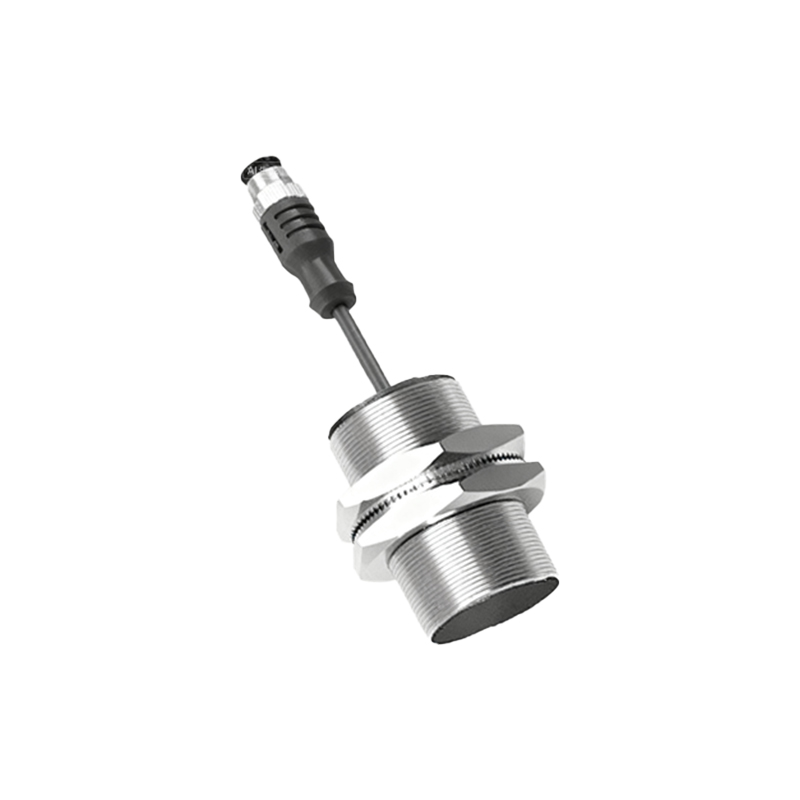
For applications requiring extremely high precision and resolution, often at the micron or even nanometer level, eddy-current sensors are the preferred choice. A specialized subset of inductive sensing, they utilize a high-frequency electromagnetic field. The interaction between this field and a conductive target generates eddy currents whose strength is influenced by the distance. These sensors offer exceptional linearity, bandwidth, and temperature stability. They are indispensable in critical machinery like turbines, spindles, and precision actuators for monitoring shaft vibration, radial play, and thermal expansion, ensuring operational integrity and predictive maintenance.
Another prominent category is the photoelectric sensor, which uses a beam of light, typically infrared, LED, or laser. The time-of-flight or triangulation method is then employed to measure the distance based on the reflection. Laser triangulation sensors, in particular, project a laser spot onto the target surface. The reflected light is focused onto a position-sensitive detector (e.g., a CCD or PSD). As the target distance changes, the position of the reflected spot shifts on the detector, allowing for precise distance calculation. These sensors are excellent for measuring displacement, thickness, or profile of objects regardless of their material, finding use in electronics assembly, robotics, and quality control.
The selection of a proximity displacement sensor is dictated by several key parameters beyond the sensing technology. Measurement range defines the minimum and maximum distances over which the sensor can operate accurately. Resolution refers to the smallest change in distance the sensor can detect. Linearity indicates how consistently the output signal corresponds to the actual distance across the entire range. Response time is critical for high-speed applications, defining how quickly the sensor can update its output. Environmental factors such as temperature extremes, pressure, and exposure to chemicals also heavily influence the choice of housing and electronics.
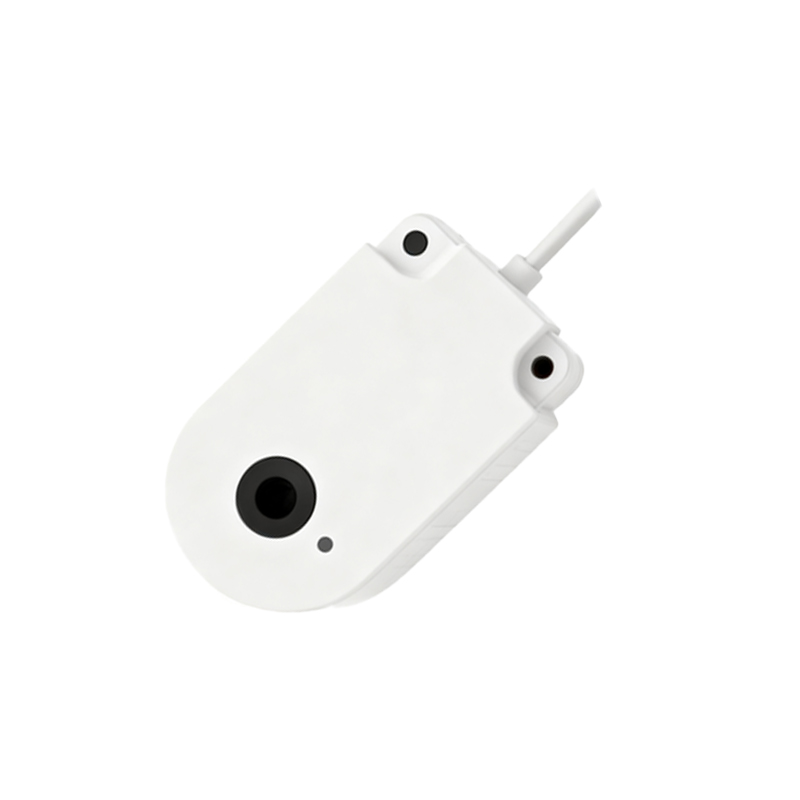
In practical industrial applications, these sensors form the backbone of modern manufacturing. On robotic assembly lines, they provide precise feedback for arm positioning and gripper control, ensuring components are placed accurately. In CNC machining centers, they monitor tool wear and workpiece alignment, safeguarding dimensional accuracy. The automotive industry relies on them for gap and flush measurement during body-in-white assembly. Furthermore, they are pivotal in condition monitoring, where they continuously measure vibration and displacement of rotating machinery to predict failures before they occur, minimizing downtime and maintenance costs.
The evolution of Industry 4.0 and the Industrial Internet of Things (IIoT) is further elevating the role of proximity displacement sensors. Modern sensors are increasingly equipped with digital interfaces like IO-Link, which facilitates not only the transmission of measured values but also detailed parameterization, diagnostics, and identification data. This enables smarter, more connected systems where sensor data can be seamlessly integrated into higher-level control and analytics platforms for optimized process control and data-driven decision-making.
In conclusion, proximity displacement sensors are indispensable enablers of automation, quality, and efficiency. By offering precise, reliable, and non-contact measurement across a vast spectrum of materials and conditions, they provide the essential data that drives control systems in virtually every modern industry. From ensuring the smooth operation of a high-speed packaging machine to guaranteeing the microscopic precision of a semiconductor wafer handler, these sensors silently perform critical functions, forming a fundamental link between the physical and digital worlds of industrial production.