In the intricate world of industrial automation and electronic device design, the demand for precise, reliable, and space-conscious sensing solutions is ever-present. Among the array of technologies available, proximity sensor mini probes have carved out a critical niche. These compact components are engineered to detect the presence or absence of an object within a very small sensing range without any physical contact. Their diminutive size belies their significant impact, enabling functionality in applications where traditional sensors simply cannot fit.
The core technology behind these miniaturized sensors varies, with inductive, capacitive, and photoelectric types being the most prevalent. Inductive mini probes are the stalwarts for detecting metallic objects. They generate an electromagnetic field; when a metal target enters this field, it causes a change in oscillation amplitude, which the sensor's circuitry detects and converts into a switching signal. Their robustness against environmental factors like dust, oil, and moisture makes them indispensable in harsh manufacturing environments, such as on compact assembly lines for verifying the position of tiny metal components or in precision CNC machines for tool positioning.
Capacitive mini probes, on the other hand, can detect both metallic and non-metallic materials—plastics, liquids, wood, and even granular substances. They function by measuring changes in capacitance between the sensor's probe and the target object. This versatility is harnessed in applications like liquid level detection in small reservoirs, monitoring the fill level of pharmaceutical vials, or detecting the presence of a plastic cap on a miniature bottle. Their sensitivity can be finely tuned to ignore container walls or ignore certain materials, offering a high degree of application-specific customization.
Photoelectric mini probes utilize a beam of light, typically infrared or laser, to detect objects. The through-beam type, with separate, ultra-compact emitter and receiver units, offers the longest sensing range and highest accuracy for its size, ideal for precise counting of micro-components on a conveyor. The diffuse-reflective type, which houses the emitter and receiver in a single tiny housing, detects objects by the reflection of its own light beam, perfect for detecting small parts at close range. Despite their sensitivity to environmental contaminants like dirt and fog, their precision and speed are unmatched for clean, high-speed applications in electronics manufacturing.
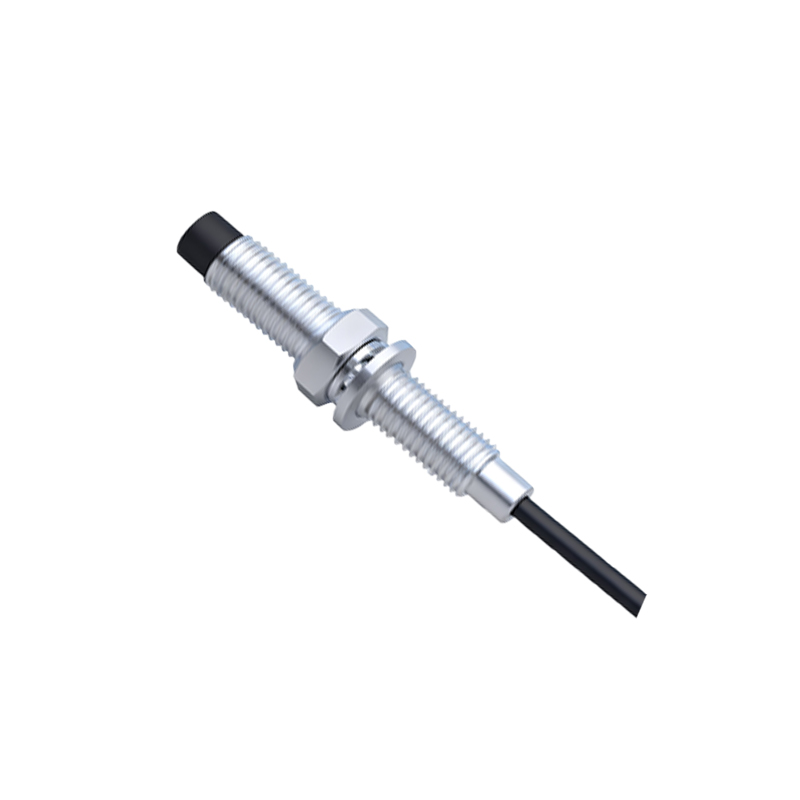
The defining advantage of the mini probe is its physical form factor. Engineered to be slender, often just a few millimeters in diameter, and short in length, these sensors can be installed in extremely tight spaces—inside robotic grippers, alongside delicate mechanisms in medical devices, or within the confined housings of consumer electronics. This miniaturization does not typically come at the cost of performance; modern designs incorporate advanced ASICs (Application-Specific Integrated Circuits) that provide stable operation, temperature compensation, and immunity to electrical noise.
Selecting the right proximity sensor mini probe requires careful consideration of several parameters. The sensing distance, or "sn," is crucial and is typically very short for these models, often ranging from 1 to 5 mm. The target material dictates the sensor type (inductive for metals, capacitive for broader materials). Environmental conditions such as temperature extremes, potential washdowns, or exposure to chemicals will determine the required housing material, usually stainless steel or PBT plastic, and the IP (Ingress Protection) rating. Output configuration—PNP or NPN, normally open or normally closed—must be compatible with the control system's PLC or microcontroller.
In practice, these tiny sensors are the unsung heroes of modern technology. In the automotive sector, they ensure minute fuel injector components are correctly positioned before assembly. Within a smartphone, they manage display on/off functions during calls by detecting the proximity of the user's ear. In advanced packaging machinery, they verify the presence of a single pill in a blister pack at high speeds. Their reliability and precision directly contribute to product quality, operational safety, and manufacturing efficiency.
Maintenance, while minimal, is essential for sustained performance. Regular checks for physical damage, buildup of debris on the sensing face, and secure electrical connections help prevent unexpected downtime. Ensuring the sensor is correctly aligned with its target and that the target object is within the specified size and material parameters is also key to long-term reliability.
As industries continue to push for greater miniaturization and smarter automation, the evolution of proximity sensor mini probes continues. Trends point toward even smaller form factors, integrated IO-Link communication for digital diagnostics and parameter setting, and enhanced sensing capabilities to distinguish between colors or material types. These advancements promise to unlock new possibilities in micro-assembly, lab automation, and next-generation compact devices, proving that sometimes, the most powerful solutions come in the smallest packages.