Introduction to Fiber Optic Sensing Technology
Fiber optic photoelectric sensors represent a cornerstone of modern industrial automation, offering unparalleled precision and reliability in detection tasks. These sensors operate on the principle of transmitting light through a flexible fiber optic cable to a sensing head. The presence or absence of an object is detected based on changes in the received light intensity—either through reflection (diffuse mode), interruption (through-beam mode), or proximity (retro-reflective mode). Their core advantages include immunity to electromagnetic interference (EMI), ability to function in extreme environments (high temperature, corrosive atmospheres), and exceptional sensitivity for detecting minute objects. This makes them indispensable in sectors like semiconductor manufacturing, food and beverage processing, and pharmaceutical production, where traditional sensors would fail.
Key Specifications and Performance Parameters
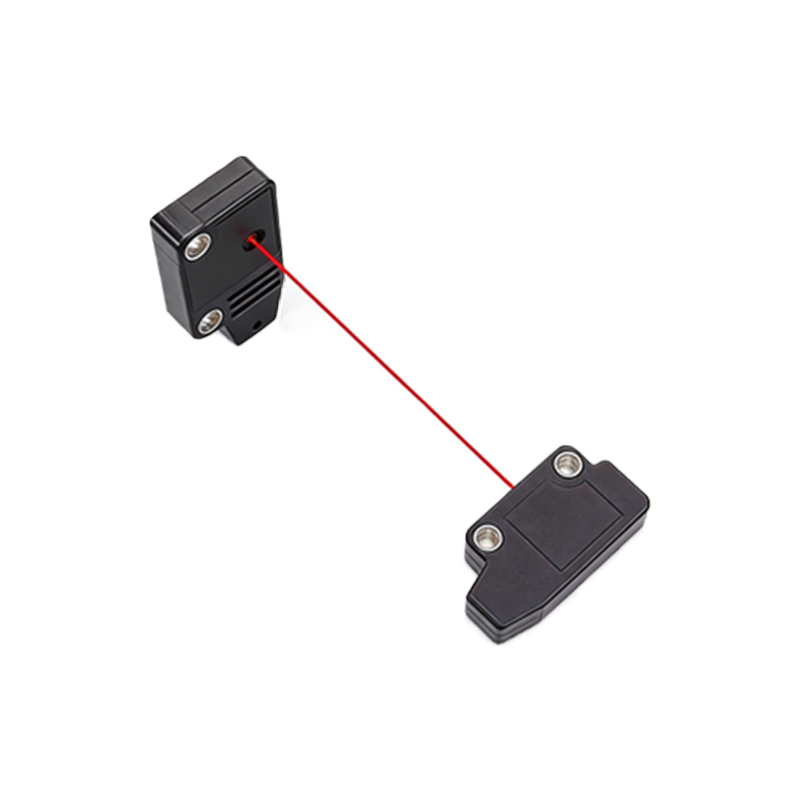
Selecting the correct sensor model hinges on a deep understanding of key specifications. The light source type is primary, with common options being Red LED, Infrared LED, and Laser LED. Red LED sources are versatile and cost-effective for general-purpose applications. Infrared LEDs excel in detecting transparent objects or are used where visible light is undesirable. Laser LEDs provide a highly collimated beam for long-range detection and precise positioning, often necessary in alignment or micrometer-level measurement tasks. Another critical parameter is the sensing distance, which varies dramatically by sensing mode. Through-beam models can achieve ranges up to several meters, while diffuse reflective types are typically limited to shorter distances, specified by the manufacturer for standard targets.
Response time, usually measured in microseconds or milliseconds, determines how quickly the sensor can react to a change in state. High-speed applications, such as counting small parts on a fast conveyor, demand sensors with sub-millisecond response. Output configuration is equally vital; models offer NPN (sinking) or PNP (sourcing) transistor outputs, relay outputs, or analog outputs (4-20mA, 0-10V) for distance-proportional signaling. The power supply range, commonly 12-24V DC, must match the control system. Environmental ratings like IP67 (dust and water immersion protection) or NEMA ratings ensure durability. Operating temperature range, often from -25°C to +70°C, defines the environmental limits.
Through-Beam (Opposed) Type Models
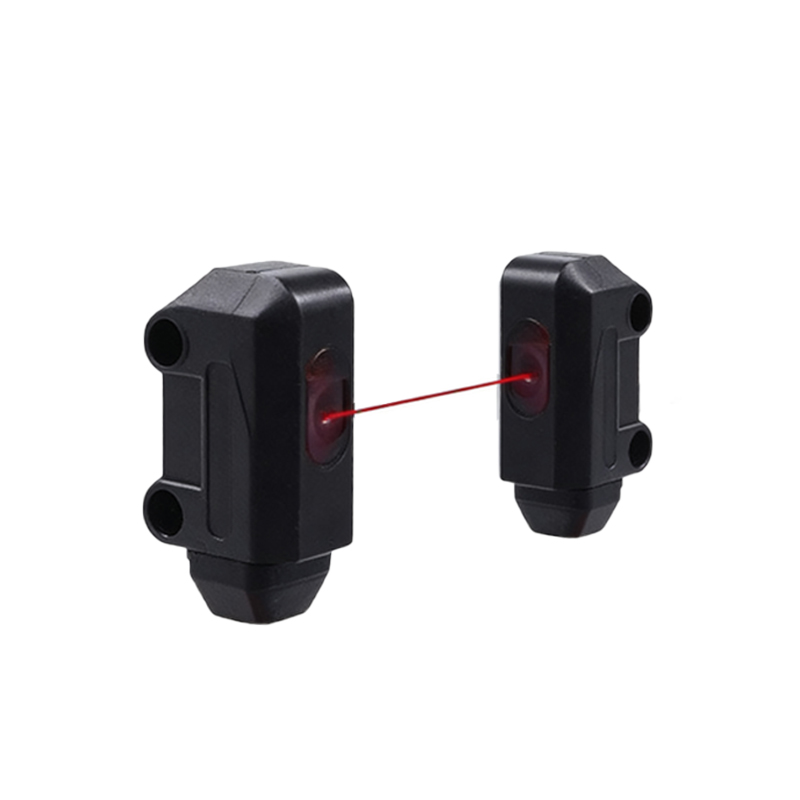
Through-beam sensors consist of separate emitter and receiver units. The emitter projects a continuous light beam to the receiver. An object is detected when it interrupts this beam. Models in this category, such as the E3X-DA-S series or OMH-100, are characterized by their long sensing range, high stability, and insensitivity to object color, surface finish, or reflectivity. They are ideal for precise detection through transparent materials, small object counting, or in dirty environments where diffuse sensors might be tricked by background reflections. Key specifications to compare include beam aperture size, alignment indicators (for easier setup), and maximum permissible misalignment. Enclosure material, typically stainless steel or rugged plastic, is chosen based on the application's mechanical and chemical stresses.
Diffuse Reflective (Proximity) Type Models
These models incorporate both emitter and receiver in a single housing. Detection occurs when light emitted is reflected back from the target object. Popular series like the E3Z or BOS 18M offer compact designs and simpler installation as only one unit needs wiring and mounting. Their performance is highly dependent on the target's color, size, and surface texture. A white, matte surface reflects well, while a black, shiny surface may be challenging to detect. Therefore, specifications list a standard sensing distance for a defined reference target (e.g., 90% reflective white paper). Advanced models feature background suppression (BGS) or foreground suppression (FGS) technology. BGS models use triangulation to measure distance, ignoring objects beyond a set point, making them perfect for detecting objects on a conveyor regardless of the belt color or background.
Retro-Reflective Type Models
This type uses a single sensor unit and a separate reflector (corner-cube prism). The sensor emits light to the reflector, which returns it directly along the same path. An object is detected when it blocks this beam. Models such as the E3S-R series bridge the gap between through-beam and diffuse types, offering longer ranges than diffuse sensors and easier alignment than through-beam pairs because the emitter and receiver are coaxial. A critical specification is the polarization filter feature. Standard retro-reflective sensors can be fooled by shiny objects that reflect light like the reflector. Polarized models include a filter that only accepts light whose polarization has been rotated by the corner-cube prism, effectively rejecting direct reflections from glossy surfaces. This makes them essential for packaging lines with metallic or glossy products.
Specialized and Advanced Model Variants
Beyond the standard types, specialized models address niche requirements. Color mark sensors, like the E3S-DC series, discriminate based on color contrast rather than light intensity, crucial in printing or labeling applications. Fiber optic amplifiers with analog output provide a voltage or current signal proportional to the received light intensity, enabling applications in transparency monitoring, edge detection, or tension control. For hazardous areas, intrinsically safe (IS) models certified for use in explosive atmospheres (e.g., ATEX, IECEx) are available. Furthermore, ultra-miniature sensing heads with fiber diameters below 0.5mm allow detection in extremely confined spaces, such as inside machinery or for micro-part assembly. Specifications for these advanced models include contrast ratio (for color sensors), linearity error (for analog models), and specific safety certification codes.
Selection Criteria and Application Guidelines
A systematic approach ensures optimal sensor selection. First, define the application: object presence, counting, positioning, or edge guiding. Second, determine the sensing mode based on required range, object characteristics, and installation constraints. Third, scrutinize the specifications: ensure the sensing distance has a sufficient safety margin (typically 50% of catalog value), the response time meets the process speed, and the environmental ratings exceed the operating conditions. Consider the fiber optic cable type (plastic for flexibility and cost, glass for high temperature) and the sensing head shape (threaded barrel, rectangular, forked). Finally, verify compatibility with the controller's input type (sinking vs. sourcing). Consulting manufacturer datasheets and using their selection software is highly recommended to compare models like Keyence FU, Omron E3X, Sick W4, or Banner Q45 side-by-side based on your precise technical parameters.