Introduction to Slot Type Photoelectric Sensors
Slot type photoelectric sensors, often referred to as through-beam or fork sensors, are fundamental components in industrial automation. Their primary function is to detect the presence or absence of an object within their sensing slot. Unlike other photoelectric sensor types, such as diffuse or retro-reflective models, the standard slot sensor operates on a direct through-beam principle. It consists of two opposing elements housed in a single U-shaped body: an emitter (typically an LED) on one side and a receiver (a phototransistor or photodiode) on the other. The emitter projects a beam of light, usually infrared or visible red, directly across the gap to the receiver. An object passing through the slot interrupts this beam, triggering a change in the sensor's output state. This simple, yet robust, design makes them exceptionally reliable for high-speed counting, edge detection, and limit switching in challenging environments.
The Challenge of Reflective Surfaces
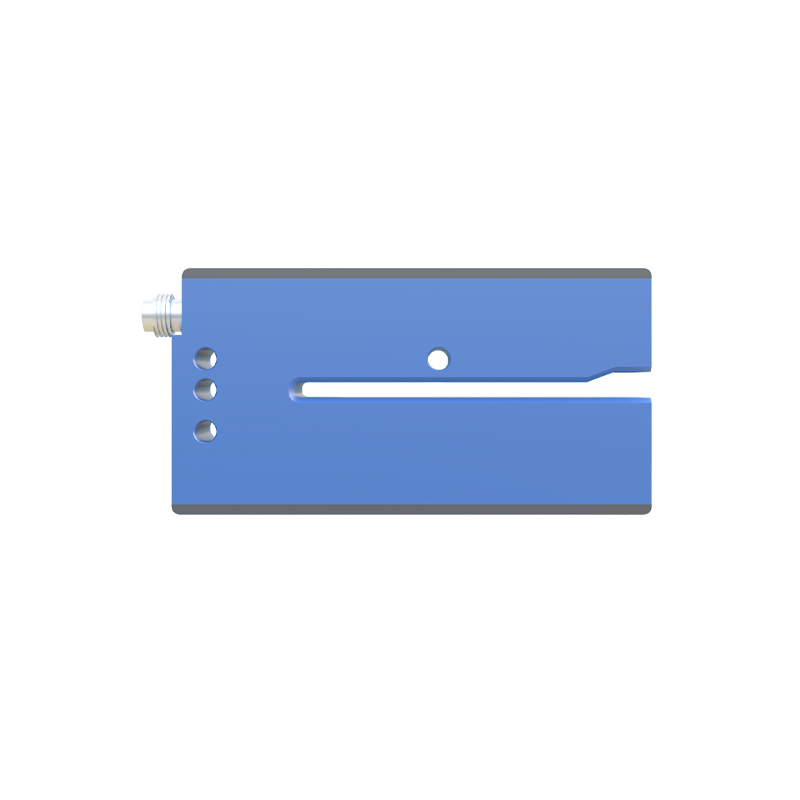
A significant limitation of conventional slot sensors arises when detecting objects with highly reflective or shiny surfaces, such as polished metal, mirrored glass, or glossy plastic. In a standard through-beam configuration, the sensor expects a clean interruption of the light beam. However, a reflective object can act like a mirror, potentially bouncing the emitter's light beam at an angle that still reaches the receiver. This phenomenon can cause the sensor to fail to detect the object, as the light beam is not fully blocked but merely redirected. This "false negative" or missed detection can lead to serious errors in automated processes, including incorrect counts, jammed machinery, or unregistered product positions, compromising both efficiency and safety.
Principles of Non-Reflective Detection Technology
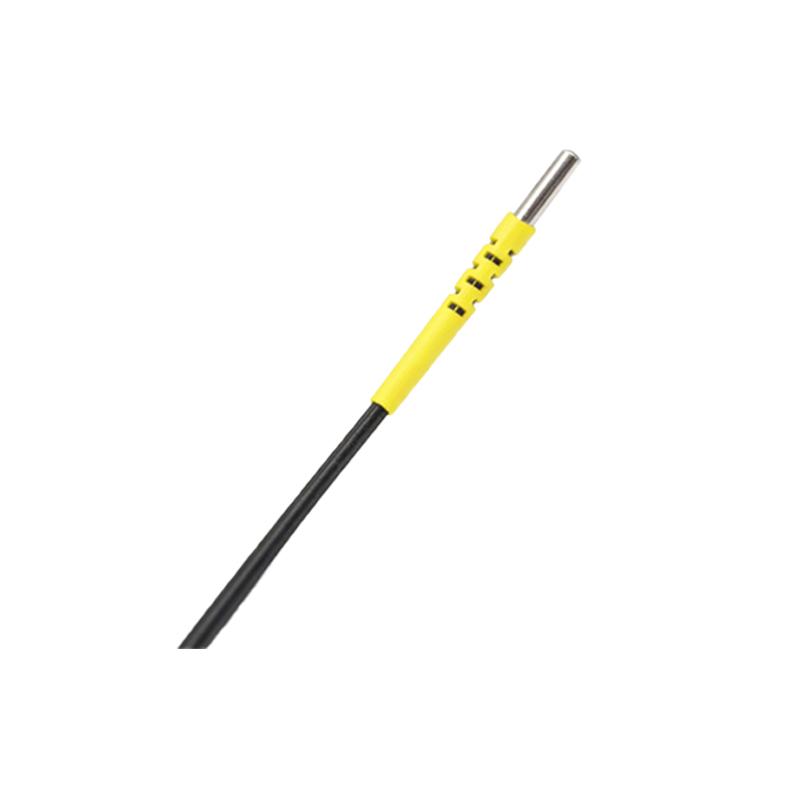
To overcome this challenge, specialized non-reflective slot type photoelectric sensors have been developed. These sensors employ advanced optical and electronic techniques to ensure reliable detection regardless of an object's surface finish. One common method is the use of cross-polarized filters. In this design, a polarizing filter is placed in front of the emitter, which projects linearly polarized light. A second polarizing filter, oriented at a 90-degree angle (cross-polarized), is placed in front of the receiver. Light reflected from a standard, non-metallic surface becomes depolarized; the cross-polarized filter at the receiver blocks this depolarized light. Crucially, light specularly reflected from a shiny, mirror-like surface retains its original polarization and is also blocked by the cross-polarized receiver filter. Only the direct, uninterrupted beam from the emitter to the receiver, which maintains the correct polarization, is allowed to pass and register as "no object." Any interruption, regardless of reflections, causes a detection event.
Key Features and Design Considerations
Non-reflective slot sensors incorporate several key features. They often utilize modulated infrared light, which makes them immune to ambient light interference from factory lighting. The sensing gap width and depth are critical specifications, determining the maximum size of the object that can be detected. Response time is another vital parameter, especially for high-speed applications. These sensors typically provide both light-on and dark-on output modes, configurable via a switch or wiring, offering flexibility for different control logic requirements. The housing is usually constructed from durable materials like ABS plastic or metal to withstand industrial environments, including exposure to dust, coolant, and mechanical vibration. Many models also feature an alignment indicator LED, simplifying installation and troubleshooting by confirming the receiver is properly receiving the emitter's signal.
Primary Industrial Applications
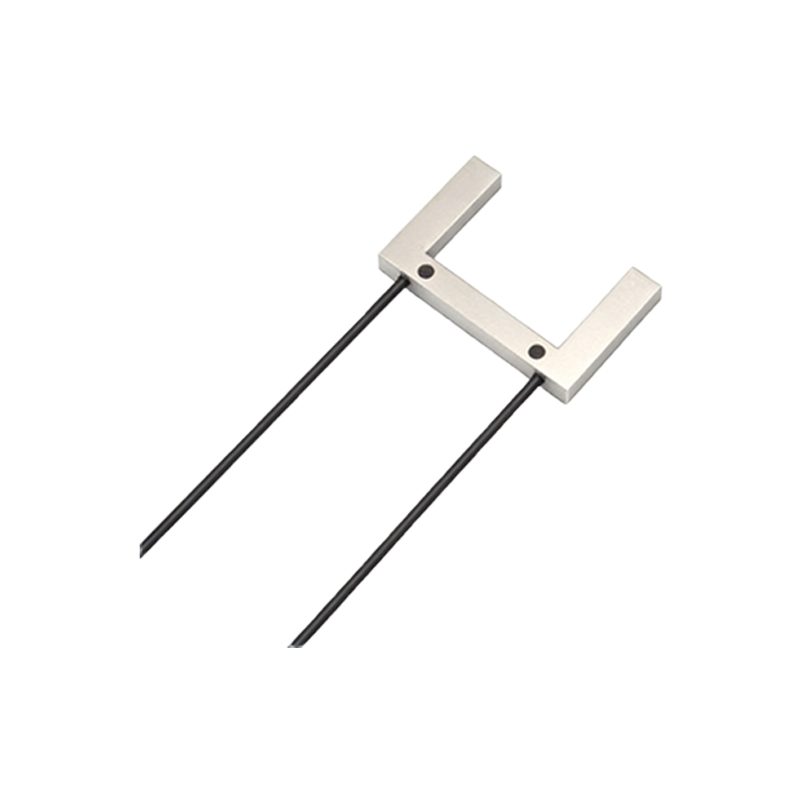
The unique capability of non-reflective slot sensors makes them indispensable in specific sectors. In the packaging industry, they reliably detect foil-wrapped products, metallized film, and shiny labels on conveyor lines. Electronics manufacturing relies on them for verifying the presence of components with reflective leads or housings. The automotive industry uses these sensors to detect polished metal parts, such as bearings or pistons, during assembly and handling. They are also crucial in printing and paper processing for detecting the edge of glossy paper or laminated sheets. Any application involving transparent objects, like glass vials or plastic films, can benefit from this technology, as these materials can also produce problematic reflections under certain conditions.
Advantages Over Alternative Solutions
Choosing a non-reflective slot sensor offers distinct advantages over attempting to solve the reflection problem with other methods. Using a standard sensor and adjusting its sensitivity might be ineffective and unreliable. Painting or masking reflective objects is often impractical in automated, high-volume production. While other sensor types exist—such as diffuse sensors with background suppression—they have different operating ranges and are more susceptible to color and surface texture variations. The non-reflective slot sensor provides a dedicated, precise, and maintenance-free solution. Its through-beam nature ensures a very sharp sensing boundary and high positional accuracy, which is superior for edge detection. The integrated, aligned design guarantees optical alignment is permanently fixed, eliminating drift over time compared to separate emitter-receiver setups.
Installation and Maintenance Best Practices
Correct installation is paramount for optimal performance. The sensor must be mounted securely to prevent misalignment due to vibration. Ensure the object path consistently passes through the center of the sensing gap. Keep the optical windows clean from dust, oil, or debris, as contamination can attenuate the light signal. Regularly verify the sensor's function using a test object. While these sensors are designed to be robust, it is important to operate them within their specified environmental ratings for temperature, humidity, and protection class (e.g., IP67). For maintenance, simply cleaning the lenses with a soft cloth and monitoring the indicator LEDs for proper operation are usually sufficient. Their solid-state design typically ensures a long operational life with minimal downtime.
Conclusion and Future Trends
Non-reflective slot type photoelectric sensors solve a critical detection problem in modern automation, enabling reliable operation with challenging materials. By leveraging polarization and advanced optics, they deliver consistent performance where conventional sensors fail. As industries continue to use more diverse and reflective materials, the demand for these specialized sensors will grow. Future developments may include even smaller form factors for miniaturized equipment, integrated IO-Link communication for digital diagnostics and parameter setting, and enhanced resistance to extreme environmental factors. Understanding their principle of operation and correct application is essential for engineers and technicians designing reliable, efficient, and safe automated systems.