Introduction to Two-Wire NC Metal Inductive Proximity Switches
Two-wire NC (Normally Closed) metal inductive proximity switches are fundamental components in industrial automation and control systems. These sensors operate on a simple two-wire connection, similar to a traditional switch, making them easy to integrate into existing electrical circuits. The "NC" designation indicates that the switch is normally closed in its resting state, meaning electrical current flows through it when no target metal object is detected. When a metal object enters the sensing range, the switch opens, interrupting the circuit. This behavior is particularly useful for safety-critical applications or fail-safe monitoring where an open circuit signals a fault or an operational event. Their primary function is to detect the presence or absence of ferrous and non-ferrous metallic objects without physical contact, ensuring reliability and longevity in harsh industrial environments.
Operating Principle and Sensing Mechanism
The core technology behind these switches is electromagnetic induction. The sensor contains an oscillator circuit that generates a high-frequency electromagnetic field at its active face. In the absence of a metal target, this field remains stable, and the NC switch contacts remain closed, allowing current to flow. When a conductive metal object approaches the sensing field, eddy currents are induced on the surface of the metal. These eddy currents draw energy from the oscillator, causing a change in its amplitude or frequency. This change is detected by the internal circuitry, which triggers the solid-state output to open the normally closed contacts, thereby breaking the circuit. The sensing distance, or "switching distance," depends on factors like the size, material, and shape of the target metal, as well as the specific sensor design. Common metals like steel typically have the longest sensing ranges, while non-ferrous metals like aluminum or copper may require shorter distances due to their different electrical properties.
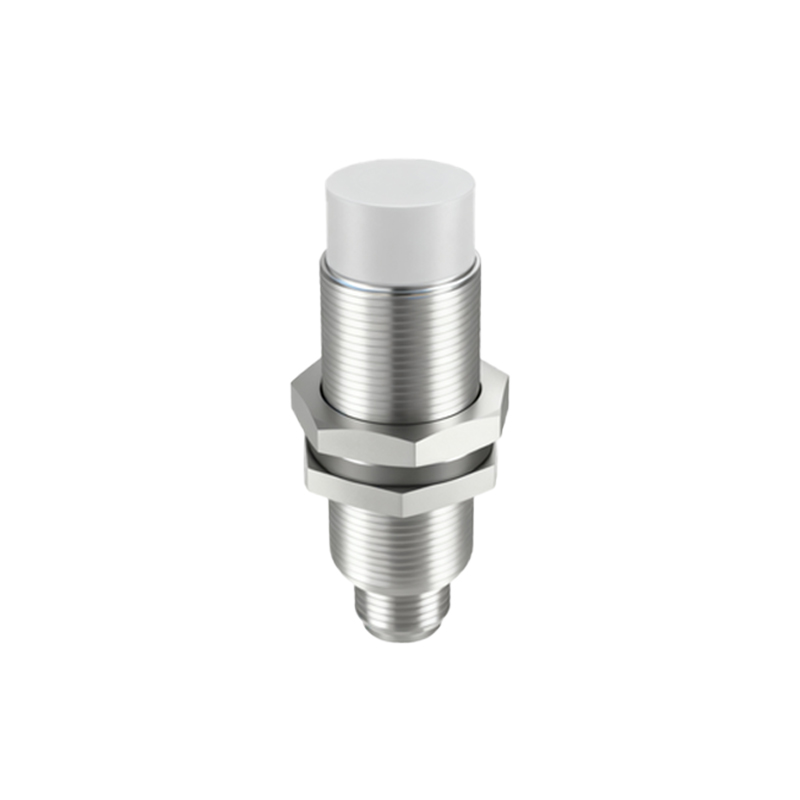
Key Advantages and Application Benefits
Two-wire NC configurations offer several distinct advantages. Their simple wiring reduces installation time and cost, as they connect directly in series with the load (such as a PLC input, relay, or indicator lamp) without needing a separate power wire. This simplicity also minimizes potential wiring errors. The normally closed design is inherently fail-safe for many monitoring tasks; for instance, a wire break or power loss results in an open circuit, which can be programmed to trigger an alarm or safety shutdown, enhancing system security. These sensors are known for their robustness, with typical housing materials like nickel-plated brass or stainless steel providing high resistance to mechanical impacts, vibrations, and industrial contaminants like oil, coolants, or dust. They require no maintenance, have no moving parts to wear out, and offer fast switching speeds suitable for high-speed counting or positioning applications on production lines, conveyor systems, or automated machinery.
Critical Installation and Wiring Considerations
Proper installation is crucial for optimal performance. The sensor must be mounted securely to prevent vibration-induced false triggers. It is essential to maintain the specified sensing distance and consider the influence of surrounding metals—adjacent metallic structures or multiple sensors in close proximity can reduce the effective sensing range due to mutual interference, a phenomenon known as "shielding." Wiring requires attention to polarity for DC versions; while two-wire sensors are often described as "non-polarized," many modern electronic designs do require correct connection of the positive and negative lines. The load current must remain within the sensor's specified switching capacity. A critical parameter is the leakage current: even when in the open (switched) state, a small leakage current (typically a few mA) flows through the sensor. This current must be lower than the minimum holding current of the connected load (e.g., a relay coil) to ensure it reliably drops out when the switch opens. Using a bleeder resistor in parallel with the load is a common solution if leakage current causes issues.
Common Industrial Use Cases and Selection Criteria
These switches are ubiquitous in factory automation. Typical applications include end-position detection of cylinders or machine parts, monitoring the presence of metal components in assembly jigs, controlling rotary equipment by detecting gear teeth or cams, and providing safety interlock signals on guards or doors. When selecting a two-wire NC metal inductive sensor, engineers must evaluate several parameters. The sensing range should be chosen with a safety margin, typically 70-80% of the nominal value to account for temperature variations and part tolerances. The housing style (e.g., cylindrical, rectangular, or ring-shaped) must fit the mechanical constraints. The electrical specifications—operating voltage range (commonly 10-30V DC or 20-250V AC), current rating, and switching frequency—must match the control system. Environmental ratings, particularly the Ingress Protection (IP) rating (like