Proximity sensors are ubiquitous in modern automation, silently performing critical tasks in manufacturing, automotive systems, consumer electronics, and countless other applications. Their core function is to detect the presence or absence of an object within a specified range without any physical contact. Understanding the working principle of these sensors is key to selecting the right type for a given application. While the underlying goal is the same, the method of detection varies significantly based on the technology employed. The main categories include inductive, capacitive, photoelectric, and ultrasonic proximity sensors.
Inductive proximity sensors are one of the most common types, primarily used for detecting metallic objects. The fundamental principle is based on electromagnetic induction. The sensor contains a coil wound around a ferrite core, which is part of an oscillator circuit. When an alternating current is passed through this coil, it generates a high-frequency oscillating electromagnetic field at the active face of the sensor. When a conductive metal target enters this field, eddy currents are induced on the surface of the target. These eddy currents draw energy from the sensor's oscillator, resulting in a reduction of the oscillation amplitude. An internal circuit monitors this amplitude change. Once the amplitude drops below a predetermined threshold (set by the sensing distance), the sensor's output state switches, signaling the detection of an object. Inductive sensors are robust, immune to non-metallic contaminants like dust or oil, and offer high switching frequencies, making them ideal for industrial environments with metals.
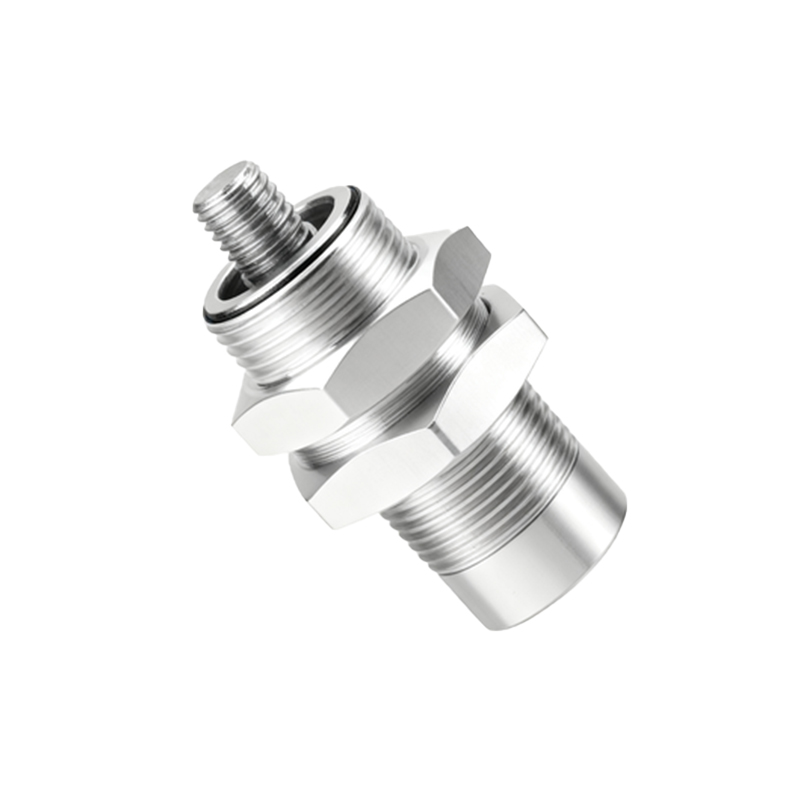
Capacitive proximity sensors, in contrast, can detect both metallic and non-metallic materials, including liquids, plastics, glass, and wood. Their operation relies on changes in capacitance. The sensor face acts as one plate of a capacitor, with the target object acting as the other plate, and the air gap serving as the dielectric. The sensor generates an electrostatic field. When a target enters this field, it alters the dielectric constant and thus the capacitance of the system. An internal oscillator is designed to start oscillating only when this capacitance reaches a specific level. The change in oscillation is evaluated by the subsequent circuitry, which triggers an output switch. A sensitivity adjustment is often provided to compensate for different material types or to ignore certain interfering objects. This makes capacitive sensors versatile for applications like liquid level detection, material handling, and presence sensing of non-metals.
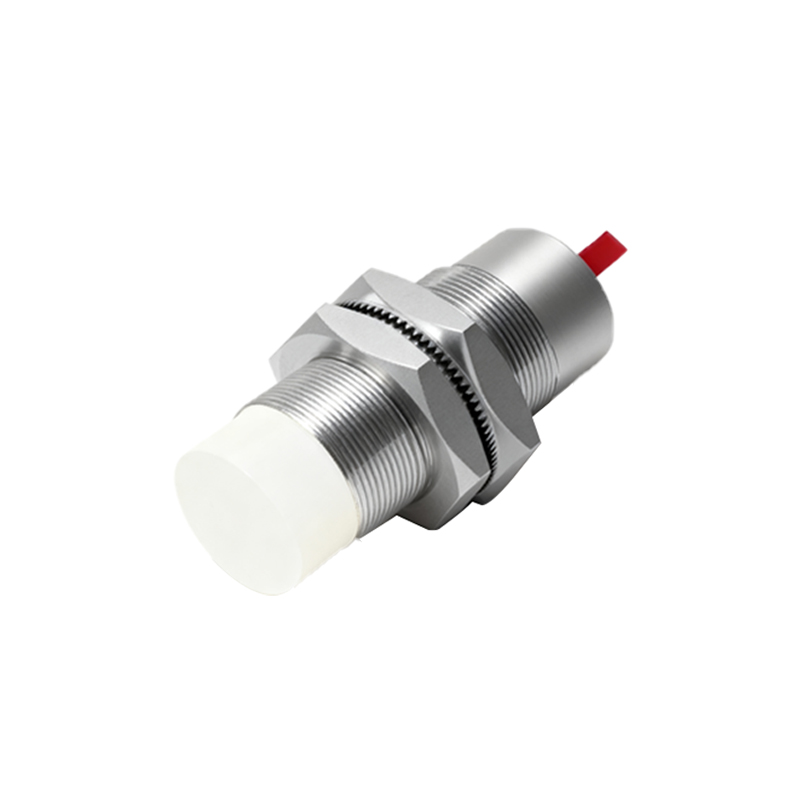
Photoelectric proximity sensors operate on an entirely different principle: light. They consist of a light emitter (usually an LED producing visible red, infrared, or laser light) and a receiver. There are three primary modes: through-beam, retro-reflective, and diffuse (proximity) mode. The diffuse mode is the true "proximity" style. In this setup, both emitter and receiver are housed in the same unit. The emitter projects a light beam towards the target area. When an object is present within the sensing range, it reflects a portion of the light back to the receiver. The receiver detects this reflected light intensity, and when it surpasses a set threshold, the output is activated. The sensing distance depends on the object's size, color, and surface texture. Photoelectric sensors offer long sensing ranges and can detect virtually any object, but they can be affected by ambient light, color, and surface reflectivity.
Ultrasonic proximity sensors use sound waves beyond the human hearing range. They contain a transducer that acts as both a transmitter and a receiver. The sensor emits short, high-frequency ultrasonic pulses. These pulses travel through the air and reflect off a target object. The reflected echo returns to the sensor. The electronic circuitry measures the time interval between the emitted pulse and the received echo. Since the speed of sound in air is known, the distance to the object can be calculated precisely using the formula: Distance = (Speed of Sound × Time of Flight) / 2. An output is switched when the calculated distance falls within the preset window. Ultrasonic sensors are excellent for detecting objects regardless of color, transparency, or material, and are suitable for challenging environments with dust, smoke, or fog. However, they can be influenced by temperature variations and soft materials that absorb sound.
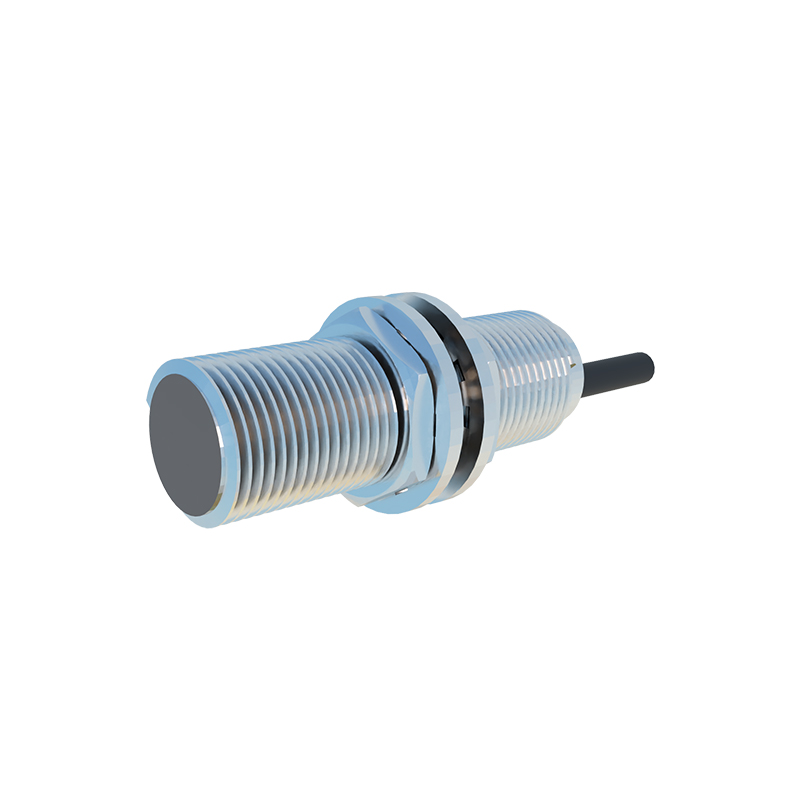
The output stage of a proximity sensor is typically a solid-state switch (PNP or NPN for DC sensors) or a relay contact. This switch controls an external load, such as a PLC input, a relay coil, or an indicator lamp. Key performance parameters include nominal sensing distance (Sn), repeatability, hysteresis (the difference between the switch-on and switch-off points), and switching frequency.
In summary, the working principle of a proximity sensor is defined by its technology: electromagnetic field disturbance for inductive, capacitance change for capacitive, light reflection for photoelectric, and sound wave echo-location for ultrasonic. The choice depends entirely on the application requirements—target material, required sensing distance, environmental conditions, and needed response speed. This non-contact detection ensures reliability, longevity, and high-speed operation, forming the