Understanding High-Frequency Vibration Proximity Sensors
High-frequency vibration proximity sensors represent a specialized category of non-contact detection devices engineered for demanding industrial environments. Unlike standard inductive or capacitive sensors, these devices are specifically tuned to detect the minute vibrations or oscillations of a target object, typically operating at frequencies ranging from several kilohertz to tens of megahertz. The core principle involves generating a high-frequency electromagnetic field or acoustic wave from the sensor's active face. When a vibrating object enters this sensing field, its oscillations interact with and modulate the emitted signal. The sensor's sophisticated internal circuitry, often incorporating advanced signal processing algorithms like Fast Fourier Transform (FFT), analyzes these modulations. It distinguishes the specific vibration signature from background noise, triggering a clean, reliable output signal only when the predefined vibration characteristics are confirmed. This makes them exceptionally immune to common industrial interferents such as dust, oil mist, or ambient electromagnetic noise.
Core Operating Principles and Technologies
The operational backbone of these sensors can be primarily divided into two technological approaches: electromagnetic and ultrasonic. Electromagnetic high-frequency sensors often utilize a coil and oscillator circuit to create a radio frequency (RF) field. A vibrating conductive target alters the damping of this oscillating circuit in a pattern corresponding to its vibration. Piezoelectric elements are another critical technology, where mechanical stress from detected vibrations generates a proportional electrical charge. For ultrasonic variants, the sensor emits high-frequency sound waves beyond human hearing. The vibration of a target causes a measurable Doppler shift or amplitude modulation in the reflected wave. Regardless of the underlying physics, all high-frequency vibration sensors share a common trait: they are not merely detecting presence, but actively analyzing the dynamic state—the oscillation—of the object. This requires robust filtering and threshold-setting capabilities to ensure precise detection without false triggers.
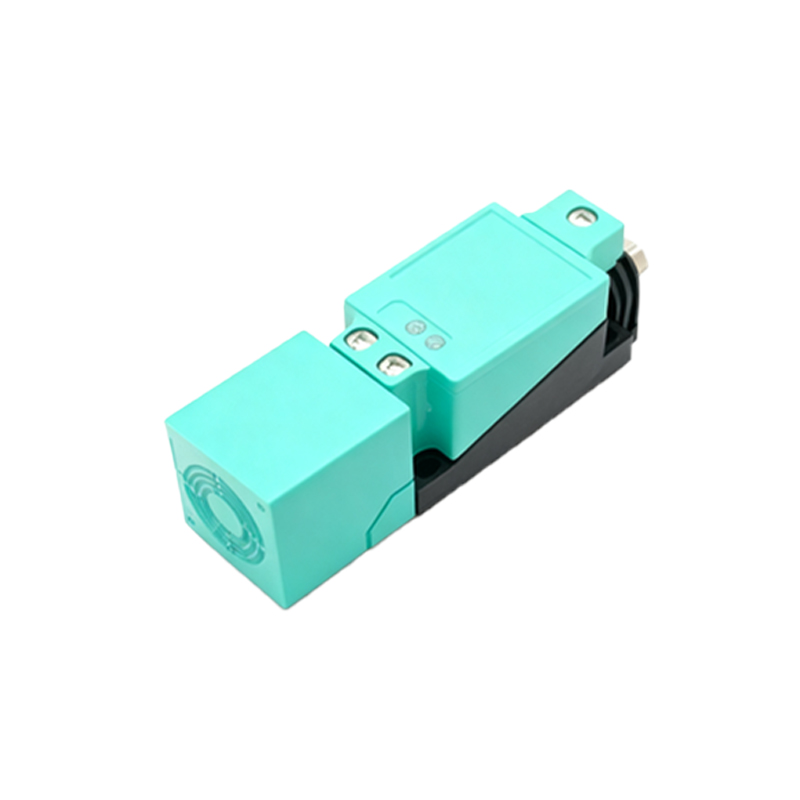
Key Advantages in Industrial Applications
The deployment of high-frequency vibration proximity sensors offers distinct advantages that solve complex monitoring challenges. Their foremost benefit is the ability to perform non-contact monitoring of critical machine components, such as bearing housings, motor shafts, or turbine blades, for incipient faults. By detecting abnormal vibration patterns early, they enable predictive maintenance, preventing catastrophic failures and unplanned downtime. Furthermore, their high-frequency operation allows for extremely fast response times, making them suitable for high-speed production lines, such as monitoring the rotation of bottling equipment or the oscillation of vibrating feeders. Their inherent insensitivity to static objects or buildup of material on the sensor face (provided it doesn't vibrate) enhances reliability in dirty environments. This selective sensitivity also allows for clever applications, like verifying that a screwdriver bit is actually rotating during an automated assembly process, rather than just being present.
Primary Industrial Use Cases and Examples
These sensors find critical roles across diverse sectors. In manufacturing automation, they are indispensable for monitoring the operation of pneumatic vibrators on hoppers or chutes, ensuring material flow consistency. Within the packaging industry, they verify the sealing jaw vibration on ultrasonic welders or detect the oscillation of filling nozzles. A vital application is in condition monitoring of rotating machinery. Sensors mounted near bearings or gears can detect changes in vibration frequency and amplitude, signaling wear, imbalance, or misalignment long before temperature rises or noise becomes audible. In the automotive sector, they are used to test component integrity, such as checking for the correct vibration response of electric fuel pumps or small motors. Even in precision fields, they assist in monitoring the tool tip vibration in CNC machining centers, which can affect surface finish quality.
Critical Selection Criteria and Installation Guidelines
Selecting the appropriate high-frequency vibration proximity sensor requires careful analysis of several parameters. First, define the required sensing frequency range; the sensor must be capable of detecting the specific vibration frequencies of the target application. Sensitivity, often expressed in mV/g or a similar unit, must match the expected vibration amplitude. The sensor's output type (analog 4-20mA/0-10V, digital PNP/NPN, or IO-Link) must integrate with the existing control system. Environmental ratings are paramount; look for robust IP (Ingress Protection) ratings (e.g., IP67, IP69K) for washdown areas and high operating temperature ranges for foundries or engine test cells. Proper installation is crucial: the sensor must be securely mounted to a stable surface to avoid picking up structural vibrations. The sensing distance and orientation relative to the vibrating target must be calibrated according to the manufacturer's specifications to ensure optimal signal strength and avoid saturation or weak detection.
Integration with Predictive Maintenance Systems
The true power of high-frequency vibration data is unlocked through integration with Industrial Internet of Things (IIoT) platforms and predictive maintenance software. Modern sensors with analog or digital bus