Fundamental Operating Principles
Photoelectric sensors operate on the principle of converting light signals into electrical signals to detect the presence, absence, or distance of an object. They consist of an emitter, which projects a light beam (often infrared, visible red, or laser), and a receiver. The detection occurs when the emitted light beam is either interrupted (through-beam mode), reflected back (retro-reflective mode), or reflected diffusely from the target object (diffuse mode). This fundamental principle allows for non-contact detection, a key advantage over mechanical limit switches. The choice of light source and modulation techniques, such as pulsed LED light, is critical for enhancing immunity to ambient light interference and ensuring reliable operation in diverse industrial environments. This core functionality makes them indispensable for tasks requiring precise, wear-free sensing.
Key Advantages and Distinctive Features
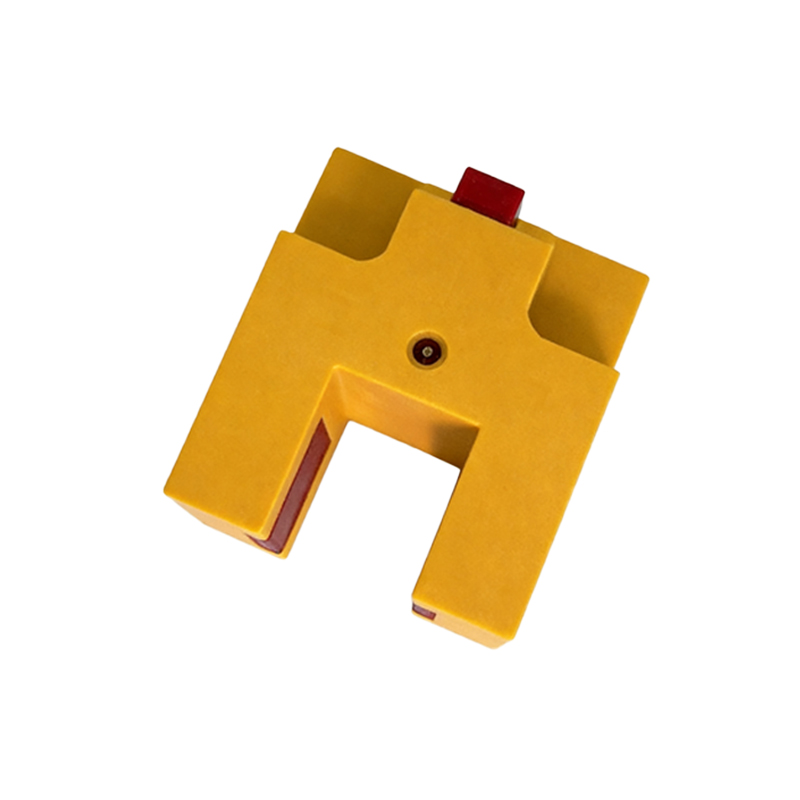
The primary characteristic of photoelectric sensors is their ability to perform non-contact detection, eliminating mechanical wear and tear on both the sensor and the target. This leads to significantly longer service life and reduced maintenance costs. They offer exceptional sensing ranges, from a few millimeters to several hundred meters with specialized models, far exceeding the capabilities of proximity sensors. Furthermore, they can detect a vast array of materials—metals, plastics, glass, wood, and liquids—regardless of color, surface texture, or magnetic properties, provided the correct sensing mode is selected. Their fast response speed, often in the microsecond range, makes them ideal for high-speed counting, sorting, and positioning applications on production lines. The versatility in housing designs, including tubular, rectangular, and slot-style housings, allows for installation in confined or challenging spaces.
Selection Criteria for Optimal Performance
Selecting the appropriate photoelectric sensor requires careful analysis of the application. The first decision point is the sensing mode: Through-beam sensors offer the longest range and highest reliability but require separate emitter and receiver units. Retro-reflective models use a reflector, simplifying wiring while maintaining good range. Diffuse sensors are the most compact, sensing objects directly, but are more susceptible to color and surface reflectivity variations. Background suppression and foreground suppression diffuse sensors provide refined detection by focusing on a specific sensing distance. Other critical factors include the required sensing distance, the size and material of the target, environmental conditions (dust, moisture, temperature, vibration), required output type (PNP/NPN, analog, IO-Link), and power supply voltage. Proper selection ensures immunity to false triggers and long-term stability.
Common Industrial Applications and Use Cases
Photoelectric sensors are ubiquitous in factory automation. In packaging machinery, they detect product presence for filling, capping, and labeling operations. On assembly lines, they count bottles, verify component placement, and control robotic pick-and-place cycles. In material handling, they are used for edge guiding on web processes, palletizing, and detecting the level of bulk materials in silos. Safety applications include presence detection at machine access points and light curtains for perimeter guarding. Advanced sensors with analog outputs are employed for precise distance measurement and contour profiling. Their ability to detect transparent objects, like glass or plastic films, makes them unique for applications in the pharmaceutical and food & beverage industries where hygiene and precision are paramount.
Installation, Alignment, and Maintenance Best Practices
Correct installation is vital for reliable operation. Sensors must be securely mounted to minimize vibration-induced misalignment. For through-beam and retro-reflective types, precise optical alignment is crucial; many modern sensors feature visible red light beams or alignment indicators to facilitate this process. The sensing path must be kept clear of obstructions, dust buildup, and condensation. In dirty environments, sensors with built-in air purge connections or specialized protective windows may be necessary. Regular maintenance involves cleaning lenses with appropriate materials, checking mounting stability, and verifying electrical connections. Diagnostic features like stability indicators or teach-in functions on smart sensors greatly simplify troubleshooting and reduce downtime, ensuring continuous process flow.
Future Trends and Technological Advancements
The evolution of photoelectric sensors is driven by Industry 4.0 and the demand for smarter, more connected devices. The integration of IO-Link communication is a significant trend, enabling digital parameter setting, remote diagnostics, and process data monitoring. Sensors are becoming more intelligent with built-in condition monitoring, predicting maintenance needs by tracking lens contamination or LED performance. Miniaturization continues, allowing for installation in increasingly compact machinery. Furthermore, advancements in laser diode technology and signal processing algorithms are enhancing precision, enabling detection of smaller objects and more accurate distance measurements even in challenging conditions. These advancements solidify the photoelectric sensor's role as a foundational, yet continuously evolving, component in industrial automation.