Introduction to M8 Proximity Sensors
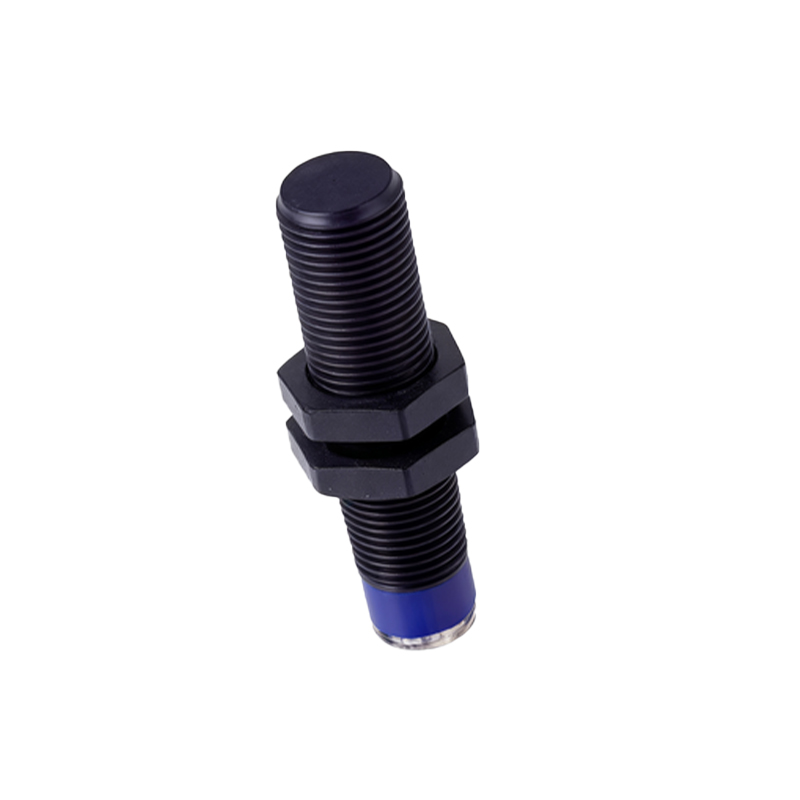
M8 proximity sensors are a cornerstone of modern industrial automation, renowned for their compact cylindrical design with an 8mm thread diameter. These inductive sensors are engineered for non-contact detection of metallic objects, offering high reliability in harsh environments. The 3-wire PNP configuration represents one of the most prevalent and versatile output types in global control systems. This design integrates power, ground, and a switched positive output signal into a single, robust housing. Their primary function is to provide a precise digital signal to a Programmable Logic Controller (PLC) or other control unit, indicating the presence or absence of a target without physical contact. This eliminates mechanical wear and enables high-speed operation, which is critical for applications like counting, positioning, and end-of-travel detection on machinery.
Understanding the 3-Wire PNP Configuration
The "3-wire" designation refers to the electrical connection scheme: typically comprising a brown wire for positive DC supply voltage (often +24V DC), a blue wire for the common ground (0V), and a black wire for the output signal. "PNP" stands for Positive-Negative-Positive, describing the switching logic of the transistor output. In a PNP sensor, the output transistor connects the load (like a PLC input) to the positive supply voltage when activated. When the sensor detects a target within its sensing range, the internal electronic switch closes, and the black output wire switches to supply +24V (or the supply voltage) to the load. When no target is present, this output wire is in a high-impedance state (effectively open). This "sourcing" configuration is widely adopted in Europe and many regions, where the PLC input modules are designed to receive a positive voltage signal to register a TRUE or HIGH state.
Key Electrical Specifications and Wiring
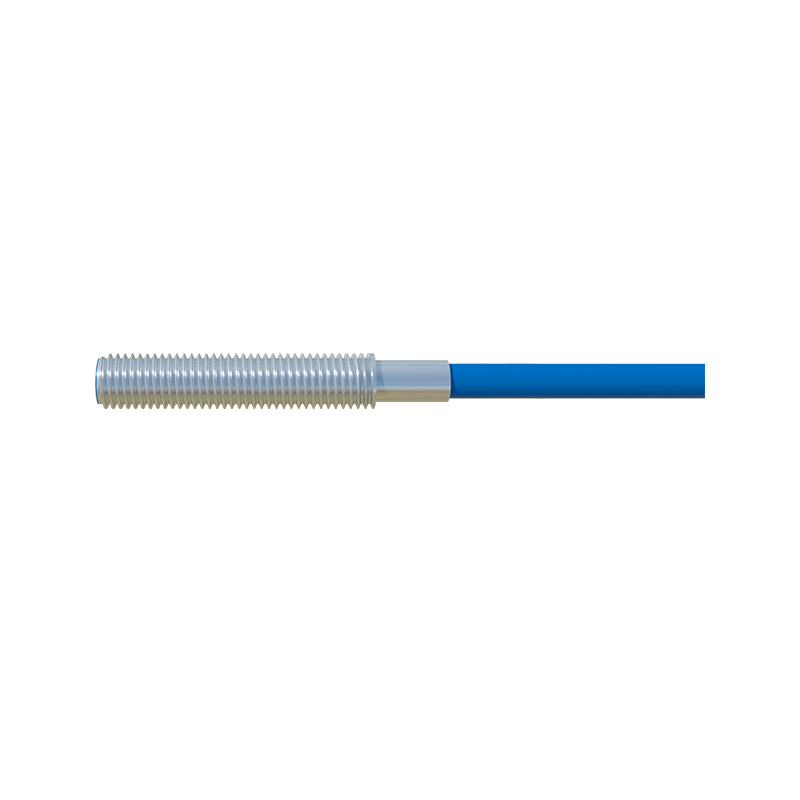
Correct wiring is paramount for safe and reliable operation. The standard color code (brown: +V, blue: 0V, black: output) must be adhered to. These sensors are almost exclusively designed for DC operation, with a common voltage range of 10-30V DC. It is crucial to verify the sensor's datasheet for its specific voltage rating, current consumption, and maximum output current (typically around 100-200mA). The load (e.g., the PLC input) must be connected between the black output wire and the blue (0V) wire. A critical best practice is to always implement a protective fuse in the supply line and, in electrically noisy environments, to use shielded cable with the drain wire properly grounded at the controller end only. Incorrect polarity connection can permanently damage the sensor's internal electronics.
Sensing Characteristics and Performance Metrics
M8 inductive proximity sensors are characterized by several key performance parameters. The nominal sensing distance (Sn) is standardized, for instance, 1.5mm or 2mm for a standard M8 ferrous target. It's important to note that this distance can vary based on the target material's size, shape, and composition (steel, aluminum, brass, etc.). Hysteresis is a built-in feature that prevents output chatter when a target is at the edge of the sensing range; it is the difference between the switch-on and switch-off points. Repeat accuracy defines how consistently the sensor detects a target at the same point. Furthermore, switching frequency indicates how many on/off cycles per second the sensor can handle, a vital spec for high-speed counting applications. Environmental ratings like IP67 (dust-tight and protected against temporary immersion) are common, ensuring durability.
Application Examples in Industrial Settings
The robustness and size of the M8 3-wire PNP sensor make it ideal for countless applications. A primary use is in pneumatic cylinder position feedback, where a sensor mounted on the cylinder body detects a built-in piston magnet or a metal flag to confirm extended or retracted positions. They are extensively used on conveyor systems for small part detection, bottle counting, and jam detection. In machine tools, they serve as limit switches to prevent over-travel of slides or spindles. Rotary encoders often use a ring of these sensors for speed and position monitoring. Their sealed bodies allow them to function reliably in CNC machining centers where coolant and metal chips are present, as well as in packaging and assembly robots where space is at a premium.
Selection Criteria and Installation Best Practices
Selecting the correct M8 PNP sensor requires careful consideration. First, confirm the target material is metallic. Choose the sensing distance with a safety factor (typically 70-80% of Sn) to account for mechanical tolerances and temperature drift.