Introduction to Limit Photoelectric Sensors
Limit photoelectric sensors are fundamental components in modern industrial automation and control systems. They operate on the principle of using a light emitter and a receiver to detect the presence, absence, or position of an object. When an object interrupts or reflects the light beam, the sensor's output state changes, sending a signal to a controller. This simple yet robust mechanism makes them indispensable for tasks requiring precise positional feedback, such as end-of-travel detection, counting, and sorting on assembly lines. Their non-contact nature ensures minimal wear and tear, leading to high reliability and long service life in demanding environments.
Core Operating Principles and Technologies
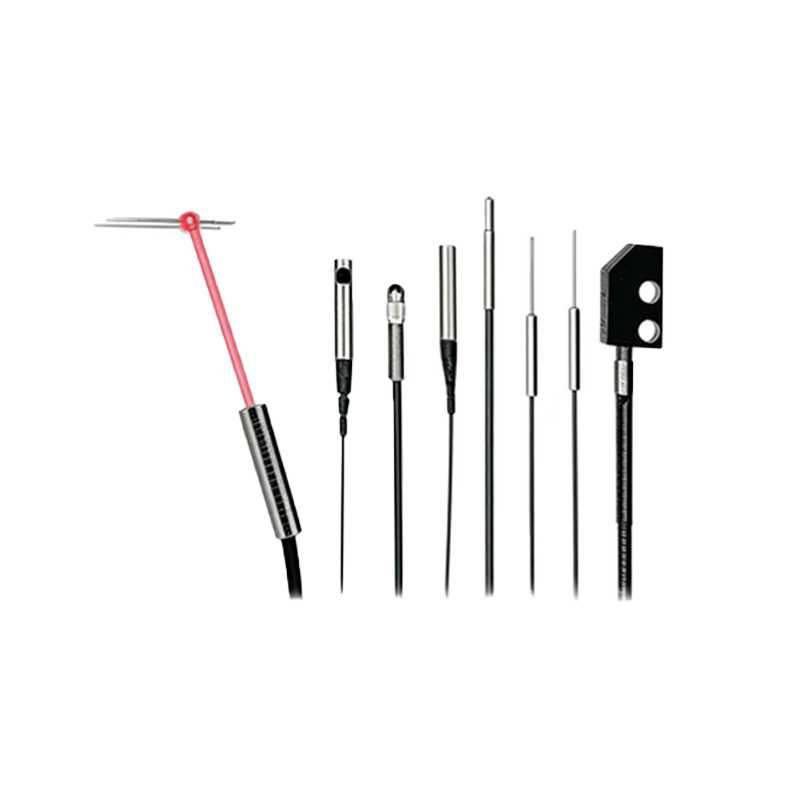
The functionality of a limit photoelectric sensor hinges on three primary modes of operation: through-beam, retro-reflective, and diffuse reflective. Through-beam sensors consist of separate emitter and receiver units. They offer the longest sensing ranges and highest reliability, as the object simply needs to break the beam. Retro-reflective sensors house both emitter and receiver in one housing, using a reflector to bounce the light back. They are ideal for detecting objects that may not be perfectly aligned. Diffuse reflective sensors detect light reflected directly off the target object itself, making them suitable for sensing at shorter distances and when mounting a reflector is impractical. Advanced models incorporate modulated LED light sources and specialized optics to ignore ambient light interference.
Key Specifications and Selection Criteria
Selecting the appropriate limit photoelectric sensor requires careful analysis of several technical parameters. Sensing range, typically specified in meters, defines the maximum operational distance. Response time, measured in milliseconds or microseconds, determines how quickly the sensor can react to a change. The type of output (e.g., NPN, PNP, relay, analog) must be compatible with the control system's input module. Environmental factors are critical; ingress protection (IP) ratings indicate resistance to dust and water, while operational temperature ranges ensure functionality in hot or cold settings. For challenging applications, sensors with specialized housings resistant to chemicals, oils, or physical impact are available. Beam characteristics, such as spot size, also influence detection accuracy for small objects.
Application Scenarios in Industrial Automation
The versatility of limit photoelectric sensors is demonstrated across countless industrial applications. In material handling, they are used to detect the position of pallets on conveyors, trigger sorting gates, and prevent over-travel of robotic arms or linear actuators. Packaging machinery relies on them for label detection, fill-level control, and product counting. Within automated assembly systems, they verify the presence of components before a process step, ensuring quality control. They are also crucial in safety systems, acting as non-contact interlocks on machine guards or detecting personnel in hazardous zones. Their ability to detect virtually any material—metal, plastic, wood, glass, or liquid—makes them universally applicable.
Installation, Alignment, and Calibration Best Practices
Proper installation is paramount for reliable sensor operation. Mounting must be secure to prevent vibration-induced misalignment. For through-beam and retro-reflective types, precise alignment of the emitter, receiver, and reflector is essential; many sensors feature built-in alignment indicators (LEDs) to facilitate this process. The sensing path should be kept clear of obstructions like dust, steam, or stray reflective surfaces that could cause false triggers. Electrical wiring must follow manufacturer guidelines, paying close attention to polarity, load specifications, and the use of surge protection in environments with inductive loads. Regular maintenance, including lens cleaning and functional verification, should be part of the preventive maintenance schedule.
Troubleshooting Common Operational Issues
Even with proper installation, sensors can encounter issues. Intermittent operation or failure to detect is often traced to misalignment, a dirty lens, or a weakened light source. Electrical problems, such as incorrect wiring, voltage spikes, or incompatible load types, can also cause failures. Environmental factors are frequent culprits; excessive ambient light, thick dust, fog, or temperature extremes can degrade performance. Systematic troubleshooting involves verifying power supply, checking alignment with the target, inspecting the physical condition of the sensor and lens, and using a multimeter to test output signals. Understanding the sensor's diagnostic indicators is key to rapid problem resolution.
Future Trends and Technological Advancements
The evolution of limit photoelectric sensors continues, driven by Industry 4.0 and the demand for smarter, more connected factories. Modern sensors increasingly feature IO-Link communication, enabling digital parameter setting, remote diagnostics, and process data monitoring directly from the sensor. Miniaturization allows for installation in space-constrained locations without sacrificing performance. Enhanced background suppression technology in diffuse sensors allows for more reliable detection of objects against complex backgrounds. Furthermore, the integration of advanced materials and optics is pushing the boundaries of sensing range, accuracy, and resistance to the harshest industrial environments, ensuring their role remains central to automation.