Introduction to Tracing Photoelectric Sensors
Tracing photoelectric sensors, often referred to as line-following or tracking sensors, are specialized optoelectronic devices widely used in industrial automation and robotics. These sensors detect and follow predefined paths, typically marked by contrasting lines or reflective tapes, enabling precise guidance for automated vehicles, conveyor systems, and assembly robots. By emitting light and measuring the reflected signal, they convert optical information into electrical outputs, facilitating real-time control. Their ability to operate in diverse environments—from clean rooms to harsh factory floors—makes them indispensable in modern manufacturing, logistics, and material handling applications. This article delves into the core working principles, components, and practical implementations of these sensors, offering insights for engineers and technicians in the electrical and automation fields.
Core Working Principle: Light Emission and Reflection
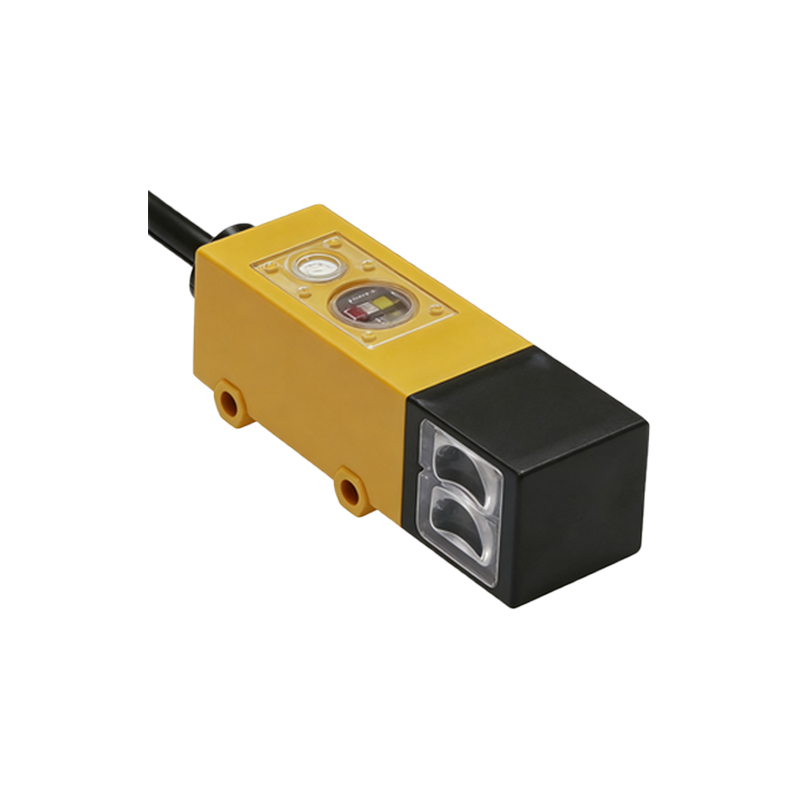
At the heart of a tracing photoelectric sensor lies the principle of light reflection. The sensor comprises an emitter, usually an infrared (IR) or visible light LED, and a receiver, such as a phototransistor or photodiode. The emitter projects a focused beam of light onto the target surface—commonly a floor or conveyor belt. When the light strikes a contrasting line (e.g., a black line on a white background), the amount of reflected light varies significantly. Darker surfaces absorb more light, resulting in minimal reflection, while lighter surfaces reflect most of the beam. The receiver detects these variations in reflected intensity, converting them into analog or digital electrical signals. Advanced sensors may use modulated light to reduce interference from ambient lighting, ensuring reliable operation even in brightly lit industrial settings. This simple yet effective mechanism allows for accurate path detection without physical contact.
Sensor Components and Configuration
A typical tracing photoelectric sensor consists of several key components. The optical system includes lenses or apertures that focus the emitted light and direct reflections to the receiver. The electronic circuitry processes the receiver's output, often incorporating amplifiers, comparators, and noise filters to enhance signal clarity. Many sensors feature adjustable sensitivity settings, enabling calibration for different surface materials and line widths. In multi-channel configurations, arrays of sensors are arranged side-by-side to cover broader paths or detect complex patterns. For instance, a robot might use five sensors in a row to precisely center itself on a line. Additionally, some models integrate microcontrollers for onboard signal processing, providing direct digital outputs like pulse-width modulation (PWM) or serial communication protocols. Housing materials are designed to withstand industrial hazards such as dust, moisture, and mechanical impacts, often meeting IP67 or higher ratings.
Types of Tracing Photoelectric Sensors
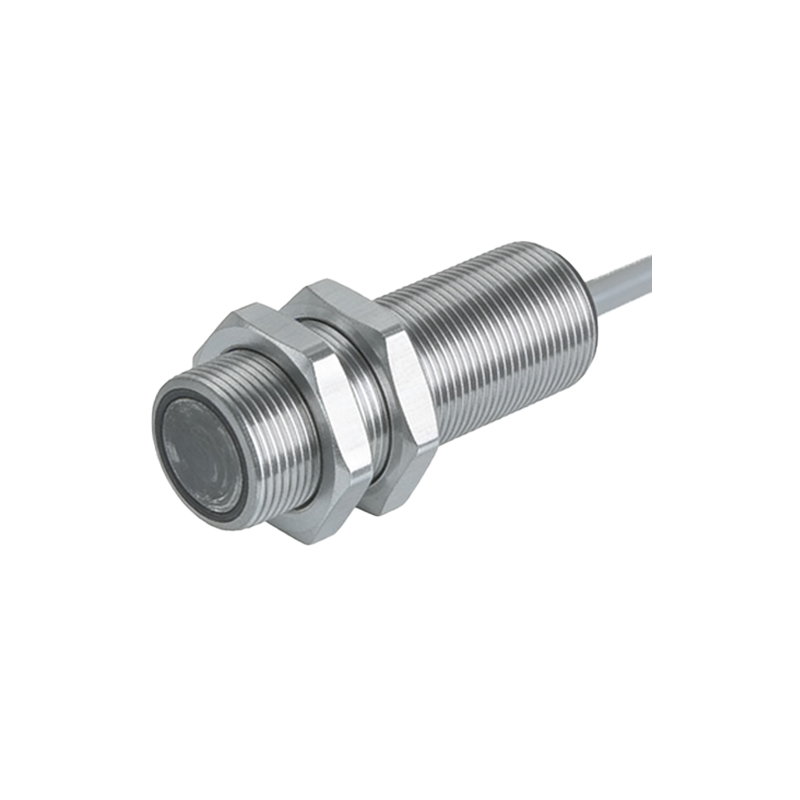
Tracing photoelectric sensors can be categorized based on their detection methods and mounting styles. Reflective-type sensors, the most common, rely on direct reflection from the target surface. Retro-reflective variants use a separate reflector to bounce light back, suitable for longer ranges. Diffuse sensors detect light scattered from nearby objects, offering flexibility in irregular environments. In terms of output, analog sensors provide continuous voltage or current signals proportional to reflection intensity, allowing for nuanced path adjustments. Digital sensors, on the other hand, output discrete on/off signals, simplifying integration with programmable logic controllers (PLCs). For specialized applications, color sensors can distinguish between different line colors, while UV-resistant models operate reliably under sunlight. Choosing the right type depends on factors like line contrast, speed requirements, and environmental conditions.
Signal Processing and Control Integration
Once the sensor captures reflection data, signal processing plays a crucial role in ensuring accuracy. The raw analog signal from the receiver is often amplified and filtered to eliminate noise from ambient light or electrical interference. Threshold circuits then compare the processed signal to a preset value—if reflection falls below the threshold (indicating a dark line), the sensor triggers an output. In automated systems, this output is fed into controllers like PLCs or microprocessors, which adjust the direction of motors or actuators to keep the vehicle or robot on track. PID (Proportional-Integral-Derivative) algorithms are commonly employed to smooth movements and prevent overshooting. For complex paths with intersections or curves, sensors may interface with higher-level software for route mapping and decision-making. Real-time feedback loops enable sub-millisecond response times, essential for high-speed applications in packaging or automotive assembly lines.
Applications in Industrial Automation
Tracing photoelectric sensors find extensive use across various industries. In automated guided vehicles (AGVs) and autonomous mobile robots (AMRs), they enable navigation along factory floors, transporting materials between workstations without human intervention. Conveyor systems utilize these sensors to align products, sort items, and monitor production flow—for example, ensuring bottles move correctly on filling lines. In printing and packaging machinery, sensors guide paper or film along precise paths to avoid misalignment. Robotics applications include pick-and-place arms that follow assembly lines, as well as welding robots that track seams. Beyond manufacturing, they are used in agricultural equipment for row-following in fields, and in medical devices for sample handling. Their reliability and low maintenance make them a cost-effective solution for enhancing efficiency and reducing errors in automated processes.
Installation and Calibration Best Practices
Proper installation and calibration are vital for optimal sensor performance. Mounting height and angle should be adjusted according to the manufacturer's specifications, typically ranging from 10 mm to 100 mm above the surface. The sensor must be perpendicular to the target to avoid skewed readings. Calibration involves setting sensitivity thresholds to account for surface reflectivity and line width; this can be done via potentiometers or digital interfaces. Engineers should test sensors under actual operating conditions, including variable lighting and surface wear. Regular maintenance includes cleaning lenses to prevent dust buildup and checking alignment periodically. For networked systems, verifying communication protocols like IO-Link or Ethernet/IP ensures seamless integration. Troubleshooting common issues—such as false triggers from shiny surfaces—may involve using polarized filters or adjusting response times. Following these practices maximizes uptime and accuracy in demanding industrial environments.
Advantages and Limitations
Tracing photoelectric sensors offer numerous advantages: non-contact operation reduces wear, high-speed response suits fast-paced production, and simple design ensures durability. They are energy-efficient and can detect subtle contrasts, making them versatile for diverse applications. However, limitations exist. Performance may degrade on highly reflective or transparent surfaces, and ambient light interference can cause false readings if not properly shielded. Line wear or contamination (e.g., oil spills) can disrupt detection, requiring frequent recalibration. Compared to vision-based systems, they lack the ability to interpret complex patterns or colors beyond basic contrasts. Despite these drawbacks, ongoing advancements—such as smart sensors with self-diagnostic features—continue to expand their capabilities, solidifying their role in industrial automation.
Future Trends and Innovations
The future of tracing photoelectric sensors is shaped by trends toward Industry 4.0 and IoT connectivity. Next-generation sensors are incorporating embedded intelligence, such as machine learning algorithms that adapt to changing environments autonomously. Wireless connectivity enables real-time data logging and remote monitoring, facilitating predictive maintenance. Miniaturization allows