Introduction to Photoelectric Sensors
Photoelectric sensors are indispensable components in modern industrial automation, utilizing light beams to detect the presence, absence, or distance of objects. These sensors operate by emitting a light source, typically from an LED or laser diode, and measuring changes in the received light intensity. The fundamental principle relies on the interaction between light and the target object, which may reflect, interrupt, or modulate the light beam. This technology enables non-contact sensing, making it ideal for applications requiring high-speed detection, precision, and durability in harsh environments. Industries such as manufacturing, packaging, and automotive heavily depend on photoelectric sensors for tasks like object counting, positioning, and quality control. Their versatility stems from various operating modes, including through-beam, retro-reflective, and diffuse reflective configurations, each suited to specific operational needs. Understanding the core working principles is essential for optimizing sensor selection and integration in automated systems.
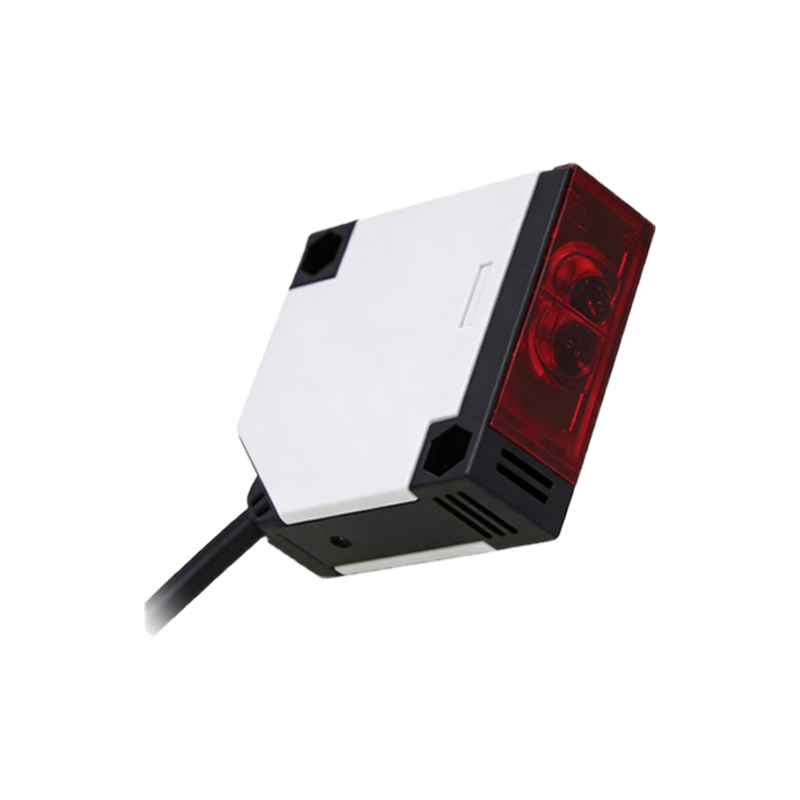
Core Components and Light Emission
The functionality of a photoelectric sensor hinges on three primary components: an emitter, a receiver, and a signal processing unit. The emitter generates a focused light beam, often in the visible red, infrared, or laser spectrum, chosen based on application requirements like range or environmental interference. For instance, infrared light is preferred in dusty settings due to its lower susceptibility to scattering. The receiver, typically a phototransistor or photodiode, detects the light and converts it into an electrical signal. Advanced sensors may incorporate modulated light signals to enhance immunity to ambient light, ensuring reliable operation under varying lighting conditions. The signal processor analyzes the received signal, comparing it to predefined thresholds to determine the object's status. This integrated design allows for real-time feedback, enabling rapid response in control systems. Emitter-receiver alignment is critical, especially in through-beam setups, where precise optics ensure accurate beam transmission and reception.
Operating Modes: Through-Beam Sensing
Through-beam photoelectric sensors, also known as opposed-mode sensors, consist of separate emitter and receiver units placed opposite each other. The emitter projects a continuous or pulsed light beam directly toward the receiver. When an object passes between them, it interrupts the beam, causing a drop in received light intensity. This interruption triggers the sensor's output to change state, signaling the object's presence. Through-beam sensors offer the longest sensing ranges and highest reliability, as they are less affected by object surface properties like color or reflectivity. They are commonly used in safety systems, such as light curtains for machine guarding, and in high-speed counting applications on conveyor belts. However, installation requires careful alignment of two separate units, which can be challenging in space-constrained environments. Regular maintenance is necessary to prevent misalignment due to vibration or thermal expansion.
Operating Modes: Retro-Reflective Sensing
Retro-reflective sensors integrate the emitter and receiver into a single housing, along with a reflector positioned opposite the sensor. The emitter sends a light beam toward the reflector, which bounces it back to the receiver. An object entering the beam path blocks the reflected light, causing the sensor to activate. This mode simplifies installation compared to through-beam sensors, as only one wiring point is needed for the sensor unit, while the reflector is passive. Retro-reflective sensors are effective for medium-range detection and are often used in packaging lines or door control systems. A key consideration is the potential for false triggers from shiny objects that may reflect light similarly to the reflector. To mitigate this, polarized filters can be employed, allowing only light with a specific polarization to be recognized, thus ignoring reflections from non-reflector surfaces.
Operating Modes: Diffuse Reflective Sensing
Diffuse reflective sensors, or proximity-mode sensors, house both emitter and receiver in one unit without an external reflector. The emitter directs light toward the target object, which reflects a portion of it back to the receiver. The sensor detects the object based on the intensity of the reflected light. This mode is highly versatile for short-range applications, such as detecting objects on assembly lines or in robotic grippers. However, performance depends on the object's surface characteristics; light-colored or reflective surfaces yield stronger signals, while dark or absorbent materials may reduce detection range. Some advanced diffuse sensors use background suppression techniques, employing triangulation to measure distance rather than reflectivity, ensuring consistent detection regardless of color. This makes them suitable for complex tasks like detecting transparent materials or varying surface finishes.
Signal Processing and Output Types
Once the receiver captures light, the signal processing unit interprets the data to determine the sensor's output. Analog outputs provide continuous voltage or current signals proportional to the received light intensity, useful for distance measurement or grayscale detection. Digital outputs, such as NPN or PNP transistors, offer discrete on/off signals for presence detection. Many sensors include programmable features, allowing users to set sensitivity thresholds, response times, or time delays via pushbuttons or software interfaces. For example, in a bottling plant, a sensor might be calibrated to ignore minor light fluctuations while reliably detecting bottles. Additionally, diagnostic functions like LED indicators or IO-Link communication enable real-time monitoring and troubleshooting, enhancing system uptime. Proper output selection aligns with controller compatibility, ensuring seamless integration into PLCs or industrial networks.
Environmental Considerations and Applications
Photoelectric sensors must operate reliably under diverse industrial conditions. Factors like ambient light, dust, moisture, and temperature variations can impact performance. Sensors with IP67 or higher ratings are sealed against dust and water ingress, suitable for washdown environments in food processing. In high-ambient-light areas, modulated light with narrow-band filters minimizes interference. Applications span from simple object detection to complex tasks: in automotive manufacturing, sensors verify part placement; in logistics, they read barcodes; in agriculture, they monitor grain levels. Emerging trends include miniaturization for compact machinery and smart sensors with embedded intelligence for predictive maintenance. By selecting the appropriate sensor type and configuring it for the environment, engineers can achieve robust, efficient automation solutions that reduce downtime and improve productivity.
Conclusion and Future Trends
Photoelectric sensors are foundational to industrial automation, offering precise, non-contact detection across numerous sectors. Their working principles, based on light emission and reception, enable flexible operation through various modes tailored to specific needs. As technology advances, sensors are becoming more intelligent, with features like Ethernet connectivity, AI-driven diagnostics, and enhanced durability for extreme conditions. The integration of IoT capabilities allows for data collection and analysis, facilitating predictive maintenance and optimized workflows. Engineers should stay informed about these developments to leverage photoelectric sensors effectively, ensuring systems remain competitive and reliable. By understanding the core mechanics and adapting to evolving applications, industries can harness light-based sensing to drive innovation and efficiency in automated processes.