Introduction to Two-Wire Proximity Sensors
In the realm of industrial automation and control systems, proximity sensors play a pivotal role in detecting the presence or absence of objects without physical contact. Among the various configurations available, the two-wire proximity sensor stands out for its simplicity and cost-effectiveness. Unlike their three-wire or four-wire counterparts, these sensors integrate seamlessly into control circuits using only two wires for both power supply and signal output. This design eliminates the need for a separate output wire, simplifying installation, reducing wiring costs, and minimizing potential failure points. They are widely employed in applications ranging from machine tooling and material handling to packaging and automotive assembly lines, where reliable, non-contact detection is paramount.
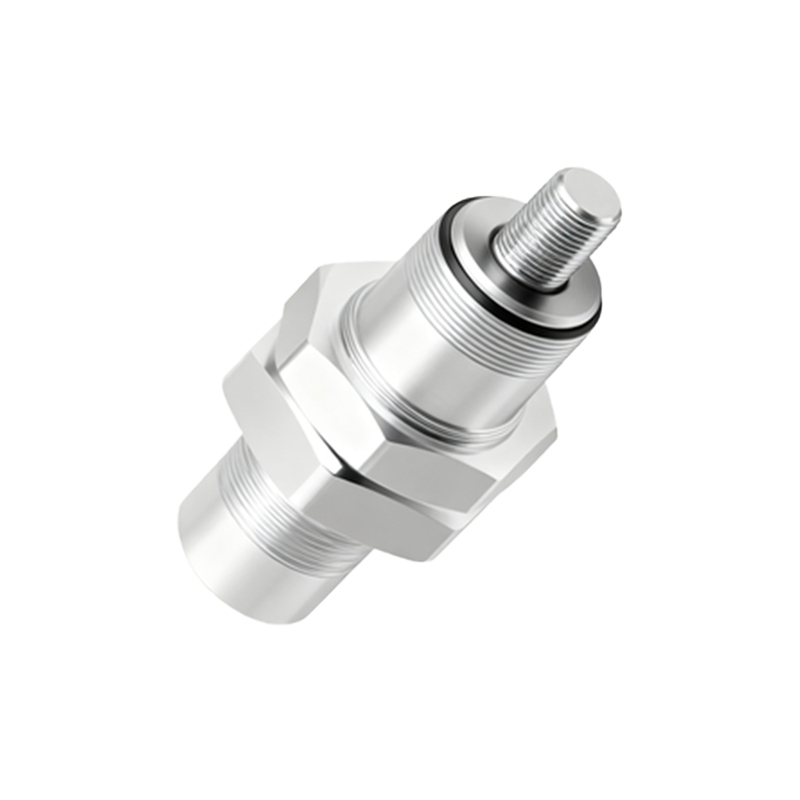
Core Operating Principle: The Oscillatory Circuit
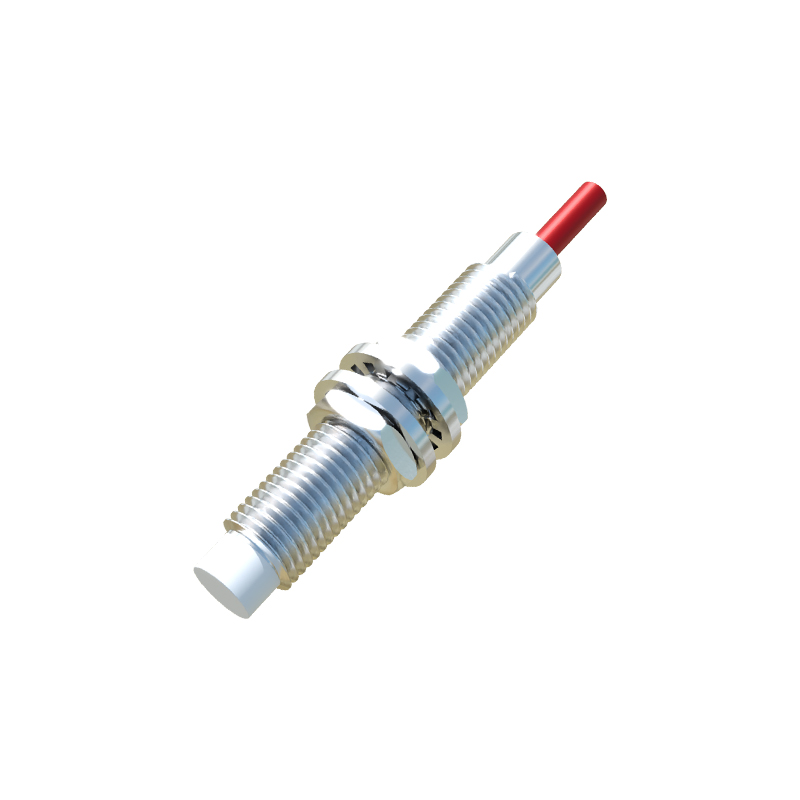
At the heart of a two-wire AC or DC proximity sensor lies an oscillatory circuit, typically based on a high-frequency oscillator. For inductive-type sensors, which detect metallic objects, the oscillator generates a high-frequency electromagnetic field that radiates from the sensor's active face. When a metallic target enters this field, eddy currents are induced on the target's surface. These eddy currents draw energy from the oscillator, causing a dampening or attenuation of the oscillations. The sensor's internal circuitry continuously monitors the amplitude of these oscillations. This change in the oscillatory state is the fundamental trigger for detection.
Signal Processing and Switching Action
The dampening of the oscillator's amplitude is not the final output. This analog change must be converted into a definitive switching action. An evaluation circuit within the sensor analyzes the amplitude level. Once the amplitude drops below a predefined threshold—indicating a target is within the specified sensing range—the circuit triggers a change of state. In a two-wire system, this change of state is manifested directly through the same two wires that provide power. The sensor effectively modulates its internal impedance or current draw to communicate its status to the connected controller, such as a Programmable Logic Controller (PLC) or a relay.
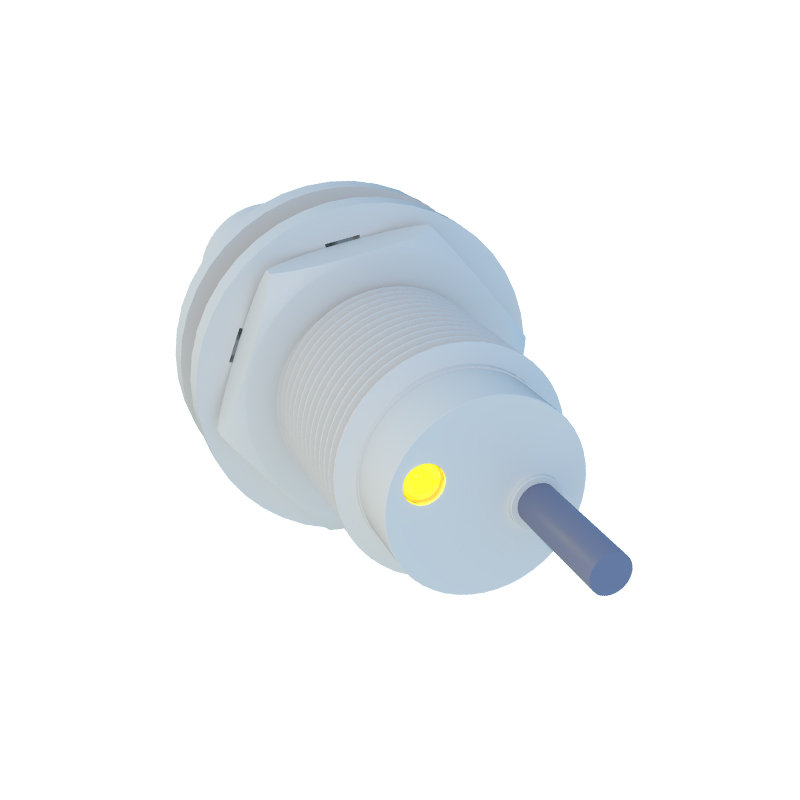
Two-Wire DC Sensor Operation
For DC (Direct Current) two-wire sensors, the operation is akin to a switch in series with the load. In the absence of a target (normal state), the sensor maintains a high impedance, allowing only a small leakage current (often less than 1.5 mA) to flow. This current is insufficient to activate the load (e.g., a PLC input). When a target is detected, the sensor switches to a low-impedance state, allowing the full circuit current to flow, which energizes the load. A crucial characteristic is the voltage drop across the sensor (saturation voltage), which must be considered to ensure sufficient voltage reaches the load. These sensors require a minimum holding current to remain activated and are polarity-sensitive, requiring correct connection to the positive and negative supply lines.
Two-Wire AC Sensor Operation
Two-wire AC (Alternating Current) sensors operate on a similar series principle but with an AC power supply. In their normal state, they exhibit high impedance, permitting only a small leakage current. Upon detection, they switch to a lower impedance state. However, a key component in AC sensors is the presence of a residual current or leakage current when in the "OFF" state. This current, typically a few milliamperes, is due to the design necessary for the internal circuitry to function. It is vital to ensure this residual current is below the holding current of any connected relay to prevent unintended activation. Some models incorporate built-in surge suppression to protect against voltage spikes common in inductive AC loads.
Key Characteristics and Advantages
The defining feature of two-wire sensors is wiring simplicity, leading to lower installation time and cost. They offer inherent short-circuit and overload protection in many designs. Their series connection makes them easy to replace and troubleshoot. However, engineers must carefully consider parameters like residual current (for AC), voltage drop (for DC), minimum holding current, and the sensor's power consumption relative to the load's requirements. The lack of a dedicated output wire means the switching signal and power are shared, which can sometimes limit application in circuits with very low current demands or require careful calculation of total circuit loads.
Application Considerations and Selection Criteria
Selecting a two-wire proximity sensor requires a thorough analysis of the application. First, determine the sensing type (inductive for metals, capacitive for non-metals). Next, choose between AC and DC versions based on the available control system voltage. Critical calculations involve verifying that the sensor's voltage drop (for DC) does not cause the load voltage to fall below its minimum operational level, and that the sensor's residual current (for AC) is below the release current of