Introduction to Diffuse Photoelectric Sensors
Diffuse photoelectric sensors, also known as diffuse reflective sensors, are a fundamental category of non-contact detection devices widely used in industrial automation. Unlike through-beam or retro-reflective sensors, diffuse sensors house both the light emitter (typically an LED) and the receiver in a single housing. The operating principle is straightforward: the emitter projects a light beam towards the target object. When the object is present within the sensing range, it reflects a portion of this light back to the receiver. The sensor's internal circuitry then detects this change in received light intensity and triggers an output signal. This self-contained design simplifies installation, as it only requires mounting on one side of the application, making it highly versatile for detecting the presence, absence, or position of objects without physical contact.
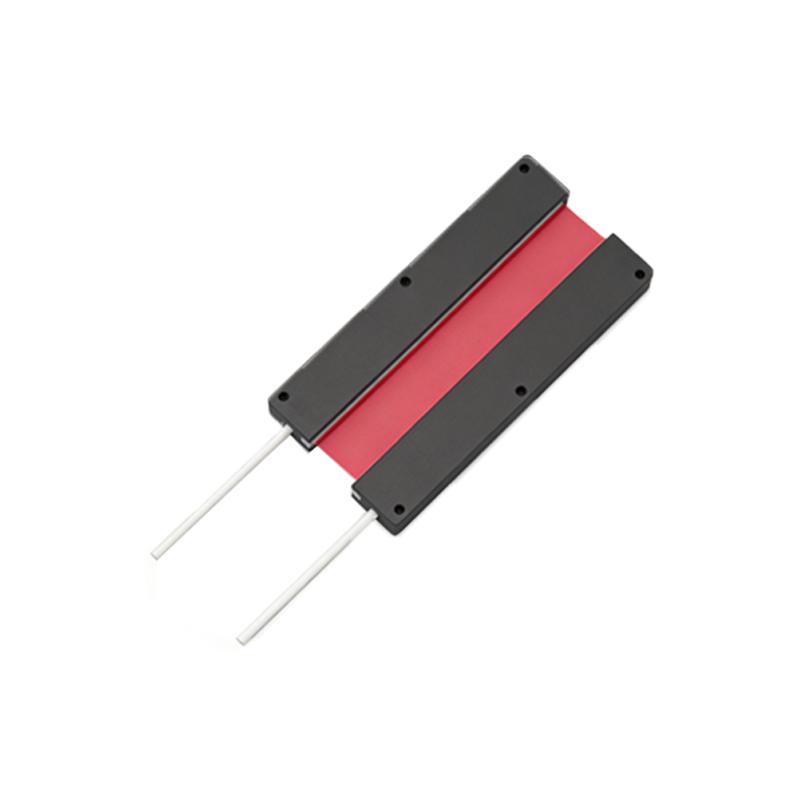
Standard Diffuse Sensors with Background Suppression
The most common type is the standard diffuse sensor. It detects objects based on the intensity of the reflected light. However, a significant limitation is its susceptibility to background interference. A dark object against a light-colored background, or a highly reflective object placed further away, can cause false triggers. To overcome this, advanced models incorporate Background Suppression (BGS) technology, also known as foreground suppression. These sensors use triangulation principles. The emitted light hits the target, and the reflected light returns at an angle to a position-sensitive detector (PSD). The sensor is calibrated to only accept light reflected from a specific, precise distance (the sensing window). Objects beyond this set range, including the background, are effectively ignored. This makes BGS sensors ideal for reliably detecting objects of varying colors and reflectivity on a conveyor belt or against a complex backdrop.
Fixed-Field and Adjustable-Field Background Suppression
Within the BGS category, there are two main sub-types: fixed-field and adjustable-field. Fixed-field BGS sensors have a pre-defined, narrow sensing window. The switching point is factory-set and cannot be changed, offering high precision and stability for applications with a constant detection distance. Adjustable-field BGS sensors provide a potentiometer or teach-in function, allowing the user to set the exact sensing distance within a specified range. This flexibility is invaluable for applications where the target distance may vary or for fine-tuning the sensor to ignore a specific background object. The adjustable field allows for optimal setup directly in the application environment, enhancing versatility.
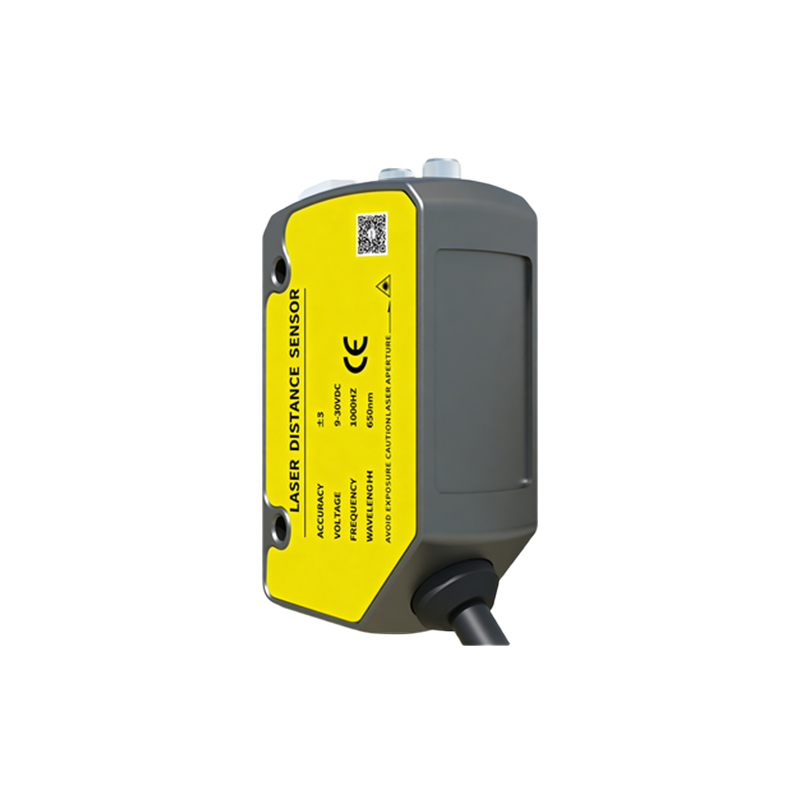
Diffuse Sensors with Contrast Detection
Contrast sensors are a specialized form of diffuse sensor designed to detect differences in contrast, such as a black mark on a white package or a label on a bottle. They evaluate the amount of light reflected from the object's surface. The sensor is typically "taught" two values: one for the background (e.g., the white package) and one for the mark (e.g., the black line). It then triggers an output when the reflected light intensity matches the taught mark value. These sensors are extremely sensitive and are crucial in packaging, printing, and labeling applications for precise registration, mark verification, and edge detection. Their high resolution allows them to detect very small contrasts at high speeds.
Color Detection and Color Recognition Sensors
Building upon contrast detection, color sensors represent a more sophisticated type of diffuse photoelectric sensor. Basic color detection sensors can distinguish between a few colors, often by using multiple LEDs that emit light at different wavelengths (e.g., red, green, blue). The sensor analyzes the composition of the reflected light to determine if it matches a pre-taught color. More advanced color recognition sensors can identify and differentiate a wide spectrum of colors. They are used for sorting applications, verifying product color, checking assembly completeness (e.g., presence of a red wire), and quality control where color is a critical parameter. Their ability to function independently of object surface structure and brightness makes them powerful tools.
Laser-Based Diffuse Sensors for Precision
While many diffuse sensors use standard visible red or infrared LEDs, laser-based diffuse sensors utilize a focused laser beam. This provides significant advantages: a very small, precise spot size, excellent resolution, and a long sensing range from a compact housing. The coherent laser light allows for accurate detection of tiny objects, precise edge positioning, and reliable operation even with low-reflectivity targets. Laser diffuse sensors, often with background suppression, are employed in high-precision manufacturing, electronics assembly, and semiconductor handling where accuracy is paramount. Safety precautions regarding laser class (typically Class 1 or 2) must always be observed.
Key Application Areas in Industry
The applications for diffuse photoelectric sensors are vast. In material handling, they detect boxes, bottles, and totes on conveyors. In packaging machinery, they count products, detect fill levels, and verify label presence. Automotive assembly lines use them for part presence verification and robot guidance. In electronics manufacturing, they position circuit boards and detect miniature components. Contrast sensors are indispensable in printing and labeling, while color sensors streamline sorting processes in food and pharmaceutical industries. Their robustness, reliability, and non-contact nature make them a cornerstone of modern automated systems.
Selecting the Right Diffuse Sensor
Choosing the appropriate diffuse sensor requires careful analysis of the application. Key factors include: sensing distance (required range and the influence of object color/material), object properties (size, color, reflectivity, material), background conditions (necessitating standard or BGS type), required response speed and output type (PNP/NPN, analog, IO-Link), environmental conditions (IP rating, resistance to chemicals, temperature range), and mounting constraints. For challenging detection tasks involving varying colors or problematic backgrounds, a sensor with background suppression or color sensing capability is almost always necessary. Consulting sensor datasheets and, when in doubt, testing a sample unit in the actual application is highly recommended for optimal results.