In the world of industrial automation and smart electronics, the ability to detect the presence or absence of an object without physical contact is fundamental. Among the various technologies enabling this capability, circular proximity sensors stand out for their reliability, versatility, and widespread use. These sensors, characterized by their typically cylindrical housing, operate on the principle of generating an electromagnetic field or beam and detecting changes caused by a target object entering this field. This non-contact detection method offers significant advantages, including no mechanical wear, high switching frequency, and the ability to function in harsh environments where dirt, oil, or moisture might compromise other sensing mechanisms.
The core technology behind most circular inductive proximity sensors is electromagnetic induction. Inside the sensor's face, a coil is fed with a high-frequency alternating current, generating an oscillating electromagnetic field. When a metallic object enters this active field, eddy currents are induced on the object's surface. These currents absorb energy from the oscillator circuit, causing a change in its amplitude. This change is detected by the sensor's evaluation circuit, which then triggers a solid-state switch to change the output state. The sensing range, or nominal sensing distance (Sn), is a key specification and is defined for a standard target, usually a square of mild steel. It's crucial to note that the sensing distance can vary for different metals; for instance, aluminum and copper typically have a reduced effective sensing range compared to steel due to their different electrical properties.
Beyond the common inductive type used for metals, circular housings are also used for other proximity sensing technologies. Capacitive proximity sensors, which can detect both metallic and non-metallic materials like liquids, plastics, or wood, often share a similar cylindrical form factor. They work by measuring changes in capacitance between the sensor's active face and the ground. Photoelectric sensors with a circular barrel design emit a beam of light (visible red, infrared, or laser) and detect its reflection or interruption to sense objects at greater distances. The choice of technology—inductive, capacitive, or photoelectric—depends entirely on the application's material detection requirements.
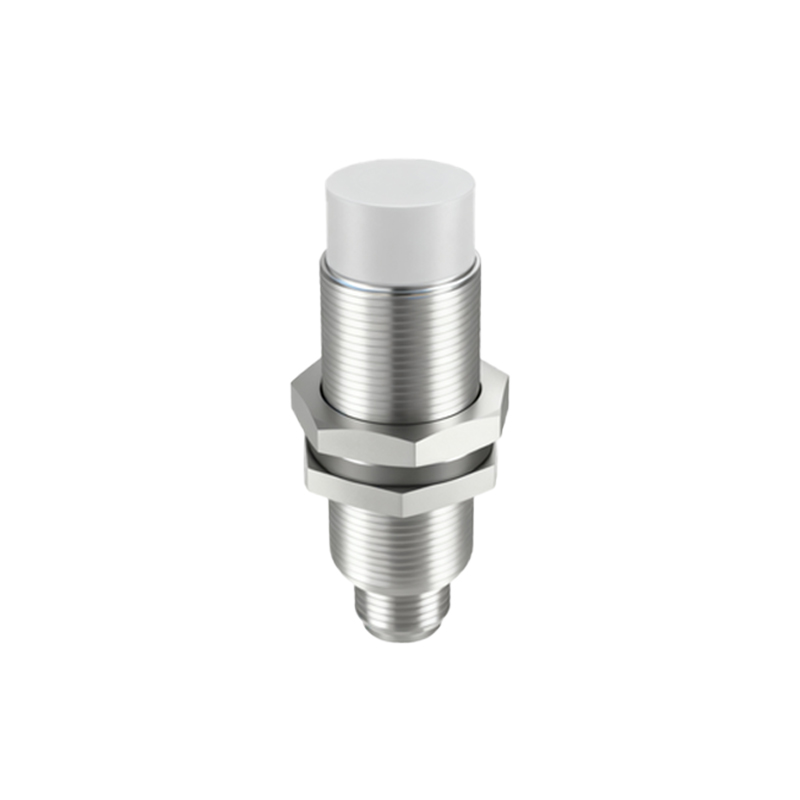
The applications for circular proximity sensors are vast and cross-industrial. In manufacturing, they are ubiquitous on assembly lines for part detection, counting, and position verification. They ensure robotic arms pick up components correctly, confirm the closure of machine guards for safety, and monitor the end position of cylinders in pneumatic systems. In the automotive industry, thousands of these sensors monitor processes from welding to painting. In packaging machinery, they detect the presence of bottles, cans, or boxes on conveyors. Their robust construction, often featuring housings made of nickel-plated brass, stainless steel, or PBT plastic, allows them to withstand vibration, temperature extremes, and exposure to coolants or washdowns, making them ideal for heavy machinery and food & beverage processing.
Selecting the right circular proximity sensor requires careful consideration of several parameters. First, identify the target material to choose between inductive, capacitive, or photoelectric technology. Next, determine the required sensing distance and ensure you account for installation and temperature derating factors. The sensor's diameter, which often correlates with its sensing range, must fit the mechanical constraints. Electrical characteristics are critical: the operating voltage (e.g., 10-30V DC or 90-250V AC), output type (NPN sinking, PNP sourcing, or NO/NC contacts), and current rating must match the control system. Environmental ratings, particularly the Ingress Protection (IP) code like IP67 or IP69K, indicate resistance to dust and water. Finally, special features like weld-field immunity (for resisting interference from welding equipment), flush or non-flush mounting capability, and short-circuit protection can be decisive for challenging applications.
Installation and wiring are straightforward but demand attention to detail. For inductive sensors, maintaining the correct clearance from surrounding metal (the lateral and front-side clearance specified in datasheets) prevents false triggering. Proper shielding and grounding minimize electrical noise interference in industrial settings. Regular maintenance is minimal but should include periodic cleaning of the sensing face to remove debris that could attenuate the sensing field and checking for physical damage to the housing or cable.
As Industry 4.0 and the Industrial Internet of Things (IIoT) advance, circular proximity sensors are evolving. Modern variants now integrate IO-Link communication, a point-to-point serial connection that goes beyond simple switching. IO-Link enables the transmission of detailed device parameters, process data like signal strength, and diagnostic information (e.g., operating hours, temperature warnings) directly to the controller. This facilitates predictive maintenance, easier device replacement, and richer data collection for process optimization, while maintaining backward compatibility with standard switching functionality.
In conclusion, the circular proximity sensor remains a cornerstone of industrial sensing. Its simple, robust design belies a sophisticated and reliable technology that solves countless detection tasks. By understanding the operating principles, key