What is an Inductive Proximity Sensor?
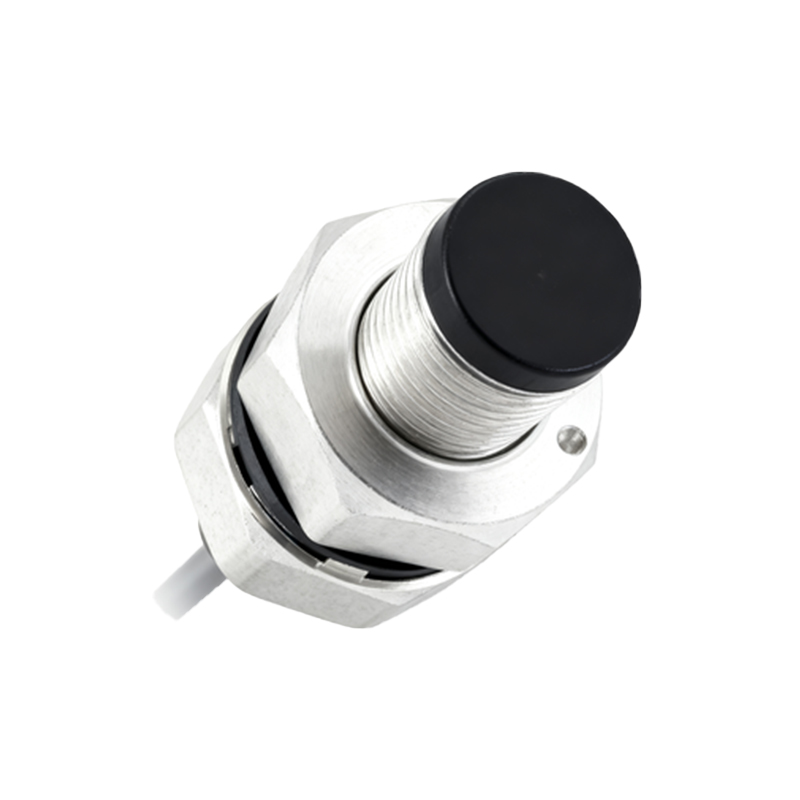
An inductive proximity sensor is a non-contact electronic device designed to detect the presence or absence of metallic objects within its sensing range without any physical contact. Operating on the principle of electromagnetic induction, these robust sensors are fundamental components in industrial automation, manufacturing, and control systems. They are highly valued for their reliability, long operational life, and ability to function in harsh environments where dust, oil, or moisture are present. Unlike photoelectric or capacitive sensors, inductive sensors specifically target ferrous and non-ferrous metals, making them indispensable for tasks like counting, positioning, and monitoring in metal-intensive processes.
Core Working Principle: Electromagnetic Induction
The fundamental operation hinges on Faraday's Law of electromagnetic induction. The core of the sensor contains an oscillator circuit that generates a high-frequency alternating electromagnetic field. This field radiates from the sensor's active face, typically made of a ferrite core surrounded by a coil. When a metallic target enters this oscillating field, eddy currents are induced on the surface of the target. These eddy currents create their own magnetic field, which opposes the original field generated by the sensor's coil. This opposition results in a loss of energy or a "damping" effect within the oscillator circuit.
Oscillator Damping and Signal Processing
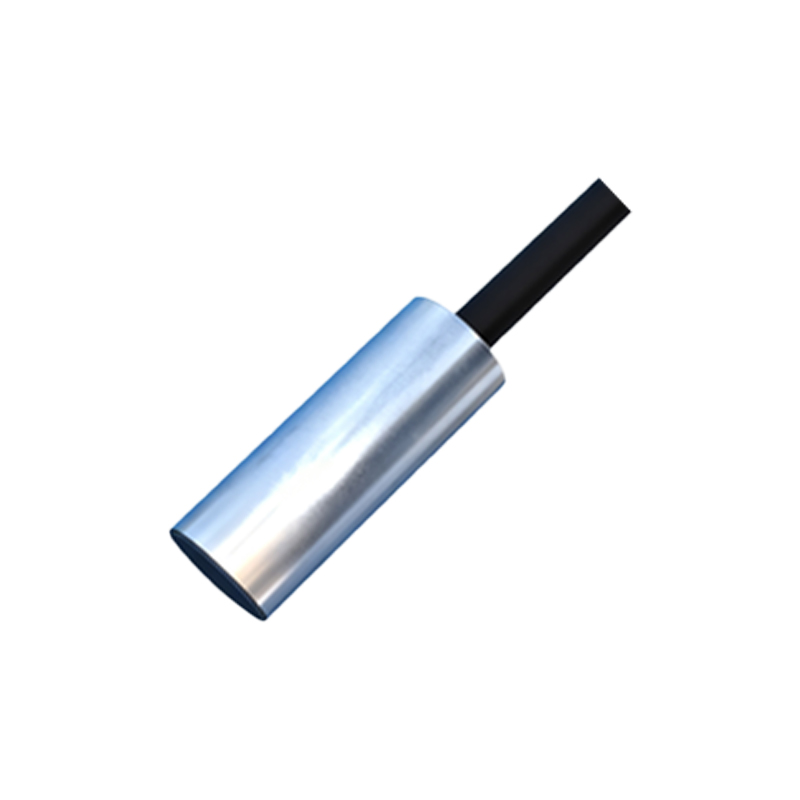
The damping effect caused by the eddy currents leads to a reduction in the amplitude of the oscillator's oscillations. An integrated evaluation circuit continuously monitors this amplitude. Once the amplitude drops below a predefined threshold—indicating a metal object is within the nominal sensing distance—the circuit triggers a change in the sensor's output state. This output is typically a solid-state switch (like an NPN or PNP transistor) that can control a load such as a PLC input, relay, or indicator lamp. The sensor returns to its original state once the target moves out of the sensing range, allowing the oscillator amplitude to recover.
Key Components and Construction
A standard inductive proximity sensor comprises several key components. The coil and ferrite core form the oscillator tank circuit, generating the detection field. The oscillator itself is a high-frequency circuit, often in the range of hundreds of kHz. The trigger circuit detects the amplitude change, and the output amplifier switches the solid-state device. Finally, a housing, usually made of nickel-plated brass, stainless steel, or PBT plastic, encapsulates and protects the internal electronics. The design is inherently rugged, with no moving parts, contributing to exceptional durability and resistance to mechanical wear.
Factors Influencing Sensing Distance
The nominal sensing distance (Sn) is a critical specification, but the actual detection range can be influenced by several factors. The target material is primary; steel (ferrous) provides the standard sensing distance, while metals like aluminum, copper, or brass have reduced effective ranges due to differences in electrical conductivity and permeability. Target size and shape also matter; a target smaller than the sensor's face or too thin may not be detected at the full nominal distance. Additionally, the installation environment, such as the presence of other metal surfaces nearby (mounting in metal), can require a derating of the sensing distance to prevent false triggers.
Types of Inductive Proximity Sensors
Beyond the standard shielded (flush-mountable) and unshielded (non-flush) types, specialized variants exist. Factor 1 sensors are the standard type with a defined reduction factor for non-ferrous metals. All-metal sensors, or factor 1 sensors, offer approximately the same sensing distance for all metals, simplifying application design. Wear-resistant sensors feature a special ceramic face for applications with abrasive targets. Analog or analog-output sensors provide a continuous signal (e.g., 4-20mA or 0-10V) proportional to the distance to the target, enabling precise position measurement, not just detection.
Typical Industrial Applications
The applications are vast across factory automation. They are used for simple object detection on conveyor lines, such as verifying the presence of a metal part. Position sensing is common, like detecting the end-of-travel of a cylinder piston (which often has a built-in metal ring). They serve as non-contact limit switches in machinery. In rotary applications, they can detect gear teeth or holes in metal disks for speed monitoring or indexing. Metal part counting, jam detection, and checking for broken tools (like drill bits) are other critical uses that enhance process reliability and safety.
Advantages and Limitations
The primary advantages include non-contact operation, high switching frequency (allowing detection of very fast-moving objects), insensitivity to non-metallic materials, and exceptional robustness. They require no maintenance and are resistant to environmental contaminants. However,