Introduction to Photoelectric Sensors
Photoelectric sensors are indispensable components in modern industrial automation, offering non-contact detection of objects based on the modulation of light. These devices operate by emitting a light beam—typically infrared, visible red, or laser—and detecting changes in the received light intensity caused by the presence, absence, or specific characteristics of a target object. Their versatility allows for applications ranging from simple object detection on conveyor belts to complex tasks like color recognition, distance measurement, and label verification. The core principle involves a transmitter (light source) and a receiver (photodetector), which can be configured in through-beam, retro-reflective, or diffuse (proximity) modes, each suited to different sensing distances and environmental conditions. Their reliability, fast response times, and ability to detect a wide variety of materials (including glass, metal, plastic, and liquids) make them superior to mechanical limit switches in many scenarios, especially in harsh environments where physical contact is impractical or could cause wear.
Key Models and Their Technical Specifications
The market offers a diverse range of photoelectric sensor models, each engineered for specific operational demands. Through-beam sensors, such as the Omron E3Z-T61 series, consist of separate emitter and receiver units. They provide long sensing ranges (up to 20 meters or more), high immunity to environmental interference, and are ideal for precise detection in packaging or material handling. Retro-reflective models, like the Sick WL12-2P243, incorporate both emitter and receiver in a single housing and use a reflector to bounce the light back. They offer medium-range detection (typically up to 5-10 meters) and are commonly used in automated storage systems. Diffuse or proximity sensors, exemplified by the Banner Q45 series, detect objects by measuring the light reflected directly from the target's surface. They have shorter ranges (a few centimeters to a meter) but are compact and easy to install for tasks like part positioning or counting. Specialized variants include background suppression sensors for ignoring distant backgrounds, color sensors for differentiation, and fiber optic sensors for extremely confined spaces or high-temperature areas. Key specifications to evaluate include sensing distance, light source type (modulated LED or laser), response time, output type (PNP/NPN, analog, IO-Link), and environmental ratings (IP67, IP69K for washdown).
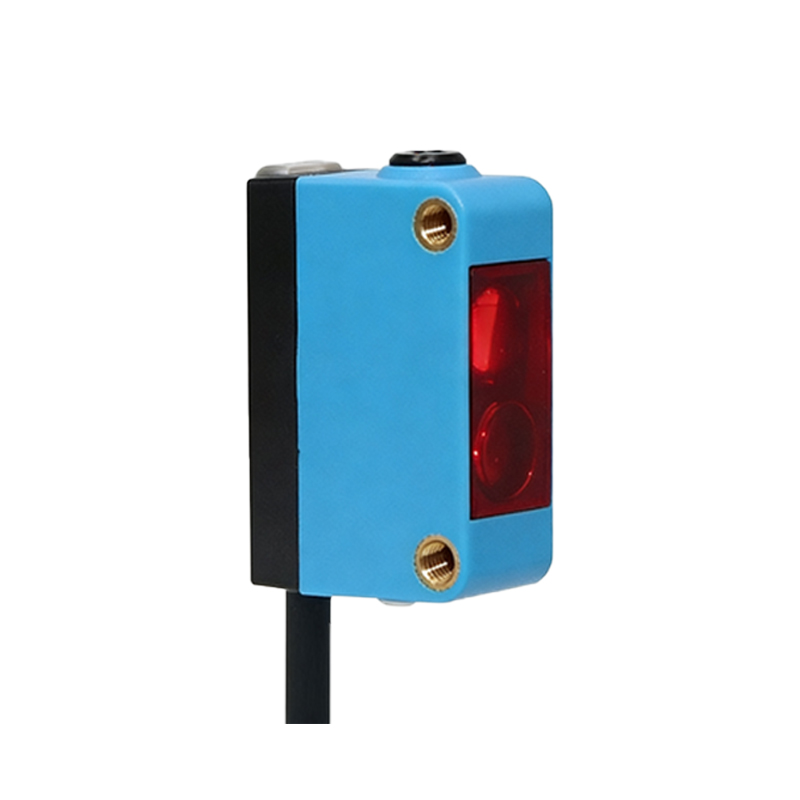
Visual Guide: Sensor Images and Installation Diagrams
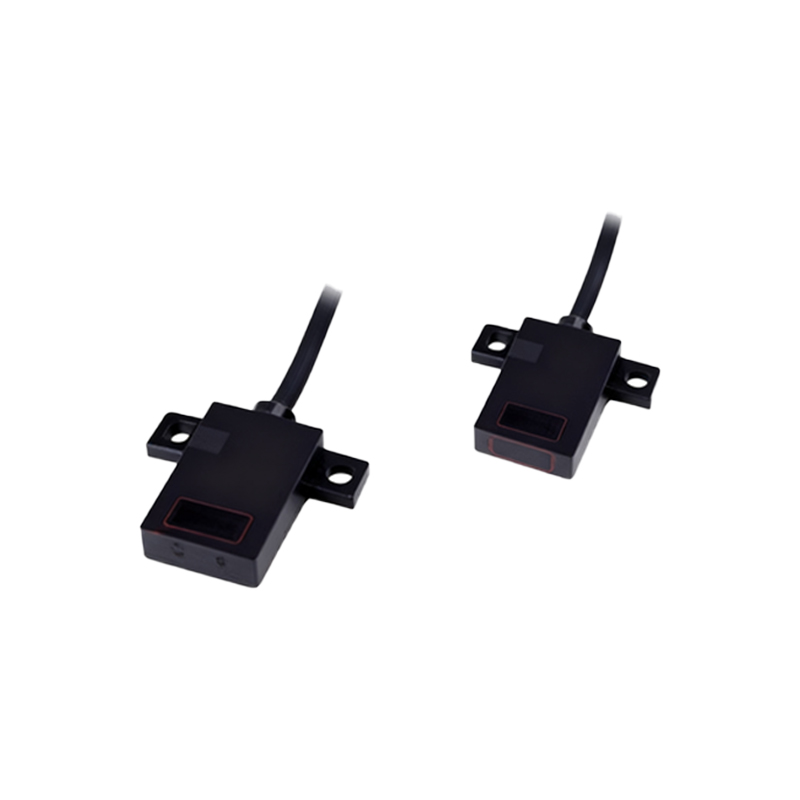
A visual reference is crucial for understanding sensor design and proper integration. Standard cylindrical housings, like those of the IFM O5D series, are common for diffuse sensors and feature an LED indicator for status. Rectangular housings, such as on the Keyence FU-35, often provide multiple sensing modes in one unit. Through-beam sensors are typically shown as two separate, aligned devices. Accompanying diagrams illustrate critical installation parameters: the optimal mounting distance, alignment angles for through-beam and retro-reflective types, and the concept of the "sensing window" or "spot size" for diffuse models. Images also highlight protective features like built-in M12 connectors, metal or plastic threaded barrels, and transparent protective windows for the lens. For complex setups, wiring diagrams detail connections to PLCs (Programmable Logic Controllers), showing the standard brown (24V DC+), blue (0V DC-), and black (output) wires. Proper visualization aids in avoiding common pitfalls like misalignment, sensing beam obstruction, or incorrect mounting relative to the target material's reflectivity.
Selection Criteria for Optimal Performance
Choosing the correct photoelectric sensor model requires a systematic analysis of the application. First, define the detection task: Is it presence/absence, counting, positioning, or edge detection? Next, consider the target properties: size, color, material (opaque, translucent, shiny), and expected movement speed. The operating environment is critical; factors like ambient light (sunlight, welding arcs), dust, fog, steam, or temperature extremes may necessitate sensors with specific spectral filters, polarized lenses, or high IP ratings. Required sensing distance directly dictates the sensor type: long-range for through-beam, medium for retro-reflective, and short-range for diffuse. For challenging backgrounds, a background suppression or true background suppression sensor is essential. Connectivity and smart features are increasingly important; sensors with IO-Link capability enable parameter setting, condition monitoring, and digital integration into Industry 4.0 networks. Finally, consider mechanical constraints like available space, required mounting brackets, and need for adjustability.
Maintenance, Troubleshooting, and Industry Trends
Ensuring long-term reliability involves routine maintenance and effective troubleshooting. Regularly clean the sensor lens with a soft cloth to prevent buildup of dust, oil, or debris that can scatter or attenuate the light beam. Periodically verify alignment, especially for through-beam systems subject to vibration. Common issues include no output signal, intermittent operation, or shortened sensing range. Troubleshooting steps involve checking power supply voltage, inspecting wiring for damage, verifying the target is within the sensing field, and using the sensor's built-in stability indicator LED. If a retro-reflective sensor fails, the reflector might be dirty or misaligned. For diffuse sensors, a highly reflective or absorbent target may require sensitivity adjustment. The industry is moving towards miniaturization, increased intelligence, and enhanced connectivity. New models integrate advanced diagnostics, higher precision laser sources for micrometer-level accuracy, and robust designs for collaborative robot (cobot) applications and hygienic environments in food & beverage or pharmaceutical manufacturing.