Introduction to M18 Non-Cabled Proximity Sensors
M18 proximity sensors without cables represent a significant evolution in industrial sensing technology. These compact, cylindrical devices, measuring 18 millimeters in diameter, are designed to detect the presence or absence of metallic or non-metallic objects without any physical contact. The defining characteristic of this variant is the absence of an integrated, fixed cable. Instead, they feature standardized connection points, such as an M12 quick-disconnect plug-in connector or terminal blocks. This design philosophy offers unparalleled flexibility for system integrators and maintenance teams. By decoupling the sensor from a permanent cable harness, installations become cleaner, more modular, and significantly easier to service or replace. The M18 form factor itself is an industry standard, prized for its robust housing, typically made of nickel-plated brass or stainless steel, which provides excellent resistance to mechanical impacts, coolant, and oils commonly found in harsh manufacturing environments like CNC machining centers, automated assembly lines, and material handling systems.
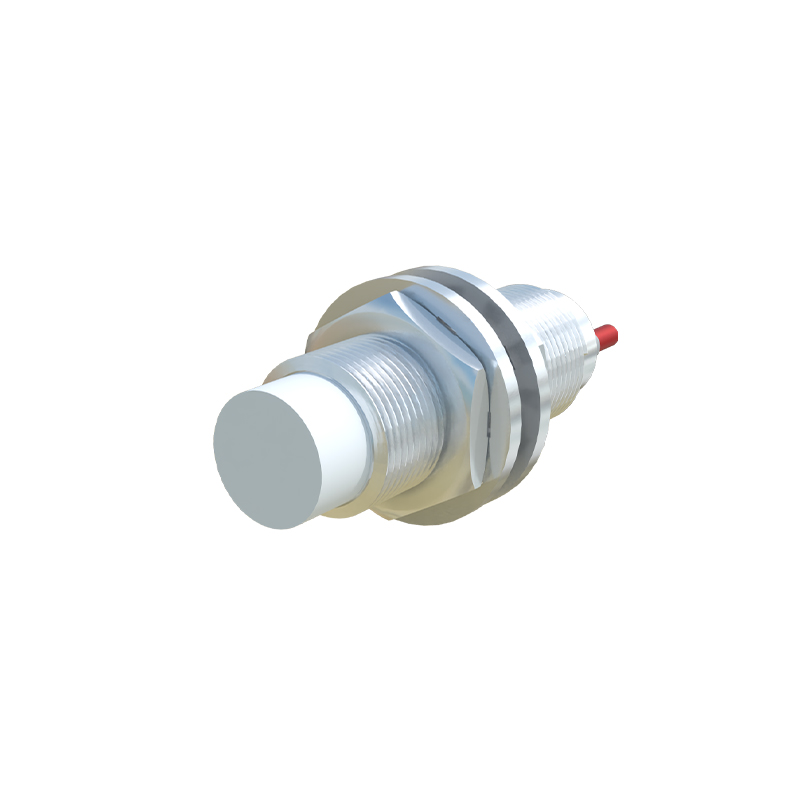
Key Advantages of Cable-Free Design
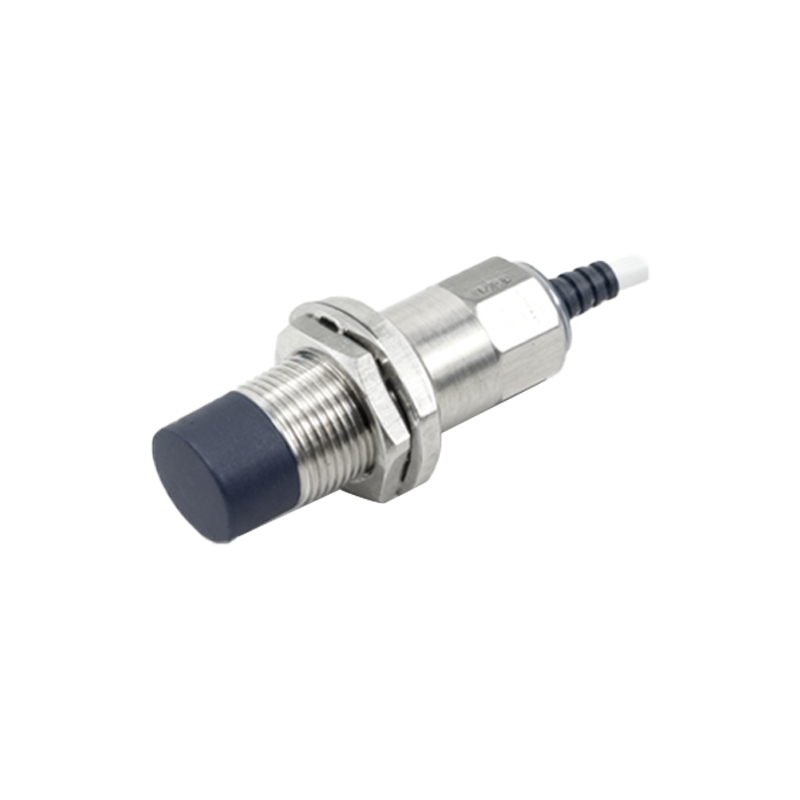
The primary benefit of opting for an M18 proximity sensor without a fixed cable lies in its logistical and operational superiority. First, inventory management is simplified. A facility can stock a smaller number of sensor bodies and keep a separate inventory of various cable lengths and connector types. This reduces the number of distinct part numbers needed on the shelf. Second, installation and replacement times are drastically reduced. A technician can simply unplug a faulty sensor and plug in a new one without dealing with wire stripping, crimping, or conduit routing. This minimizes machine downtime. Third, it enhances design flexibility. Engineers can select the exact cable length and type (e.g., PVC, PUR for oil resistance, or highly flexible) required for each specific application, avoiding excess cable clutter or the need for extensions. Finally, it improves reliability. The connection point is often more robust and protected than a spliced cable joint, reducing failure points caused by wire fatigue or poor terminations.
Technical Specifications and Sensing Principles
M18 non-cabled proximity sensors are available in all standard sensing technologies. Inductive sensors are the most common, capable of detecting ferrous and non-ferrous metals. They operate on the principle of electromagnetic induction, where an oscillator creates a high-frequency field. When a metallic target enters this field, it causes a change in oscillation amplitude, which is detected by the sensor's circuitry. Key specifications include sensing distance, typically up to 8mm for a standard M18 inductive sensor, with factors like target material and size affecting the actual range. Capacitive sensors, which can detect both metallic and non-metallic materials (like plastics, wood, or liquids), are also available in M18 housings. They function by measuring changes in capacitance between the sensor's face and the target. All variants come with output options such as NPN (sinking), PNP (sourcing), or NO/NC (normally open/normally closed) configurations, compatible with PLCs and other control systems. They are rated for specific supply voltages, commonly 10-30V DC, and feature LED status indicators.
Common Industrial Applications
The application scope for M18 cable-free proximity sensors is vast across factory automation. They are extensively used for position verification. For instance, confirming a cylinder has fully extended or retracted in a pneumatic system, or detecting the presence of a part in a fixture or on a conveyor. In packaging machinery, they count products, monitor fill levels in hoppers (using capacitive types), or ensure carton flaps are properly folded. Within automotive assembly, these sensors provide precise feedback for robotic tooling, verify component placement, and act as safety interlocks on guarding systems. The cable-free design is particularly advantageous in applications requiring frequent sensor reconfiguration or in tight spaces where routing a pre-attached cable would be problematic. Machine tool builders favor them for tool breakage detection, spindle positioning, and pallet shuttle verification.
Installation and Wiring Considerations
Proper installation is critical for optimal performance. The sensor must be mounted securely using its standard locknut, ensuring it is not subjected to excessive side load or impact from the target. The sensing face should be positioned parallel to the target surface, maintaining the specified nominal sensing distance with an appropriate safety margin. For inductive sensors, it is crucial to account for the reduction factor when sensing non-ferrous metals like aluminum or copper, which reduces the effective sensing range. When wiring, the correct mating connector (e.g., M12 4-pin or 5-pin) must be selected based on the sensor's pinout (PNP vs. NPN, 2-wire vs. 3-wire). The cable shield should be properly grounded at the control