Understanding the Core Technology
Photoelectric sensors are a cornerstone of industrial automation, utilizing a light emitter and receiver to detect the presence, absence, or distance of objects. Their operation hinges on the modulation of light—typically infrared, visible red, or laser—and its subsequent reception. The fundamental principle involves the emitted light beam being either interrupted, reflected, or retro-reflected, with the receiver detecting this change in light intensity. This non-contact detection method offers significant advantages over mechanical switches, including higher reliability, faster response times, and no physical wear from target interaction. The choice of light source and modulation technique directly impacts sensing range, environmental immunity, and application suitability, forming the basis for categorizing these versatile devices.
Through-Beam Sensors: The Gold Standard for Range and Reliability
Ranking highest for long-range detection and unwavering reliability in challenging environments are through-beam (or opposed) sensors. This category consists of two separate units: a transmitter and a receiver positioned opposite each other. Detection occurs when the target object breaks the light beam path. This configuration provides the longest possible sensing distances, often exceeding 100 meters for high-power models, and exceptional stability. Because the receiver detects the direct light from the transmitter, it is largely immune to target surface color, reflectivity, or finish. They are the premier choice for precise object counting, high-speed production line monitoring, and safety curtains where absolute detection certainty is paramount, despite the need for wiring and alignment of two separate components.
Retro-Reflective Sensors: Balancing Performance and Simplicity
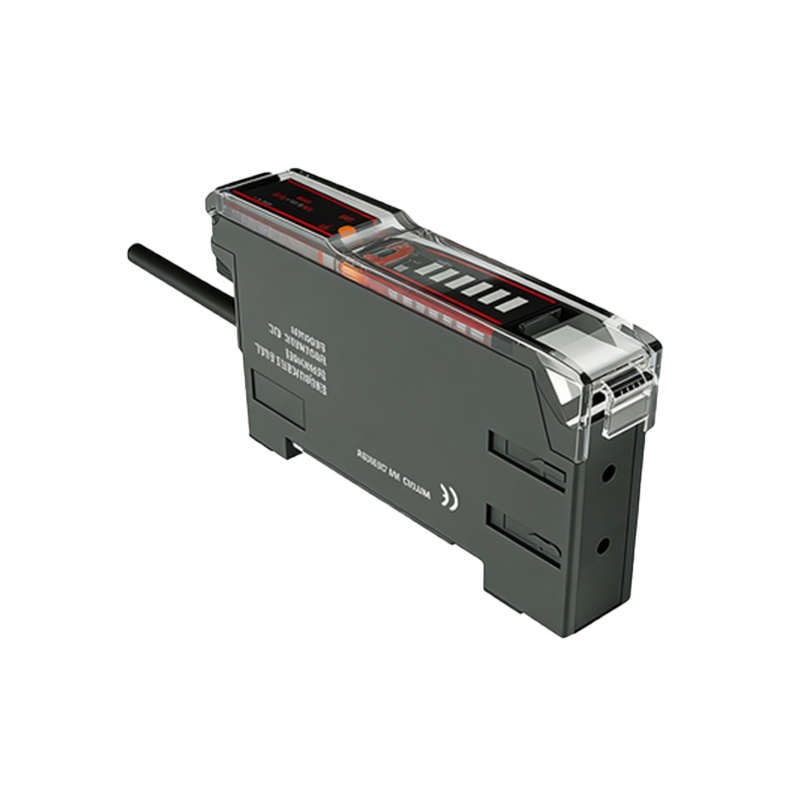
A close contender in the rankings for general-purpose applications is the retro-reflective sensor. This category houses both emitter and receiver in a single housing, simplifying installation. It operates by bouncing the emitted light off a specialized reflector, such as a corner-cube retroreflector, which returns the beam directly to the receiver. An object is detected when it interrupts this return beam. These sensors offer a good balance of range (typically up to 10-15 meters) and setup convenience. A key feature is the polarization filter, which allows the sensor to ignore light reflected from shiny objects, preventing false triggers. They are highly ranked for pallet detection, conveyor gate control, and medium-range applications where through-beam installation is impractical.
Diffuse Reflective Sensors: The Ultimate in Single-Point Convenience
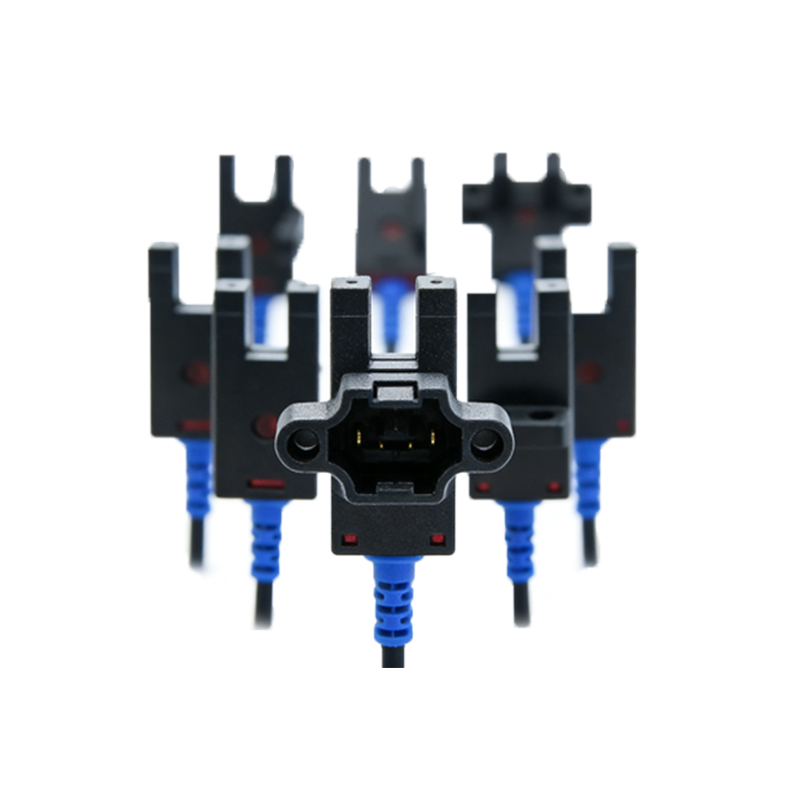
Ranking as the most compact and easiest to install are diffuse reflective (or proximity) sensors. In this category, both optical components are in one unit, and detection relies on the light diffusing off the target object itself. The sensor detects the brightness of the reflected light. This eliminates the need for a separate reflector or receiver unit, allowing for extremely flexible mounting. However, this convenience comes with trade-offs: shorter sensing ranges (from a few centimeters to about 2 meters) and sensitivity to the target's color, material, and surface texture. Dark, matte, or absorbent surfaces significantly reduce the effective sensing distance. They are top-ranked for applications like detecting objects on a conveyor belt, bottle cap presence, or short-range material handling where target properties are consistent.
Background Suppression and Fixed-Field Sensors: Precision Experts
A specialized but highly ranked category for precision tasks includes Background Suppression (BGS) and Fixed-Field sensors. These are advanced types of diffuse sensors designed to ignore objects beyond a set distance. BGS sensors use triangulation principles to measure the angle of the reflected light, allowing them to detect an object only within a precise, user-defined range while ignoring the background. Fixed-field sensors use optics to create a sharp, defined sensing zone. They excel in applications where the target must be detected at a specific position regardless of color or against a variable background, such as in packaging machinery, robot picking, and assembly verification. Their precision commands a high ranking for complex detection scenarios.
Fiber Optic Sensors: Masters of Harsh and Confined Spaces
Earning a top ranking for extreme environments and micro-detection are fiber optic photoelectric sensors. These systems separate the amplifier (containing the electronics) from the sensing point via flexible fiber optic cables. The tiny sensing heads, immune to electrical noise, heat, and chemicals, can be threaded into incredibly tight spaces, exposed to vacuums, or placed in washdown areas. Different tip configurations (through-beam, diffuse, etc.) can be attached to the fibers. While the sensing range is limited by the fiber type, their unparalleled ability to operate in hostile conditions—inside machinery, in explosive atmospheres (with appropriate approval), or for detecting minute components—secures their elite status for specialized industrial challenges.
Laser Sensors: The Pinnacle of Accuracy and Resolution
At the pinnacle of the ranking for precision measurement and detection of minute details are laser photoelectric sensors. Utilizing a highly focused, coherent laser beam, these sensors provide extremely small spot sizes even at long distances. This allows for the detection of very small objects, precise edge detection, and accurate distance measurement via time-of-flight or triangulation principles. Laser sensors are less affected by ambient light and can achieve superior performance in demanding applications like semiconductor wafer handling, transparent object detection, web guiding, and high-accuracy positioning. Their superior resolution and accuracy justify their top-tier ranking and cost for applications where other sensor types fall short.