Introduction to the LJ3A3-0.8-ZBY Proximity Sensor
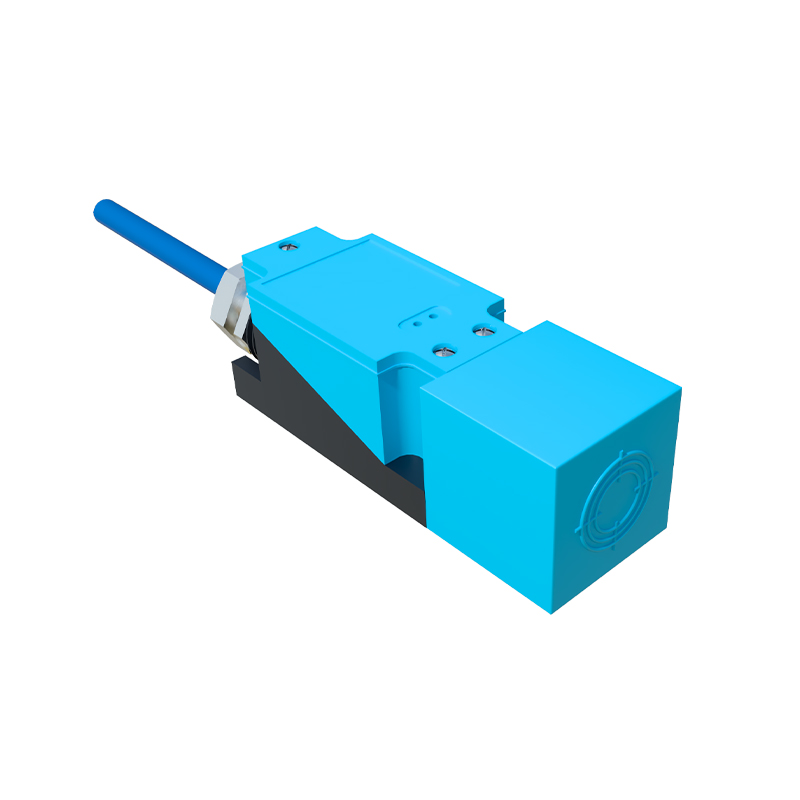
The LJ3A3-0.8-ZBY is a widely recognized inductive proximity sensor designed for robust industrial automation applications. As a cylindrical, shielded-type sensor, it offers a compact form factor with an 8mm sensing distance. Engineered for high reliability, this sensor operates on a DC supply and features a normally open (NO) PNP output configuration, making it compatible with a broad range of programmable logic controllers (PLCs) and control systems. Its primary function is to detect the presence or absence of metallic objects without physical contact, thereby ensuring wear-free operation and long service life in demanding environments such as assembly lines, packaging machinery, and material handling systems.
Detailed Technical Specifications and Operating Principles
Operating on the principle of electromagnetic induction, the LJ3A3-0.8-ZBY generates an oscillating electromagnetic field from its sensing face. When a ferrous or non-ferrous metal target enters this field, eddy currents are induced, causing a change in the oscillation amplitude. This change is detected by the internal circuitry, which subsequently switches the solid-state output. Key specifications include a rated operating voltage range of 10-30V DC, a maximum switching current of 200mA, and a switching frequency of approximately 1kHz. The sensor is characterized by its short-circuit and reverse polarity protection, enhancing its durability against common electrical installation errors. The "ZBY" suffix typically indicates specific terminal connection type and housing material details, which should be verified against the manufacturer's datasheet for precise application matching.
Key Features and Performance Advantages
The LJ3A3-0.8-ZBY stands out due to several performance advantages. Its shielded (flush-mountable) design allows for installation flush with metal surfaces without loss of sensing range, providing significant flexibility in mechanical integration. The sensor boasts high environmental resistance, typically rated at IP67, which signifies complete protection against dust ingress and the ability to withstand temporary immersion in water. This makes it suitable for washdown areas in food processing or outdoor applications. Furthermore, its stable performance across a wide temperature range and immunity to ambient light or acoustic noise ensures consistent detection accuracy. The LED status indicator is a practical feature for quick diagnostics and commissioning, signaling both power presence and output activation.
Typical Industrial Applications and Use Cases
This proximity sensor finds extensive use across various industrial sectors. In automotive manufacturing, it is employed for part presence verification on conveyor systems, robot arm positioning, and end-of-travel detection in actuators. Within the packaging industry, it reliably counts metallic items, controls filling levels, and monitors cap placement on bottles. In CNC machining centers, the LJ3A3-0.8-ZBY is often used for tool breakage detection, pallet positioning, and door interlocking for safety. Its robustness also makes it ideal for harsh environments like steel mills or foundries, where it monitors the position of rollers, cranes, or transfer cars. The 0.8-meter pre-wired cable version simplifies installation by reducing the need for separate conduit and connectors.
Installation Guidelines and Wiring Considerations
Proper installation is critical for optimal sensor performance. The sensor should be mounted securely to minimize vibration effects, with careful attention to the specified sensing distance and hysteresis. For shielded models like the LJ3A3-0.8-ZBY, adjacent mounting in metal is permissible, but a minimum spacing from other sensors is recommended to prevent mutual interference. The wiring must adhere to the color code standard: brown wire for DC positive (+), blue wire for DC negative (-), and black wire for the switched output signal. It is essential to ensure the load (e.g., PLC input, relay coil) does not exceed the sensor's maximum current rating. Implementing surge suppression for inductive loads, such as relays or solenoids, is a best practice to protect the sensor's output transistor from voltage spikes.
Maintenance, Troubleshooting, and Selection Criteria
While designed for maintenance-free operation, periodic checks are advised. Common issues include false triggering or failure to detect, often caused by accumulated metallic debris on the sensing face, incorrect target material/size, or power supply problems. Cleaning the face and verifying the target meets the standard sensing object (usually a square iron plate of specified dimensions) are first steps. When selecting a sensor for a specific task, engineers must evaluate the required sensing distance, target material and size, output type (PNP/NPN, NO/NC), electrical characteristics, housing material (e.g., nickel-plated brass, stainless steel), and environmental conditions. The