Introduction to Proximity Sensing
Proximity sensors are vital components in modern industrial automation, providing non-contact detection of objects within a defined range. Unlike traditional mechanical limit switches, these devices operate without physical contact, leading to enhanced reliability, longer operational life, and the ability to detect a wide variety of materials. Their core function is to sense the presence or absence of an object and convert this information into an electrical signal. This capability is fundamental for applications such as object counting, position verification, jam detection, and speed monitoring on production lines, robotic arms, and conveyor systems. The selection of the appropriate sensor type is critical and depends on factors like the target material, required sensing distance, environmental conditions, and response speed.
Inductive Proximity Sensors
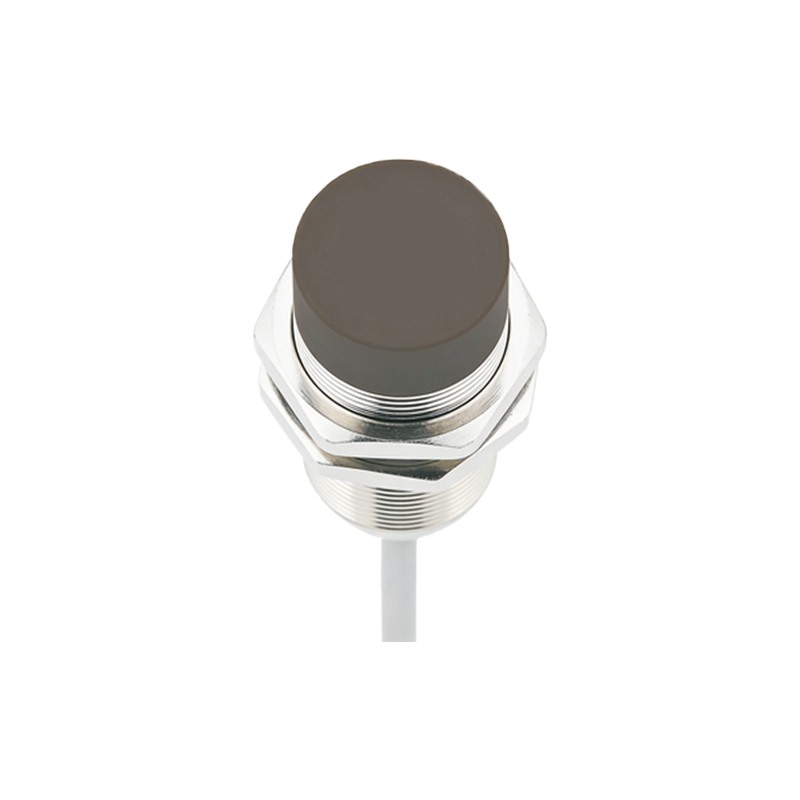
Inductive proximity sensors are specifically designed for the detection of metallic objects. They generate an electromagnetic field from a coil and oscillator circuit. When a ferrous or non-ferrous metal target enters this field, it induces eddy currents on the metal's surface. This causes a change in the oscillation amplitude, which is detected by the sensor's circuitry, triggering a solid-state output switch. These sensors are highly robust, resistant to environmental factors like dust, oil, and moisture, and offer excellent repeatability. Common applications include detecting the position of metal parts, monitoring gear teeth rotation, and serving as end-of-travel sensors in machinery. Their sensing range is typically limited and varies based on the target metal type, with shorter ranges for non-ferrous metals.
Capacitive Proximity Sensors
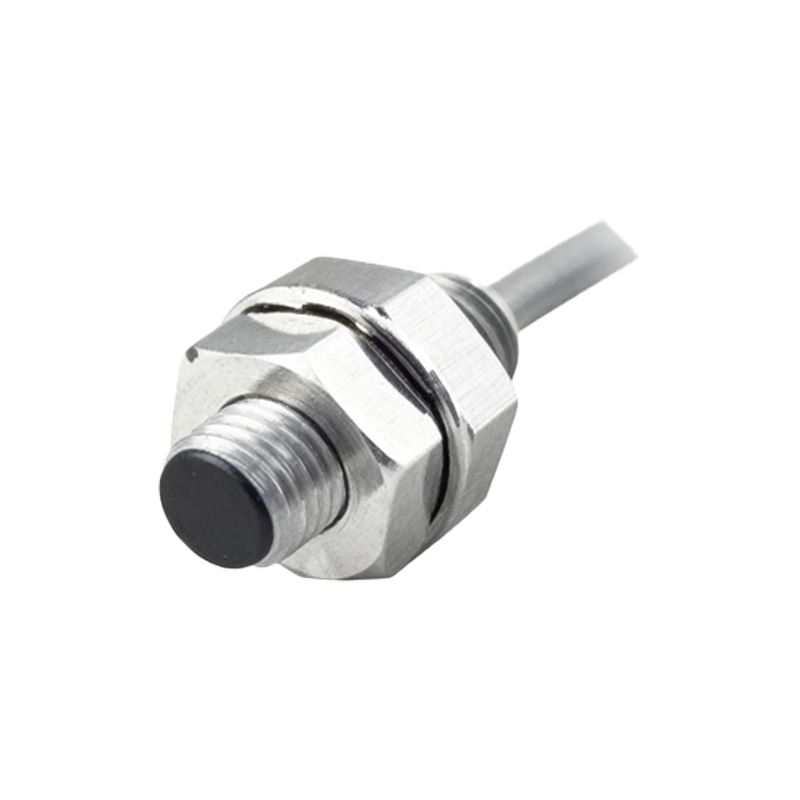
Capacitive proximity sensors can detect both metallic and non-metallic objects, including liquids, powders, plastics, and wood. They operate by generating an electrostatic field. The sensor and the target act as two plates of a capacitor. When an object enters the sensing field, it alters the capacitance of the system. This change is measured, and when it exceeds a preset threshold, the sensor activates its output. This makes them versatile for applications where other sensor types fail, such as detecting filled levels in non-metallic containers, sensing the presence of glass or cardboard, or monitoring granular materials in hoppers. They can be sensitive to environmental changes like humidity and require careful calibration to avoid false triggers from non-target materials.
Ultrasonic Proximity Sensors
Ultrasonic sensors measure distance or detect presence by emitting high-frequency sound waves (typically beyond 20 kHz) and analyzing the reflected echo. The time interval between sending the signal and receiving the echo is calculated to determine the distance to the target. These sensors are effective for detecting objects of virtually any material, shape, or color, as long as the surface is capable of reflecting sound. They are ideal for applications requiring longer sensing ranges, precise distance measurement, or level sensing of liquids and bulk solids. Challenges include potential interference from ambient noise, temperature variations (which affect sound speed), and the angle of the target surface. They are commonly used in parking assistance systems, liquid level control, and pallet detection in warehouses.
Photoelectric Sensors
Photoelectric sensors use light beams to detect objects. They consist of a light emitter (usually an LED producing visible red, infrared, or laser light) and a receiver. When the light beam is interrupted or reflected by a target object, the change in light intensity at the receiver triggers the output. They are categorized into three main operating modes: through-beam (separate emitter and receiver), retro-reflective (uses a reflector), and diffuse (reflective), where the sensor uses light reflected directly from the target. Photoelectric sensors offer very long sensing ranges, especially laser types, and can detect small objects with high precision. They are suitable for detecting transparent films, color marks, and objects on high-speed conveyors. Performance can be affected by ambient light, dust, fog, and the color or reflectivity of the target.
Magnetic Proximity Sensors (Reed Switches)
Magnetic proximity sensors, often utilizing reed switches or Hall-effect chips, detect the presence of a magnetic field, typically from a permanent magnet. In a reed switch, two ferromagnetic reeds are sealed in a glass tube. When a magnet approaches, the reeds are magnetized and attract each other, closing the electrical contact. Hall-effect sensors produce a voltage change in response to a magnetic field. These sensors are simple, cost-effective, and can operate in harsh environments where sealing is easy. They are primarily used for detecting the position of cylinders (with embedded magnets), door/window opening status, and as speed sensors in conjunction with rotating magnets. Their sensing range is generally short and limited to the detection of magnetic sources.
Selection Criteria and Application Considerations
Choosing the right proximity sensor requires