Understanding the Core Principle
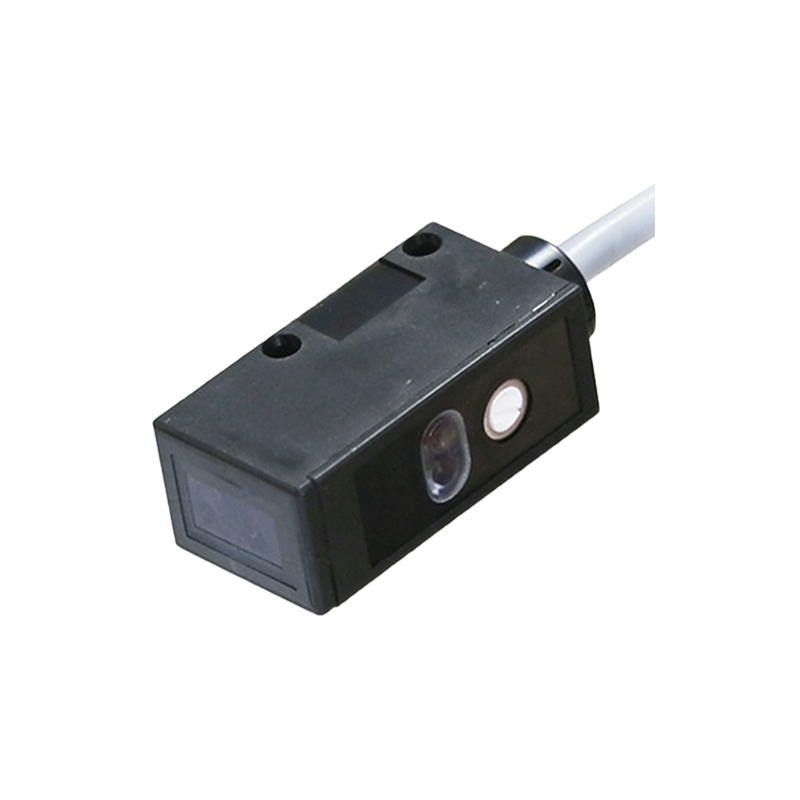
Photoelectric sensors are ubiquitous in industrial automation, providing non-contact detection of objects. Among their various operational modes, the retro-reflective sensor paired with a reflector offers a robust and widely adopted solution. The fundamental principle is elegantly simple. The sensor unit itself houses both a light emitter, typically an LED (often infrared for stability), and a light receiver. This unit projects a beam of light towards a specially designed reflector, often called a retro-reflector or target. This reflector is not a simple mirror; it is constructed with a precise array of corner-cube prisms or a specialized film that returns the incoming light beam directly to its source, regardless of minor angular misalignments. The sensor's receiver is tuned to detect this returned beam. When an object passes between the sensor and the reflector, it interrupts this light path. The receiver notes the absence of the beam, triggering the sensor's output switch. This "beam-break" method allows for reliable detection over considerable distances with a single, compact sensor head.
The Critical Role of the Retro-Reflector
The reflector is not a passive component but the key to the system's practicality and range. Its retro-reflective property ensures that light is bounced directly back along the incident path. This is crucial because it compensates for slight installation misalignments, vibration, or thermal drift that could plague a through-beam system requiring two perfectly aligned separate units. Modern reflectors are highly efficient, often returning over 90% of the incident light, which directly translates to longer sensing ranges and better signal-to-noise ratios. They are also designed to be highly visible to the sensor while being less susceptible to ambient light interference. For challenging environments, polarizing filters can be integrated. The sensor emits polarized light, and the reflector rotates this polarization. The receiver then has a filter that only accepts light with the rotated polarization, effectively ignoring most reflections from shiny objects (like metal cans) that might otherwise falsely indicate an unbroken beam.
Primary Advantages Over Other Sensor Types
Choosing a photoelectric sensor with a reflector presents several distinct advantages. Firstly, installation and wiring are significantly simplified compared to a through-beam system. Only one device needs to be powered and wired for output, and precise coaxial alignment is not required, reducing setup time and cost. Secondly, it offers an excellent balance between sensing range and physical footprint. Retro-reflective sensors can achieve ranges comparable to many through-beam sensors but with a simpler mechanical setup. Thirdly, they provide superior performance in detecting transparent objects, such as glass or clear plastic bottles. Specialized models emit a focused, high-intensity beam that, when interrupted by a transparent material, causes enough refraction or reflection loss to be reliably detected—a task difficult for diffuse reflective sensors. Finally, maintenance is easier as there is only one electronic unit to service, and the reflector is typically a durable, passive component.
Common Industrial Applications and Use Cases
The reliability and versatility of reflector-based photoelectric sensors make them suitable for a vast array of applications. In packaging and material handling, they are used for object detection on conveyor belts, checking for the presence of boxes, cartons, or bags. They are ideal for detecting transparent items on production lines, such as in bottling plants or pharmaceutical packaging. In automated storage and retrieval systems (AS/RS), they serve as limit switches or position verification sensors for shuttles and elevators. The automotive industry employs them for part presence verification in assembly robots. Another critical application is in safety systems, where they can form part of a safety light curtain or an access control beam to detect personnel entering a hazardous zone. Their ability to function reliably in dusty or mildly dirty environments (with regular reflector cleaning) further expands their utility.
Key Selection Criteria and Installation Tips
Selecting the right sensor and reflector for an application requires careful consideration. The primary factor is the required sensing distance, which must be within the sensor's specified range with a safety margin. The size and material of the target object must be considered; for very small objects, a sensor with a narrow, focused beam is necessary. The environment is critical: for outdoor use or areas with high ambient light, models with robust background suppression technology are essential. For wet or dirty conditions, sensors with higher IP (Ingress Protection) ratings and periodic reflector cleaning schedules are mandatory. During installation, ensure the reflector is mounted securely and perpendicular to the sensor's beam axis as much as possible. Avoid mounting surfaces that vibrate excessively. Keep the lens and reflector clean from dust, oil, or condensation. Always verify the sensor's stability and response by testing with the actual target object under normal operating conditions.