Introduction to Photoelectric Sensors
Photoelectric sensors are essential components in industrial automation, utilizing light beams to detect the presence, absence, or distance of objects. These sensors operate by emitting a light source—typically infrared, visible, or laser—and measuring changes in the received light due to reflection, interruption, or absorption. Their versatility allows for applications across diverse sectors, including manufacturing, packaging, material handling, and safety systems. The core principle involves converting light signals into electrical outputs, enabling precise control in automated processes. With advancements in technology, modern photoelectric sensors offer enhanced accuracy, reliability, and adaptability to harsh environments, making them indispensable in today's industrial landscape.
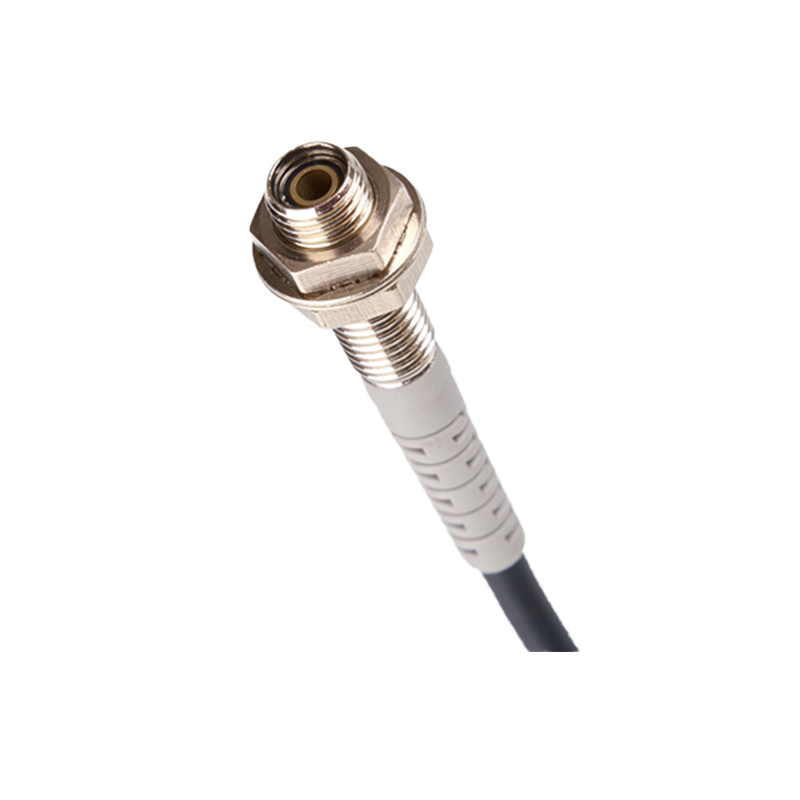
Through-Beam Photoelectric Sensors
Through-beam sensors, also known as opposed-mode sensors, consist of separate emitter and receiver units positioned opposite each other. The emitter projects a continuous light beam toward the receiver, and detection occurs when an object interrupts this beam. This configuration provides high accuracy and long sensing ranges, often exceeding 100 meters in ideal conditions. It is particularly effective in environments with dust, smoke, or vibrations, as the direct beam path minimizes false triggers. Common applications include object counting on conveyor belts, safety curtains in machinery, and level detection in bulk material systems. However, installation requires precise alignment, which can be challenging in complex setups.
Retroreflective Photoelectric Sensors
Retroreflective sensors integrate both emitter and receiver into a single housing, using a reflector to bounce the light beam back. When an object passes between the sensor and reflector, it blocks the reflected light, triggering detection. These sensors offer easier installation compared to through-beam types, as only one unit needs mounting, and alignment is less critical. They are suitable for medium-range applications, typically up to 10 meters, and are widely used in packaging lines, door control systems, and palletizing operations. A key consideration is that highly reflective objects might cause false readings, so polarization filters are often employed to distinguish between the reflector and target objects.
Diffuse Reflective Photoelectric Sensors
Diffuse reflective sensors, or proximity-mode sensors, house the emitter and receiver together, detecting objects based on light reflected directly from the target surface. The sensor emits a light beam, and when an object enters the sensing field, it scatters light back to the receiver. This design allows for compact, single-unit installation without additional reflectors, making it ideal for space-constrained environments. Sensing ranges are shorter, usually under 2 meters, and performance can vary with object color, texture, and reflectivity. These sensors are common in robotics for part positioning, in vending machines for product detection, and in assembly lines for presence verification. Advanced models incorporate background suppression technology to ignore distant objects.
Background Suppression Photoelectric Sensors
Background suppression sensors are a specialized type of diffuse reflective sensor that uses triangulation or lens-based methods to limit the sensing range. By focusing on a specific distance, they ignore objects beyond a set threshold, preventing false detections from backgrounds like walls or machinery. This makes them highly reliable for applications requiring precise positioning, such as detecting objects on conveyor belts or controlling robotic grippers. They are effective with varying surface colors and materials, as the detection logic depends on distance rather than reflectivity. Typical sensing ranges extend up to 1 meter, with adjustable settings for fine-tuning in complex industrial setups.
Color Mark and Luminescence Sensors
Color mark sensors detect specific colors or contrasts on objects, using focused light beams and receivers to analyze reflected wavelengths. They are crucial in printing, labeling, and textile industries for registration control and quality checks. Luminescence sensors, on the other hand, identify materials that glow under ultraviolet light, such as adhesives or security inks, by emitting UV light and measuring the fluorescent response. Both types offer high sensitivity and are used in specialized applications where standard photoelectric sensors might fail, like sorting recycled materials or verifying product authenticity.
Fiber Optic Photoelectric Sensors
Fiber optic photoelectric sensors employ optical fibers to transmit light between the emitter and receiver, allowing the sensing head to be placed in tight, hazardous, or high-temperature areas. The amplifier unit can be remotely located, protecting it from harsh conditions. These sensors are ideal for detecting small objects, in high-speed applications, or in environments with extreme temperatures, chemicals, or electromagnetic interference. They come in through-beam, retroreflective, and diffuse types, with sensing ranges tailored to specific needs. Common uses include semiconductor manufacturing, food processing, and medical device assembly.
Laser-Based Photoelectric Sensors
Laser-based sensors use focused laser beams for high-precision detection, offering narrow beam spots and long ranges up to several hundred meters. They excel in applications requiring accurate measurement, such as edge detection, thickness monitoring, and alignment systems. The coherent light source reduces dispersion, enabling reliable performance in challenging conditions like bright ambient light or long distances. These sensors are often used in automotive manufacturing, woodworking, and aerospace industries, where micron-level accuracy is critical. Safety precautions are necessary, as laser beams can pose risks to human eyes.
Selection Criteria for Photoelectric Sensors
Choosing the right photoelectric sensor depends on factors like sensing range, object properties, environmental conditions, and output requirements. Consider the detection mode—through-beam for long-range reliability, retroreflective for ease of installation, or diffuse for direct reflection. Evaluate object size, color, and material, as these affect reflectivity and accuracy. Environmental aspects such as dust, moisture, temperature, and ambient light should guide housing and lens selections. Output types like NPN/PNP, analog, or digital interfaces must match control systems. Consulting manufacturer datasheets and testing in real conditions ensures optimal performance and longevity in industrial applications.