Introduction to Photoelectric Sensing
Photoelectric sensors are indispensable components in modern industrial automation, providing non-contact detection of objects. They operate by emitting a beam of light, typically from an LED or laser diode, and detecting changes in the received light intensity. These changes are caused by the presence, absence, or specific characteristics of a target object. The core principle relies on the photoelectric effect, where light energy is converted into an electrical signal. This technology offers significant advantages over mechanical contact methods, including higher speed, longer operational life, minimal maintenance, and the ability to detect a wide variety of materials regardless of color, texture, or surface finish. From packaging lines and material handling to automotive assembly and food processing, photoelectric sensors ensure precision, reliability, and efficiency.
Through-Beam Sensors
Through-beam sensors, also known as opposed-mode sensors, consist of two separate units: a transmitter and a receiver. The transmitter projects a continuous beam of light directly to the receiver. Detection occurs when an object physically interrupts this light beam, causing the receiver's output to switch. This configuration provides the longest sensing range and highest excess gain among all photoelectric types, making it ideal for detecting small objects, opaque materials, or in environments with potential contamination like dust or dirt. It is highly reliable because the alignment is critical only during installation. Common applications include part counting on high-speed conveyors, break detection in web processes, and safety curtains on machinery.
Retroreflective Sensors
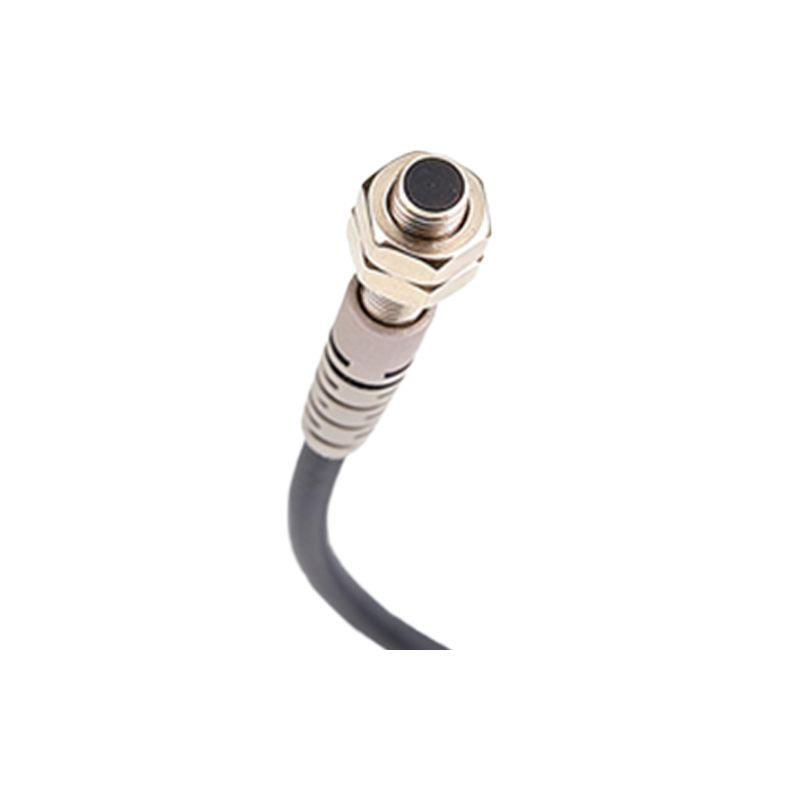
Retroreflective sensors house both the light emitter and receiver in a single housing. They operate by projecting light towards a specialized reflector, often a corner-cube prism or tape, which reflects the beam directly back to the receiver. An object is detected when it blocks this reflected light path. This design offers a longer range than diffuse sensors and simplifies wiring, as only one device needs to be mounted and connected. A key feature is the use of polarizing filters to overcome potential false triggers from shiny objects. The emitter's light is polarized in one direction, and the receiver's filter is polarized at a 90-degree angle. The reflector depolarizes the light, allowing it to pass through the receiver's filter, while light reflected directly from a glossy surface remains polarized and is blocked.
Diffuse Reflective Sensors
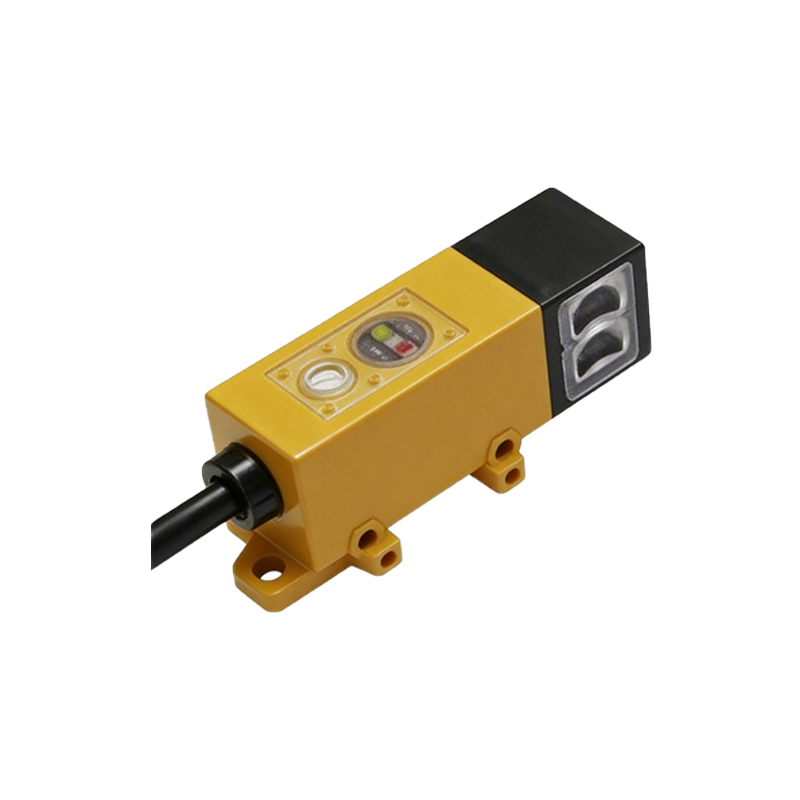
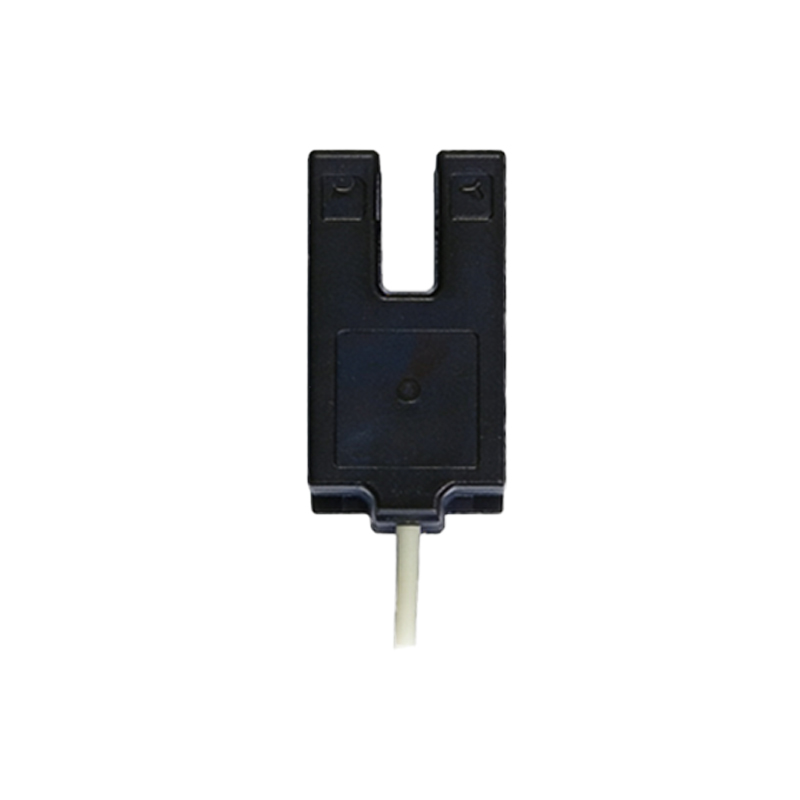
Diffuse sensors, or proximity-mode sensors, integrate the emitter and receiver into one unit. They detect an object by relying on the diffuse reflection of the emitted light from the target's surface itself. No separate reflector is needed. The sensor triggers when sufficient light is scattered back from the object to the receiver. Sensing distance is influenced by the target's size, color, and surface texture; light-colored, matte surfaces provide longer ranges than dark, glossy ones. These sensors are compact and easy to install, as they require only a single mounting point. They are widely used for detecting the presence of objects at short to medium ranges, such as in bottling plants, for level detection in bins, or for positioning control.
Background Suppression Sensors
Background Suppression (BGS) sensors are a specialized type of diffuse sensor designed to ignore objects beyond a preset sensing distance. They use triangulation or a receiver array to measure the angle of the reflected light rather than just its intensity. Light reflected from an object within the set range hits one part of the receiver, triggering detection. Light from objects or surfaces beyond the set range hits a different part and is ignored. This allows for precise detection of an object at a specific distance, regardless of its color or reflectivity, and effectively ignores a more reflective background. This is crucial for applications like detecting transparent bottles on a conveyor or ensuring a package is correctly positioned within a defined zone.
Fiber Optic Photoelectric Sensors
Fiber optic photoelectric sensors separate the sensing head from the amplifier unit using flexible fiber optic cables. The emitter's light travels through one cable to the sensing point, and the reflected or transmitted light is carried back via another cable to the receiver. This configuration allows sensing in extremely confined, hot, or hazardous environments where the electronic amplifier cannot be placed. The small sensing tip can detect minute objects. Different tip configurations (through-beam, diffuse, etc.) are available. They are immune to electrical noise and are perfect for applications in high-temperature areas, cleanrooms, or locations with strong electromagnetic interference, such as inside machinery or near welding stations.
Laser Sensor Variants
Laser-based photoelectric sensors utilize a focused laser beam instead of standard LED light. This provides several enhanced capabilities: a very small, precise spot size for detecting extremely small objects or edges; a highly collimated beam for long sensing ranges with minimal divergence; and excellent visibility for precise alignment during setup. Laser sensors are commonly found in through-beam, diffuse, and background suppression versions. They are essential in high-precision industries like semiconductor manufacturing, for precise positioning in robotics, for measuring applications, and for detecting fine wires or components where standard sensors lack the necessary resolution.
Selection Criteria and Conclusion
Choosing the correct photoelectric sensor type depends on several application-specific factors. Key considerations include the required sensing distance, the size and material properties of the target object, the installation environment (presence of dust, moisture, vibration), the required response speed, and background conditions. Through-beam sensors offer maximum reliability for long ranges. Diffuse sensors provide simplicity for close-range presence detection. Retroreflective models are a good compromise for medium ranges. Background suppression and laser sensors deliver precision for challenging detection tasks. Understanding these fundamental types and their operating principles enables engineers to select the optimal sensor, ensuring robust and efficient automation system performance.