Understanding Capacitive Sensing Technology
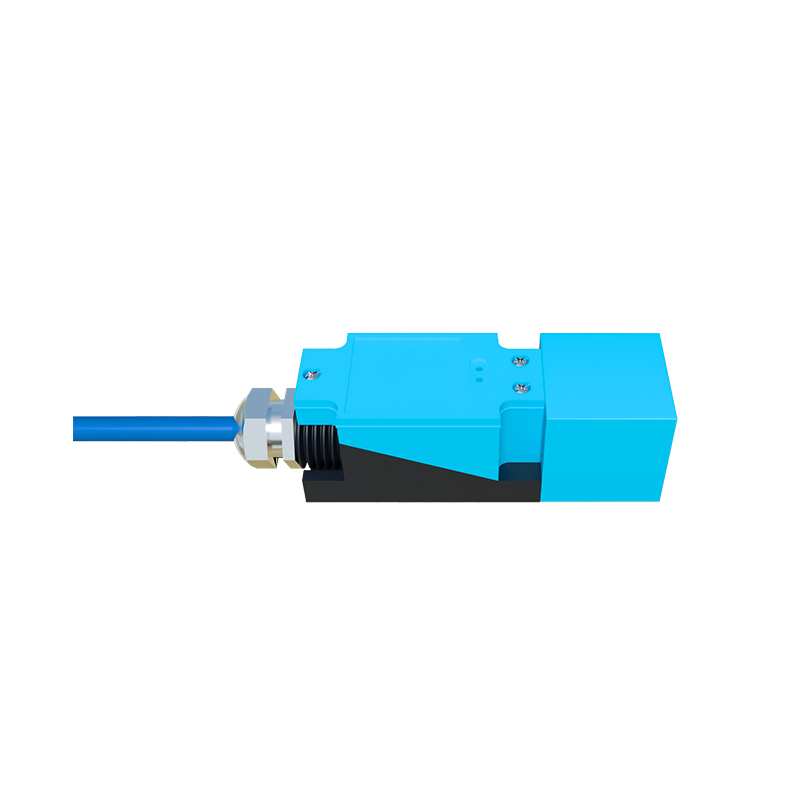
Capacitive flat proximity sensors operate on the fundamental principle of capacitance change. At their core, these sensors consist of an electrode system that creates an electrostatic field. When an object enters this detection field, it alters the dielectric properties or the conductive coupling, leading to a measurable change in capacitance. This change is processed by the sensor's internal oscillator and evaluation circuitry, which triggers a switching output. Unlike inductive sensors that detect only metals, capacitive sensors can detect a vast range of materials, including liquids, powders, plastics, wood, and glass, by sensing changes in the dielectric constant. The "flat" design refers to a low-profile, often rectangular or square housing that allows for flush or non-flush mounting in tight spaces, making them ideal for modern, compact machinery.
Key Advantages of the Flat Design
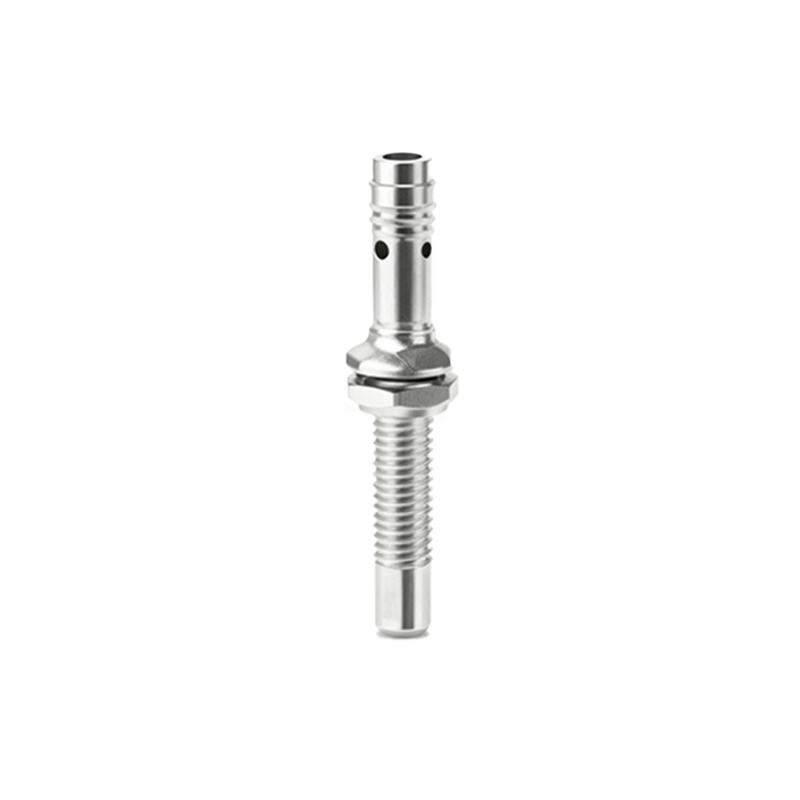
The flat form factor offers several distinct benefits in industrial automation. Primarily, it enables seamless integration into machine surfaces, panels, or conveyor structures without protruding. This minimizes the risk of physical damage from passing objects and allows for a cleaner, more streamlined design. The low-profile housing often provides a larger sensing face compared to cylindrical sensors of similar volume, which can be advantageous for detecting larger or inconsistently shaped targets. Furthermore, many flat capacitive sensors are designed with robust, chemically resistant housing materials like PBT or stainless steel, ensuring reliable operation in harsh environments involving dust, moisture, or aggressive cleaning agents.
Core Application Areas in Industry
Capacitive flat proximity sensors find utility across diverse sectors due to their material-agnostic detection capability. In packaging machinery, they reliably detect the presence of cardboard boxes, plastic bottles, or foil wrappers on conveyor lines. In the food and beverage industry, they are indispensable for level detection of liquids, granules, or powders inside non-metallic tanks or hoppers, preventing overfill or run-dry conditions. Woodworking and plastics processing utilize them to monitor material feed or the position of composite panels. An increasingly critical application is in human-machine interface (HMI) panels, where their touch-sensitive capability is used for touch buttons or gesture control behind insulating glass or plastic overlays.
Critical Selection Parameters
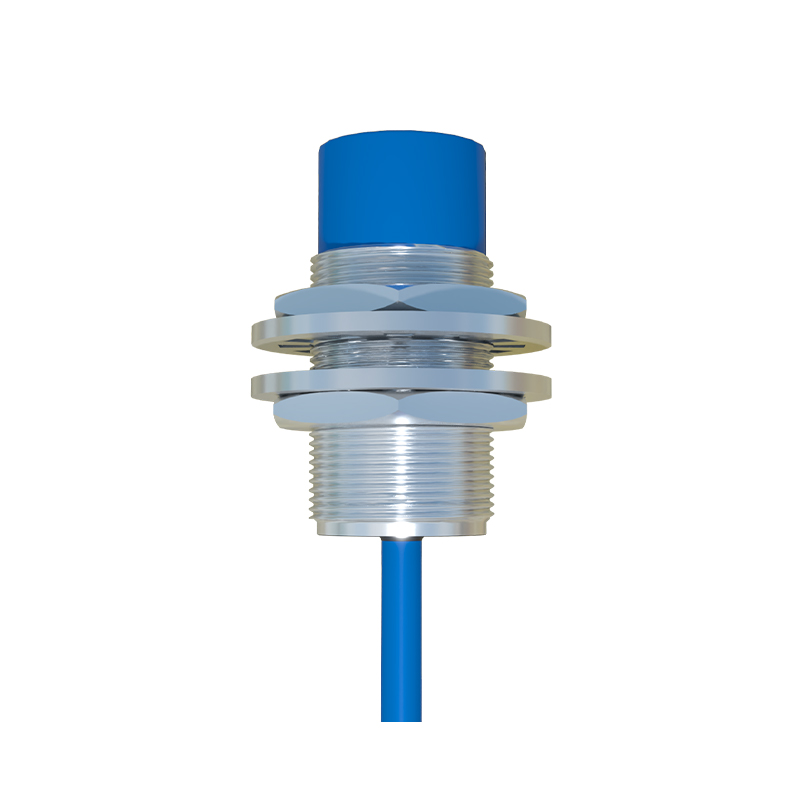
Choosing the correct capacitive flat sensor requires careful consideration of several technical parameters. The nominal sensing distance, or Sn, is specified for a standard target (often metal or water) and is typically shorter than that of inductive sensors. Engineers must account for the dielectric constant of the actual target material, as this significantly affects the effective sensing range. The housing material and ingress protection (IP) rating, such as IP67 or IP69K, are vital for compatibility with the operational environment. Output type (PNP/NPN, NO/NC, analog) must match the control system's input card. Additionally, factors like switching frequency, temperature range, and the availability of built-in sensitivity adjustment potentiometers or teach-in functions are crucial for fine-tuning performance.
Installation and Commissioning Best Practices
Proper installation is paramount for stable and reliable operation. For flush-mountable flat sensors, it is essential to ensure the surrounding mounting material is non-conductive to prevent the sensing field from being shunted. A minimum clearance from adjacent metal parts, as specified in the datasheet, must be maintained to avoid false triggering. During commissioning, the sensitivity adjustment is used to set the optimal switching point for the specific application, compensating for background effects like moisture buildup or varying material properties. Many modern sensors feature LED indicators for output status and signal strength, greatly aiding in setup and diagnostics. Regular maintenance should involve cleaning the sensing face to remove any contaminant film that could alter the dielectric environment.
Future Trends and Innovations
The evolution of capacitive flat proximity sensors is closely tied to trends in Industry 4.0 and smart manufacturing. Future developments are focusing on increased intelligence at the sensor level. This includes integrated IO-Link communication, which allows for remote parameter setting, advanced diagnostics, and process data monitoring, enabling predictive maintenance. Miniaturization continues, pushing the boundaries of how small a sensor can be while maintaining a useful sensing range and robustness. Furthermore, enhanced algorithms are being developed to improve stability against environmental disturbances like humidity fluctuations or coating buildup, expanding their applicability into even more challenging processes. The convergence of sensing, communication, and data analytics will solidify their role as key components in connected, flexible production systems.