Introduction to 2-Wire Photoelectric Sensors
Photoelectric sensors are fundamental components in industrial automation, providing non-contact detection of objects. Among various configurations, the 2-wire sensor stands out for its simplicity and direct integration into control systems. Unlike 3-wire or 4-wire models that require separate power and signal lines, a 2-wire sensor operates by modulating current flow through the same two wires used for power supply. This design reduces wiring complexity, minimizes installation time, and lowers overall costs. Typically, these sensors are connected in series with the load, such as a programmable logic controller (PLC) input or a relay. The sensor regulates current to indicate its state: a low current (often below 1 mA) signifies an "off" or no-detection state, while a higher current (usually 5-20 mA) indicates an "on" or detection state. This current-based signaling makes 2-wire sensors compatible with a wide range of DC control circuits, enhancing their versatility in manufacturing, packaging, and material handling applications.
Wiring Principles and Electrical Characteristics
The core principle behind 2-wire photoelectric sensor wiring involves series connection within a DC circuit. The sensor requires a continuous power supply, typically ranging from 10 to 30 VDC, to function. When wiring, one wire connects to the positive voltage supply, and the other to the load's input terminal, which then links to the ground or negative side. It is crucial to observe polarity, as incorrect connections can damage the sensor or cause malfunction. The sensor's internal electronics manage power consumption and signal output simultaneously. In the idle state (no object detected), the sensor draws a minimal leakage current to maintain operation. Upon detecting an object, it increases current flow to a level recognizable by the control device as a logic high signal. Key electrical parameters to consider include operating voltage range, load current capacity, and voltage drop across the sensor (often 2-5 V). Engineers must ensure the power supply can handle the total current draw, including the sensor and connected load, to prevent voltage sags that might lead to unreliable detection.
Step-by-Step Installation Procedure
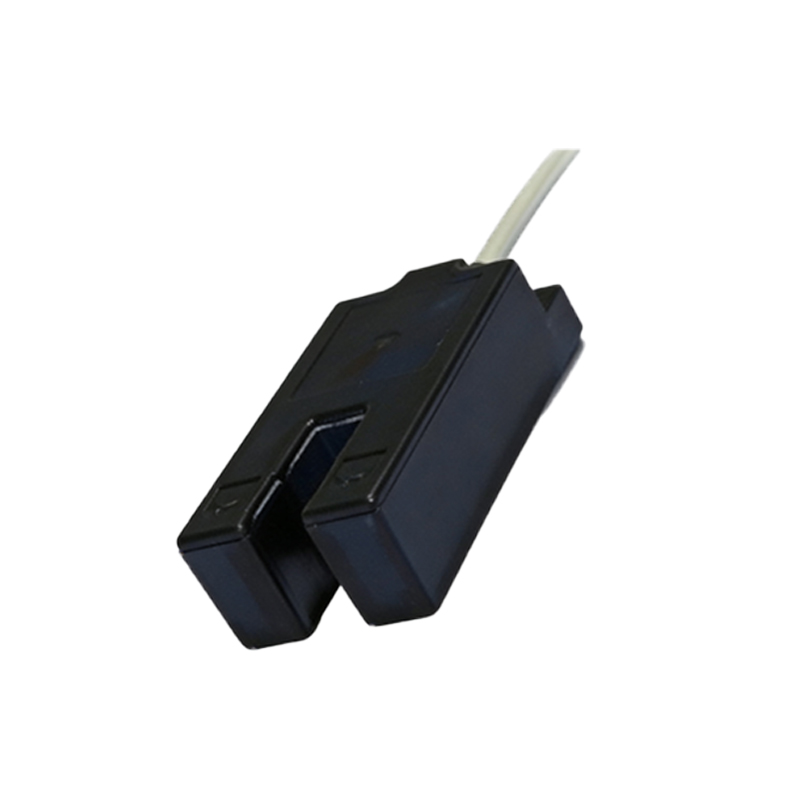
Proper installation of a 2-wire photoelectric sensor ensures reliable performance and longevity. Begin by selecting an appropriate sensor model based on detection range, sensing mode (e.g., diffuse, retro-reflective, or through-beam), and environmental conditions like dust or moisture. Before wiring, disconnect all power sources to prevent electrical hazards. Mount the sensor securely using brackets, ensuring alignment with the target object's path. For wiring, identify the two terminals, usually labeled as "+" and "-" or "L+" and "L-". Connect the positive wire from the DC power supply to the sensor's positive terminal. Then, run a wire from the sensor's negative terminal to the input module of the PLC or relay. Finally, complete the circuit by connecting the load's common terminal to the power supply's negative side. After connections, verify wiring for tightness and correct polarity. Apply power and test the sensor by introducing an object within its detection field. Use a multimeter to check current levels: a low reading should correspond to no detection, and a higher reading to detection. Adjust sensitivity or alignment if necessary, and ensure the sensor's indicator LED functions as expected.
Advantages and Limitations in Industrial Use
Two-wire photoelectric sensors offer distinct advantages that make them suitable for many industrial scenarios. Their primary benefit is reduced wiring, which cuts material costs and simplifies panel layouts. This simplicity also speeds up installation and maintenance, reducing downtime. Since they lack a separate output wire, these sensors are less prone to wiring errors compared to three-wire versions. Additionally, their compatibility with standard PLC inputs allows for easy integration into existing control systems without additional interfaces. However, limitations exist. The voltage drop across the sensor can be significant in low-voltage circuits, potentially affecting load operation. Current leakage in the off-state might inadvertently activate highly sensitive loads, requiring careful load selection. Moreover, 2-wire sensors generally have lower switching frequencies and shorter sensing distances than their 3-wire counterparts, making them less ideal for high-speed applications. Understanding these trade-offs helps engineers select the right sensor type based on specific operational requirements, balancing cost, performance, and reliability.
Troubleshooting Common Issues
Even with correct installation, 2-wire photoelectric sensors may encounter issues that affect performance. Common problems include false triggering, failure to detect objects, or inconsistent signal output. Start troubleshooting by checking power supply voltage with a multimeter to ensure it falls within the sensor's specified range. Low voltage can cause weak signals, while overvoltage may damage components. Inspect wiring connections for looseness, corrosion, or short circuits, especially in harsh environments. Verify that the load impedance is appropriate; too high impedance can prevent sufficient current flow, while too low may cause excessive current draw. Environmental factors like ambient light interference, dust accumulation on lenses, or mechanical misalignment can also lead to malfunctions. Clean the sensor's lens regularly and adjust its position if needed. If the sensor operates erratically, test it with a known good load to isolate the issue. Additionally, ensure that the sensor's sensing mode matches the application—for instance, using a diffuse sensor for reflective surfaces might cause false positives. Consulting the manufacturer's datasheet for specific error codes or diagnostic indicators can provide further insights into resolving persistent issues.
Best Practices for Optimal Performance
To maximize the reliability and lifespan of 2-wire photoelectric sensors, adhere to industry best practices. Always use shielded cables in electrically noisy environments to prevent electromagnetic interference from disrupting signals. Maintain proper cable management by avoiding sharp bends or tension that could damage wires. When selecting a power supply, choose one with adequate current capacity and consider adding surge protection devices to guard against voltage spikes. Regularly calibrate sensors according to the manufacturer's guidelines, especially after environmental changes like temperature shifts. Implement preventive maintenance schedules that include cleaning optical components and checking for physical damage. For critical applications, consider redundancy by installing backup sensors or using dual-channel configurations. Document wiring diagrams and sensor parameters for future reference, facilitating quicker repairs or upgrades. By following these practices, engineers can ensure that 2-wire photoelectric sensors deliver consistent, accurate detection, contributing to efficient and safe industrial operations.