Introduction to M10 Photoelectric Sensors
The M10 photoelectric sensor represents a cornerstone in modern industrial automation, offering a compact and reliable solution for object detection. Characterized by its 10mm threaded barrel housing, this sensor type is engineered for versatility across diverse applications, from packaging and material handling to assembly line monitoring. Its fundamental operating principle involves emitting a light beam—typically infrared, visible red, or laser—and detecting changes in the received light to sense the presence, absence, or position of an object. The M10's small form factor allows for installation in space-constrained environments where larger sensors cannot operate, making it an indispensable component in the design of efficient and responsive automated systems. The robust construction often includes metal or high-grade plastic housings with ingress protection ratings, ensuring reliable performance even in challenging industrial conditions involving dust, moisture, or vibration.
Key Operating Principles and Technologies
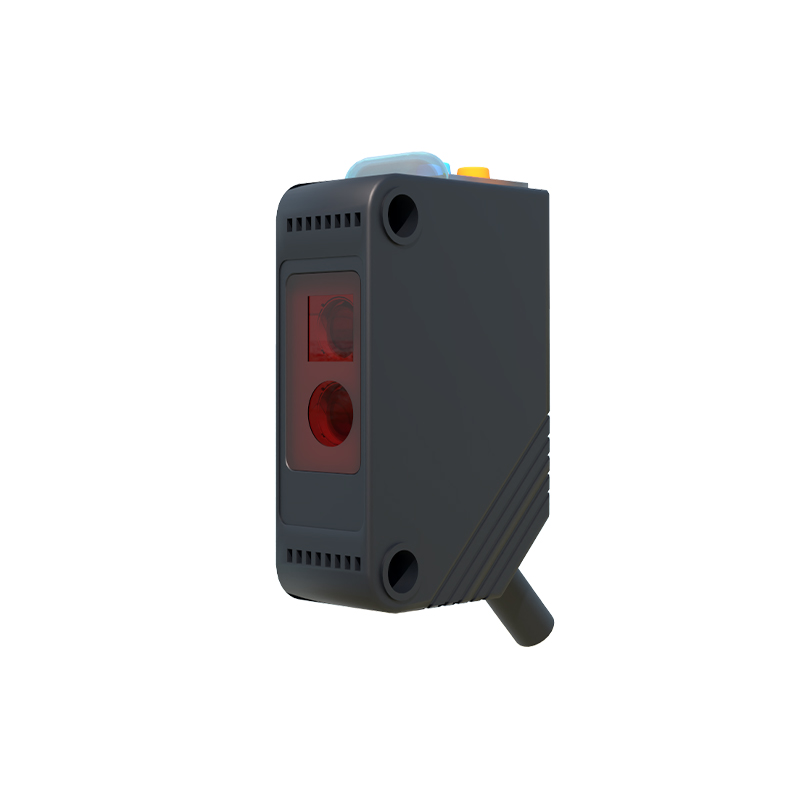
M10 photoelectric sensors utilize three primary sensing modes: through-beam, retro-reflective, and diffuse reflective. Through-beam sensors consist of separate emitter and receiver units; detection occurs when an object interrupts the light beam traveling between them. This mode offers the longest sensing range and highest reliability for precise detection. Retro-reflective models house both emitter and receiver in a single unit, using a reflector to bounce the light beam back. An object is detected when it blocks this reflected beam. Diffuse reflective sensors, also self-contained, detect objects by measuring the light reflected directly off the target's surface. Advanced M10 sensors may incorporate background suppression or foreground suppression technologies, which use triangulation principles to detect objects only within a defined sensing window, ignoring surfaces beyond a set distance. Furthermore, the choice of light source—modulated LED for immunity to ambient light or laser for precise spot detection—adds another layer of application-specific customization.
Critical Specifications and Selection Criteria
Selecting the appropriate M10 photoelectric sensor requires careful analysis of technical specifications. Key parameters include sensing range, which varies significantly by model and sensing mode; a diffuse sensor may offer a range from a few centimeters up to a meter, while through-beam variants can detect over several meters. Response time, often in the millisecond range, determines how quickly the sensor can signal a detection event, crucial for high-speed production lines. The output type is another vital consideration: NPN (sinking) or PNP (sourcing) transistor outputs are standard, with some models providing analog current (4-20mA) or voltage (0-10V) outputs for distance measurement, or IO-Link for digital communication and parameterization. Environmental ratings such as IP67 or IP69K define resistance to dust and water jets, while operating temperature ranges ensure functionality in cold storage or hot manufacturing areas. The housing material, typically stainless steel or nickel-plated brass, must also be compatible with the application environment to prevent corrosion.
Wiring, Installation, and Configuration Best Practices
Proper installation is paramount for optimal sensor performance. The compact M10 size is installed via its 10mm thread into a matching nut or mounting bracket. Ensuring precise alignment between emitter and receiver (for through-beam types) or towards the reflector/target is critical; even minor misalignment can cause false triggers or detection failures. Wiring must adhere to the manufacturer's diagram: typically, brown wire connects to DC positive (+V), blue wire to DC common (0V), and black (or white) wire is the switched output. A stable, regulated power supply within the sensor's specified voltage range (commonly 10-30V DC) is essential. Many modern M10 sensors feature built-in sensitivity adjustment potentiometers or teach-in buttons for setting the detection threshold. For complex setups, using alignment tools or indicator LEDs greatly simplifies commissioning. Maintaining a clean lens free of dirt, oil, or debris is a simple yet often overlooked practice that ensures long-term reliability.
Common Industrial Applications and Use Cases
The application scope for M10 photoelectric sensors is vast. In packaging machinery, they detect the presence of boxes on a conveyor, count products, or verify label placement. Automotive assembly lines employ them to confirm component presence before a robotic weld or to check for correct part orientation. In the electronics industry, these sensors verify the insertion of circuit boards into slots or detect tiny components on pick-and-place machines. They are also fundamental in bottling and filling plants for liquid level control, cap detection, and bottle positioning. Logistics and warehousing systems use M10 sensors for parcel dimensioning, palletizing guidance, and automated guided vehicle (AGV) navigation. Their robustness makes them suitable for harsh environments like woodworking (sawdust) or food processing (moisture and washdowns), where reliable detection is non-negotiable for safety and efficiency.
Troubleshooting and Maintenance Guidelines
Even the most reliable sensors may encounter issues. Common problems include failure to detect objects, intermittent operation, or constant output activation. A systematic troubleshooting approach begins with verifying the power supply voltage and polarity at the sensor terminals. Next, inspect the lens for contamination and clean it with a soft cloth if necessary. Check the alignment of through-beam or retro-reflective setups, as vibration can cause drift over time. For diffuse sensors, ensure the target object is within the specified sensing range and has adequate reflectivity; dark or absorbent materials may require a special background suppression model. Utilizing the sensor's status LED indicators is invaluable for diagnostics—a steady light often indicates power, while a blinking light may signal a detection or fault condition. Preventive maintenance involves periodic checks of mounting stability, cable integrity for wear or damage, and environmental factors that may have changed since installation, such as new light sources causing optical interference.
Future Trends and Advancements
The evolution of M10 photoelectric sensors continues to align with Industry 4.0 trends. Integration of smart features like IO-Link communication is becoming standard, allowing for remote monitoring of sensor health (predictive maintenance), dynamic parameter changes on-the-fly, and seamless data integration into PLCs and SCADA systems. Miniaturization efforts are pushing the limits of the M10 form factor to house more powerful processors and enhanced sensing elements. There is also a growing emphasis on developing sensors with higher immunity to extreme environmental factors like intense ambient light, heavy condensation, or coatings that might obscure the lens. Furthermore, the convergence of sensing technologies may lead to hybrid M10 devices that combine photoelectric sensing with proximity, ultrasonic, or even vision-based capabilities in a single compact housing, offering unprecedented flexibility for complex automation challenges.