What is Sensitivity in Inductive Proximity Sensors?
Sensitivity, in the context of inductive proximity sensors, refers to the sensor's ability to detect a target at a specified distance. It is fundamentally governed by the sensor's operating principle, which involves generating an electromagnetic field from a coil in an oscillator circuit. When a metallic target enters this field, eddy currents are induced on the target's surface. These currents absorb energy from the oscillator, causing a change in its amplitude. The sensor's electronics monitor this change and trigger a switching output. The sensitivity determines the precise point at which this switching occurs relative to the target's distance and material. A higher sensitivity allows for detection of smaller targets or the same target from a greater nominal sensing distance. It is a critical parameter that directly impacts the reliability and precision of automated systems.
Key Factors Influencing Sensor Sensitivity
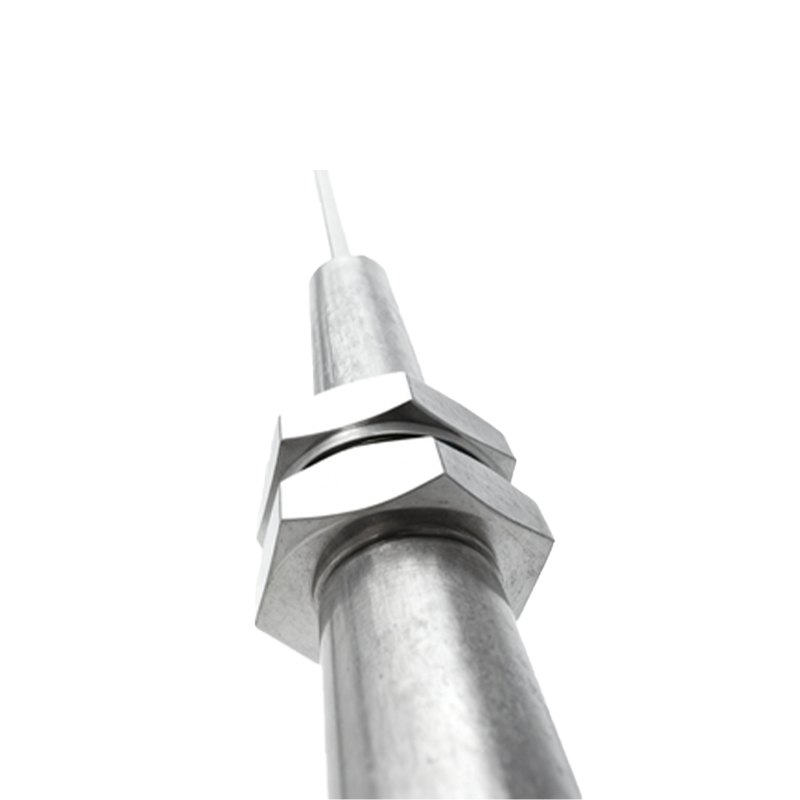
Several interrelated factors dictate the practical sensitivity of an inductive proximity sensor. The most significant is the target material. Ferrous metals like mild steel have the highest permeability, resulting in the longest nominal sensing distance (Sn). Non-ferrous metals such as aluminum, brass, or copper have lower permeability, typically reducing the effective sensing range to 30-60% of Sn. Stainless steel, depending on its grade, can also reduce the range. The target's size and shape are equally crucial. For reliable switching, the target's diameter or side length should be equal to or greater than the sensor's active face diameter. Smaller targets will drastically reduce the sensing distance. Furthermore, the sensor's own design—specifically the size and configuration of its coil, the operating frequency, and the sophistication of its internal ASIC (Application-Specific Integrated Circuit)—sets the baseline sensitivity.
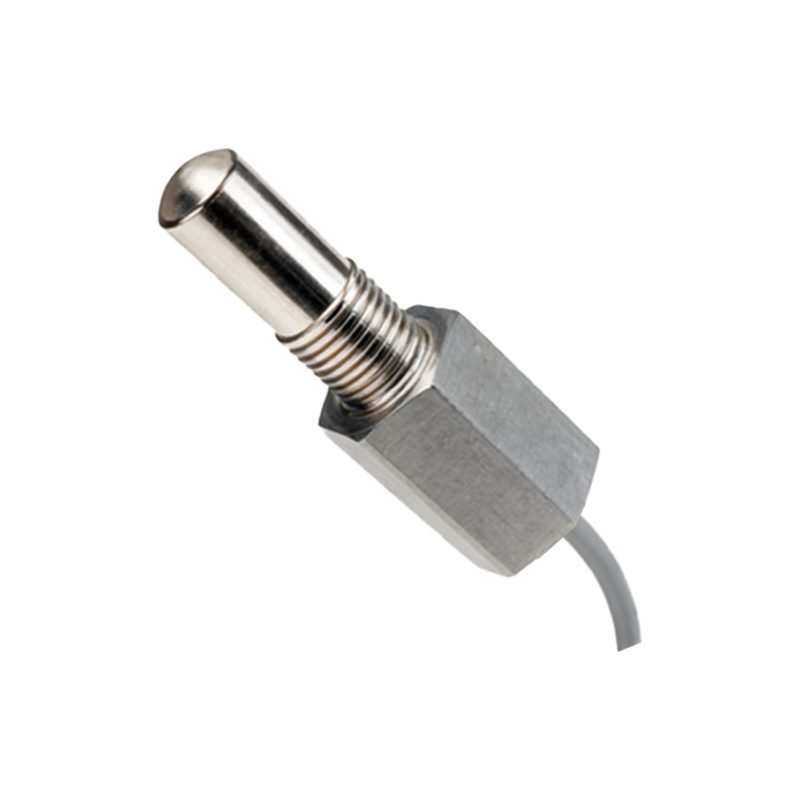
Standardized Sensing Distance and Real-World Adjustments
Manufacturers specify a 'nominal sensing distance (Sn)' under ideal conditions: a standard target of mild steel, 1mm thick, with sides equal to the sensor's diameter or 3x Sn (whichever is smaller). This is a standardized reference point. The 'usable sensing distance (Su)' is typically 90% of Sn, accounting for manufacturing tolerances and supply voltage variations. The 'assured operating distance (Sa)' is 81% of Sn, representing the guaranteed switching point under all rated conditions. Engineers must never design applications at the nominal distance. Instead, a 'reduction factor' must be applied based on the actual target material. For instance, when detecting an aluminum target, the effective sensing distance is Sn multiplied by a factor of approximately 0.4. This adjustment is essential for preventing false triggers or missed detections.
The Role of Hysteresis in Stable Operation
Hysteresis is an intentional, built-in feature that is vital for stable switching and is intrinsically linked to sensitivity settings. It is the difference between the switch-on point (as the target approaches) and the switch-off point (as the target recedes). Expressed as a percentage of the sensing distance, hysteresis prevents output oscillation or "chatter" when a target is positioned at the exact switching threshold due to vibration or minor positional drift. While a sensor with extremely high sensitivity might seem desirable, without sufficient hysteresis, it would be prone to instability in dynamic industrial environments. Therefore, a well-designed sensor optimizes both high sensitivity for long-range detection and adequate hysteresis for rock-solid performance.
Calibration, Temperature Effects, and Mounting Considerations
Sensitivity is not a fixed, unchangeable value. Many modern sensors feature a potentiometer or teach-in function for fine-tuning the sensing distance to match specific application needs, such as ignoring a larger background metal object while detecting a small target. Environmental temperature also plays a role; extreme heat or cold can affect the oscillator's characteristics, leading to a drift in sensitivity. High-quality sensors are designed with temperature compensation circuits to minimize this effect. Finally, mounting conditions are paramount. Flush-mountable sensors can be installed embedded in metal without affecting performance, whereas non-flush sensors require a clear, metal-free zone around their sensing face. Incorrect mounting can severely degrade sensitivity and sensing range.
Selecting the Right Sensitivity for Your Application
Choosing a sensor with appropriate sensitivity is an application-driven decision. For tasks requiring detection of very small metal parts or fine positioning, a high-sensitivity sensor is mandatory. Conversely, in environments with heavy metal dust, slag, or where the sensor is close to moving machine parts, a lower-sensitivity sensor might be preferable to avoid false triggering from incidental metallic proximity. The trend in industry is toward intelligent sensors with programmable sensitivity profiles and diagnostics. These "smart" sensors can communicate their operational status, including sensitivity degradation over time, enabling predictive maintenance and maximizing system upt