Introduction to Inductive Proximity Sensors
Inductive proximity sensors are fundamental components in industrial automation, providing non-contact detection of metallic objects. Operating on the principle of electromagnetic induction, these sensors generate an oscillating electromagnetic field. When a metallic target enters this field, eddy currents are induced, causing a change in the oscillation amplitude. This change is detected by the sensor's circuitry, triggering an output signal. Renowned for their robustness, high switching frequency, and immunity to environmental factors like dust, oil, and moisture, they are indispensable in manufacturing, packaging, and material handling applications. Their ability to function without physical contact ensures minimal wear and tear, leading to exceptional longevity and reliability in harsh industrial environments.
Key Selection Criteria for Engineers
Selecting the optimal inductive proximity sensor requires careful evaluation of several technical parameters. The sensing distance, or nominal range, is paramount and varies based on the target material (steel, aluminum, brass) and sensor size. Engineers must also consider the sensor's housing material—typically nickel-plated brass, stainless steel, or PBT plastic—to ensure compatibility with the operating environment, including exposure to coolants or chemicals. Output configuration (NPN/PNP, NO/NC) must align with the control system's PLC input requirements. Other critical factors include switching frequency for high-speed applications, temperature rating, protection class (IP67/IP69K), and the presence of built-in diagnostics or IO-Link capability for Industry 4.0 connectivity.
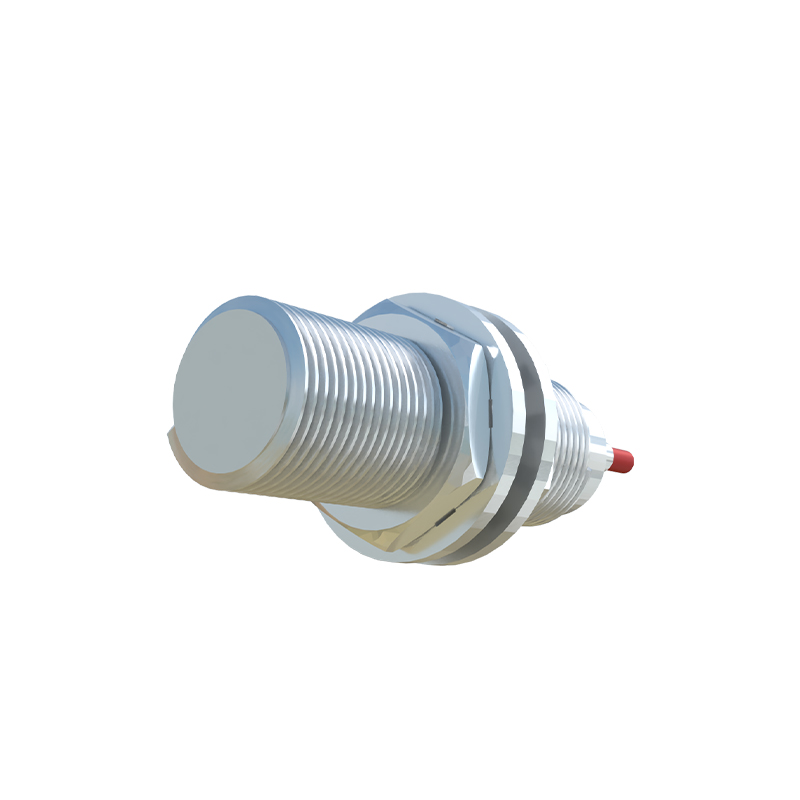
Top 10 Inductive Proximity Sensor Models
Based on performance, reliability, market adoption, and technological innovation, here is a ranked overview of leading inductive proximity sensors.
1. Siemens 3RG Series: A benchmark for reliability, offering exceptional shielding (flush-mounted) and non-shielded versions, extended temperature ranges, and high immunity to electromagnetic interference. Ideal for heavy-duty machinery.
2. Pepperl+Fuchs NBN Series: Known for its rugged stainless steel housing and superior chemical resistance. These sensors provide excellent performance in washdown and corrosive environments, often featuring a patented "Weld-Immune" design.
3. Balluff BES Series: A versatile and compact series with a vast array of form factors (cylindrical, rectangular, ring-shaped). They excel in providing precise, repeatable detection and often incorporate IO-Link for smart sensor functionality.
4. Omron E2E Series: A classic and globally trusted series renowned for its consistent quality and durability. They offer a wide selection of connection types and sizes, making them a versatile choice for standard applications.
5. IFM Efector Series: Pioneers in diagnostic capabilities, many IFM sensors feature condition monitoring, such as signal strength indication via LED or through IO-Link, enabling predictive maintenance strategies.
6. Sick IME Series: These sensors are engineered for extreme conditions, offering very high switching frequencies and resistance to strong magnetic fields, making them perfect for automotive and metal-forming applications.
7. Turck BI Series: Boasting a patented "Factor 1" technology for all metals, these sensors detect steel, aluminum, and copper at the same rated sensing distance, simplifying inventory and selection.
8. Rockwell Automation Allen-Bradley 871F Series: Designed for seamless integration with Allen-Bradley control systems, they offer robust performance, easy configuration, and reliable operation in demanding plant floor settings.
9. Keyence EX-V Series: Pushing the limits of miniaturization and precision, Keyence offers ultra-compact sensors with sub-micron repeatability for high-precision positioning and inspection tasks in electronics assembly.
10. Schneider Electric XS Series: A cost-effective and reliable solution for a broad spectrum of applications. They provide good performance in standard industrial environments with a focus on ease of installation and use.
Application-Specific Recommendations
For machine tool and CNC applications, where metal shavings and coolant are prevalent, a fully-flush, stainless steel housed sensor like the Pepperl+Fuchs NBN or Sick IME is recommended. In automated packaging lines with high-speed bottling or labeling, sensors with a very high switching frequency, such as those from Sick or Balluff, are critical. For welding cells, "weld-immune" models from Pepperl+Fuchs or Turck that can withstand spatter and strong magnetic fields are essential. In smart factory setups aiming for data-driven maintenance, prioritizing sensors with integrated IO-Link from Balluff, IFM, or Siemens provides invaluable diagnostic data.