Introduction to Magnetic Inductive Proximity Sensors
Magnetic inductive proximity sensors are fundamental components in industrial automation, renowned for their reliability and non-contact detection capabilities. These sensors operate on a simple yet effective principle: they generate an electromagnetic field and react to changes caused by ferromagnetic targets entering this field. Unlike other sensor types, they are specifically designed to detect only metals, particularly iron and steel, making them highly selective. This inherent selectivity is a key advantage in environments cluttered with non-metallic objects, ensuring false triggers are minimized. Their robust construction, typically featuring a sensing face made of a ferrite core surrounded by a coil and encapsulated in a rugged housing like nickel-plated brass or stainless steel, allows them to thrive in harsh industrial settings characterized by dust, moisture, and mechanical stress.
Core Operating Principle and Technology
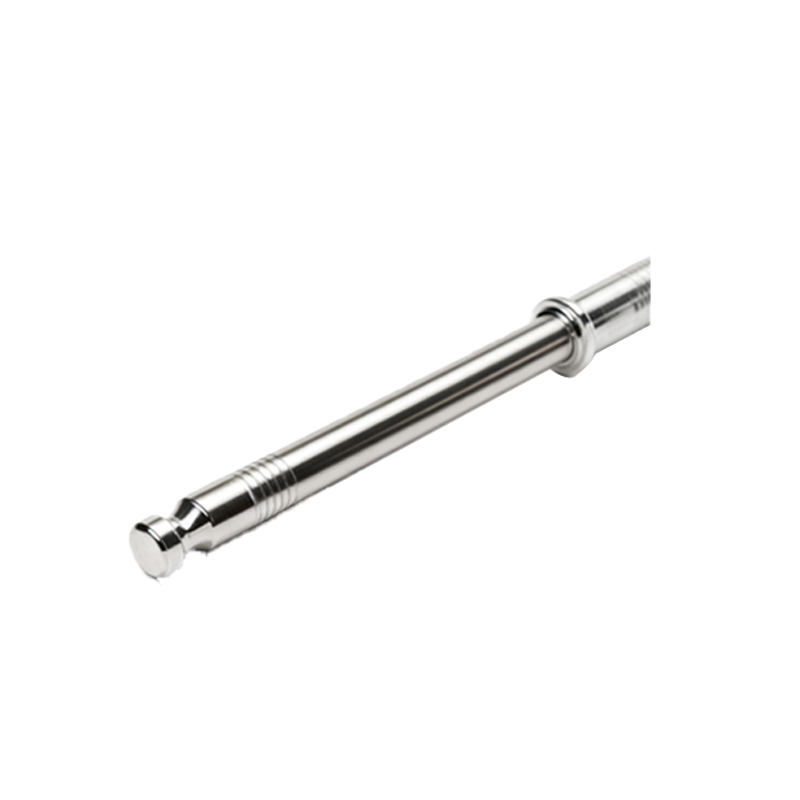
At the heart of a magnetic inductive sensor lies an LC oscillating circuit. When powered, the coil generates a high-frequency alternating magnetic field that emanates from the active face of the sensor. In the absence of a target, the oscillation maintains a constant amplitude. When a ferromagnetic object enters this magnetic field, eddy currents are induced on the surface of the target. These eddy currents draw energy from the oscillator, causing a measurable dampening or reduction in the oscillation amplitude. An integrated evaluation circuit continuously monitors this amplitude. Once the damping exceeds a predefined threshold, the circuit triggers a switching action, changing the output state of the sensor from "open" to "closed" or vice-versa, thereby signaling the presence of the target.
Key Advantages and Performance Characteristics
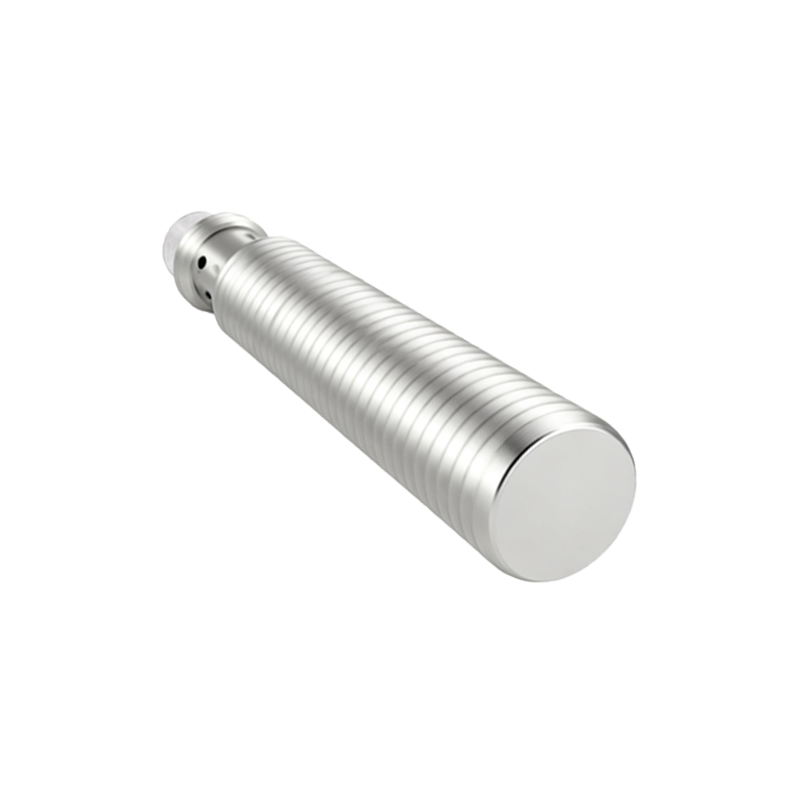
The widespread adoption of these sensors is driven by several compelling advantages. Their non-contact nature eliminates mechanical wear and tear, leading to exceptionally long service life and reduced maintenance costs. They offer high switching frequencies, enabling the detection of very fast-moving objects on production lines. Furthermore, they are largely immune to environmental factors such as dirt, oil, and non-conductive contaminants, as these materials do not interact with the magnetic field. The sensing distance, or "switching distance," is a fixed characteristic based on the sensor's design and is not adjustable, which guarantees consistent and repeatable operation. Modern variants also provide impressive shielding capabilities, allowing for flush mounting in metal without affecting performance, which simplifies installation.
Primary Industrial Applications and Use Cases
Magnetic inductive sensors find utility in a vast array of industrial applications. A quintessential use is in position sensing, such as verifying the open or closed state of machine guards, doors, or valves. They are indispensable in counting and detection tasks on conveyor systems, monitoring the passage of metal parts, bottles with metal caps, or pallets. In rotary applications, they serve as speed or zero-point sensors by detecting gear teeth, bolts, or keyways on rotating shafts. They also play a critical role in end-of-travel detection for cylinders and linear actuators, providing precise feedback for control systems. Their robustness makes them ideal for heavy machinery, automotive manufacturing, material handling, and packaging industries.
Selection Criteria and Installation Considerations
Selecting the appropriate sensor requires careful consideration of several parameters. The nominal sensing distance (Sn) is paramount and must be chosen with a safety margin to account for target variations and temperature effects. The housing material and shape (e.g., cylindrical, rectangular) must suit the mechanical and environmental constraints. Electrical characteristics, including operating voltage (commonly 10-30V DC or 20-250V AC), output type (PNP/NPN, NO/NC), and current rating, must be compatible with the control system. For installation, ensuring the correct orientation and maintaining the specified non-metallic clearance around the sensing face is crucial for reliable operation. Proper shielding and protection from weld spatter or strong external magnetic fields are also vital considerations in specific installations.
Comparison with Other Proximity Sensor Types
It is instructive to contrast magnetic inductive sensors with other common proximity technologies. Capacitive sensors can detect both metallic and non-metallic materials but are more sensitive to environmental changes like humidity. Ultrasonic sensors offer longer ranges and can detect various materials but are generally slower and more expensive. Photoelectric sensors provide very long ranges and precise detection but can be obstructed by dirt and require a clear line of sight. The magnetic inductive sensor's strength lies in its rugged, cost-effective, and highly reliable detection of ferrous metals in challenging conditions where the limitations of other technologies become apparent. This makes it the undisputed first choice for pure metal detection tasks in core industrial automation.
Future Trends and Technological Evolution
The evolution of magnetic inductive sensors continues alongside Industry 4.0 and smart manufacturing trends. While the core electromagnetic principle remains unchanged, integration with digital