Introduction to Photoelectric Sensing Technology
Photoelectric sensors are indispensable components in modern industrial automation, utilizing light beams to detect the presence, absence, or distance of objects. Their operation is based on the emission of a light source, typically an LED or laser, and a receiver that detects changes in the received light signal. These sensors are prized for their non-contact operation, high speed, and reliability across diverse environments. Common types include through-beam, retro-reflective, and diffuse reflective sensors, each suited for specific detection challenges. The core principle involves the interruption or reflection of a light beam, which is then converted into an electrical signal for processing by a control system. This fundamental technology forms the backbone of countless automated processes, from simple object counting to complex robotic guidance.
Case Study 1: Object Detection on High-Speed Conveyors
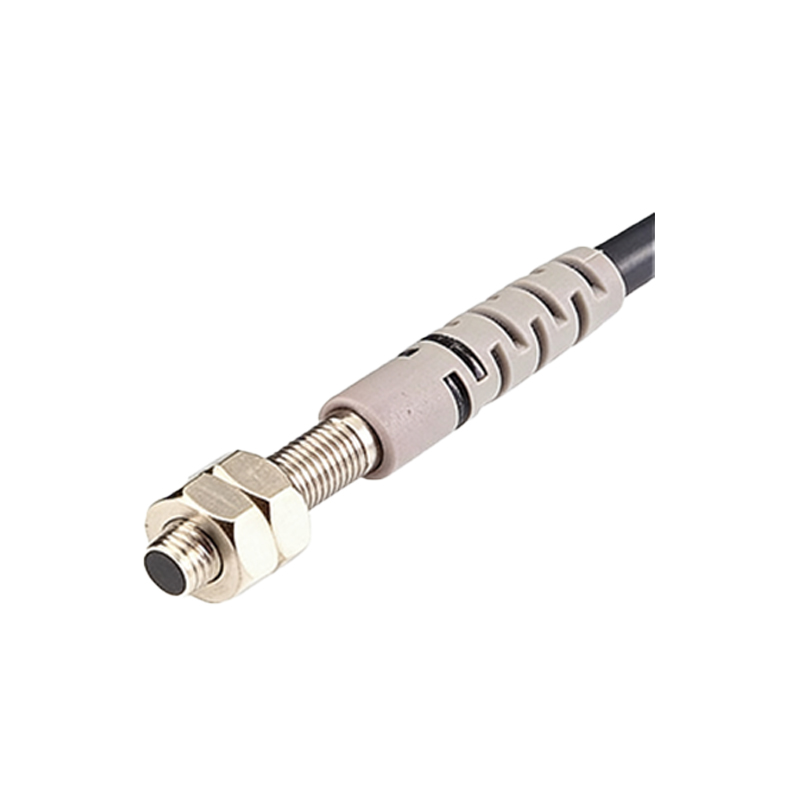
In packaging and logistics facilities, high-speed conveyor systems require precise and rapid object detection to manage sorting, counting, and routing. Through-beam photoelectric sensors are frequently deployed in these scenarios. One specific application involves detecting small parcels on a conveyor belt moving at speeds exceeding 3 meters per second. A through-beam sensor, with its separate emitter and receiver units mounted on opposite sides of the belt, creates an uninterrupted light curtain. When a parcel breaks this beam, the sensor sends an instantaneous signal to the programmable logic controller (PLC). This triggers subsequent actions like diverting the parcel to the correct chute or incrementing a counter. The key advantages here are the sensor's long sensing range, immunity to the color or surface finish of the object, and exceptional response time, which is critical for maintaining throughput without errors.
Case Study 2: Precise Positioning in Robotic Assembly
Robotic arms used in automotive or electronics assembly demand micron-level precision for part placement. Diffuse reflective sensors with background suppression capabilities are instrumental in these tasks. For instance, in a circuit board assembly line, a robot needs to pick a specific component from a feeder tray and place it on a board. A compact, background suppression sensor is mounted on the robot's end-effector. It emits a focused light spot onto the tray. The sensor is precisely calibrated to detect only the component within a very narrow defined distance, effectively ignoring the tray surface behind it. This allows the robot to confirm the component's presence and exact height before gripping, ensuring successful pickup. This application highlights the sensor's ability to perform accurate distance-based detection regardless of the target's color or reflectivity, a common challenge in automated assembly.
Case Study 3: Liquid Level Control in Transparent Containers
Monitoring liquid levels in bottles or tanks, especially when the container is made of clear glass or plastic, presents a unique challenge. Standard sensors might struggle with the transparent medium. A polarized retro-reflective photoelectric sensor provides an elegant solution. In a beverage filling line, these sensors are positioned at the desired fill level on the bottle neck. The sensor emits polarized light towards a special retro-reflector. When an empty bottle is present, the light beam passes through, reflects off the retro-reflector, and returns to the receiver. Once the liquid rises and interrupts the beam, the signal is lost, signaling the filler to stop. The polarization filter is crucial as it eliminates false triggers caused by reflections from shiny bottle surfaces, ensuring detection is based solely on the liquid interrupting the optical path. This ensures consistent fill volumes and minimizes waste.
Case Study 4: Edge Guidance in Web Processing
Continuous material webs, such as paper, plastic film, or textiles, must be kept aligned during processes like printing, coating, or slitting. Photoelectric sensors are central to edge detection systems that guide these materials. A common setup involves a contrast sensor, which detects the difference in reflectivity between the material and its background (often a roller). The sensor is mounted on a moving carriage that follows the web's edge. As the web wanders, the sensor detects the transition from the material to the background roller. This error signal is sent to a controller that adjusts guiding rollers to recenter the web. This application relies on the sensor's high resolution and ability to detect minute contrast differences at high line speeds, ensuring material stability and preventing costly tears or misalignment.
Case Study 5: Safety Light Curtains for Machine Guarding
Beyond process control, photoelectric sensors are vital for personnel safety. Safety light curtains create an invisible protective screen around hazardous machinery, such as press brakes or robotic work cells. These systems consist of multiple aligned emitter and receiver pairs creating a vertical plane of light. If an operator's hand or body breaks any beam within the protected area, the system immediately sends a stop signal to the machine. Modern safety light curtains offer high resolution (finger or hand detection), muting functions for allowing material passage, and compliance with stringent international safety standards like ISO 13849. This application underscores the critical role of photoelectric technology in enabling safe human-machine collaboration in automated environments.
Conclusion and Future Trends
The analyzed cases demonstrate the versatility and critical importance of photoelectric sensors across industrial automation. From enabling high-speed logistics to ensuring operator safety, their applications are foundational. Future developments are focusing on enhancing performance through innovations like laser-based sensors for even greater precision and range, IO-Link enabled sensors for advanced diagnostics and parameter setting, and increased robustness for operation in extreme conditions of temperature, dust, and vibration. As Industry 4.0 and smart factories evolve, the integration of photoelectric sensors into networked, data-rich systems will further amplify their value, providing not just detection but actionable intelligence for predictive maintenance and process optimization.