Introduction to Boluo Photoelectric Sensors
Boluo photoelectric sensors are integral components in modern industrial automation, renowned for their precision, reliability, and versatility. These devices operate on the fundamental principle of converting light signals into electrical signals to detect the presence, absence, or distance of objects without physical contact. The core mechanism involves an emitter, which projects a light beam—typically infrared, visible red, or laser—and a receiver that captures the light's reflection or interruption. This non-contact detection method makes them ideal for harsh environments where contamination, wear, or mechanical damage is a concern for physical switches. Industries ranging from packaging and material handling to automotive assembly and pharmaceutical manufacturing rely heavily on these sensors for process control, quality assurance, and safety systems. The "Boluo" designation often refers to a specific brand or series known for robust construction and consistent performance, embodying key advancements in optoelectronic technology tailored for demanding applications.
Through-Beam Sensors (Opposed Mode)
Through-beam photoelectric sensors, also known as opposed or beam-break sensors, consist of two separate units: a transmitter and a receiver positioned directly opposite each other. The transmitter continuously emits a light beam towards the receiver. An object is detected when it passes between the two units, completely interrupting the light beam. This configuration offers the longest sensing range and highest excess gain among photoelectric types, making it exceptionally reliable for detecting small, opaque objects or for use in environments with significant dust or dirt that might scatter light. It is less susceptible to variations in object color, reflectivity, or surface finish. Common applications include detecting objects on high-speed conveyor belts, checking for broken wires or threads in textile machinery, and providing safety curtains for hazardous area access control. The primary consideration for installation is the precise alignment of the two separate housings.
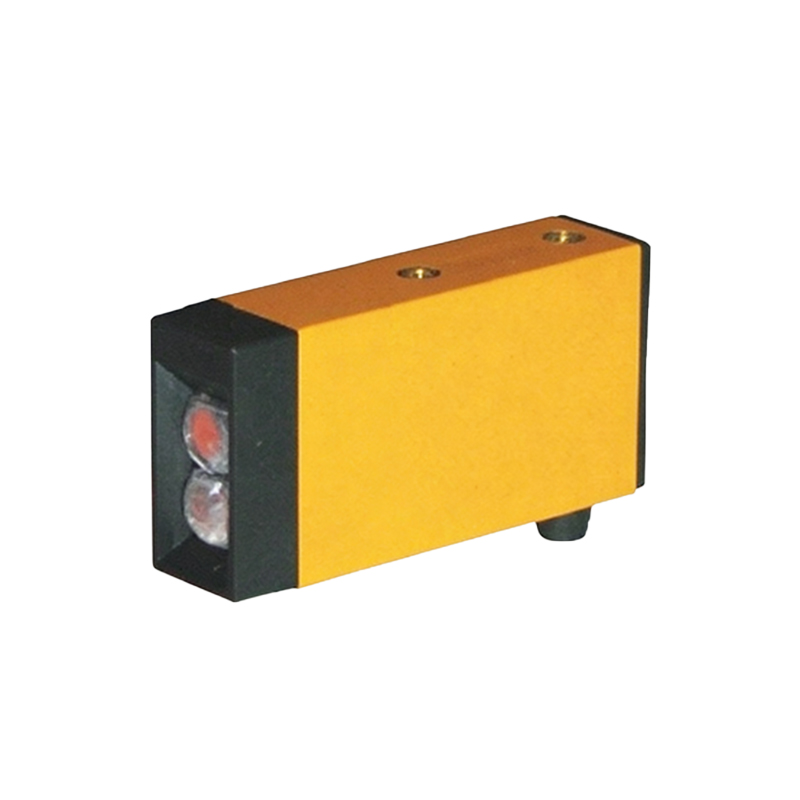
Retro-Reflective Sensors
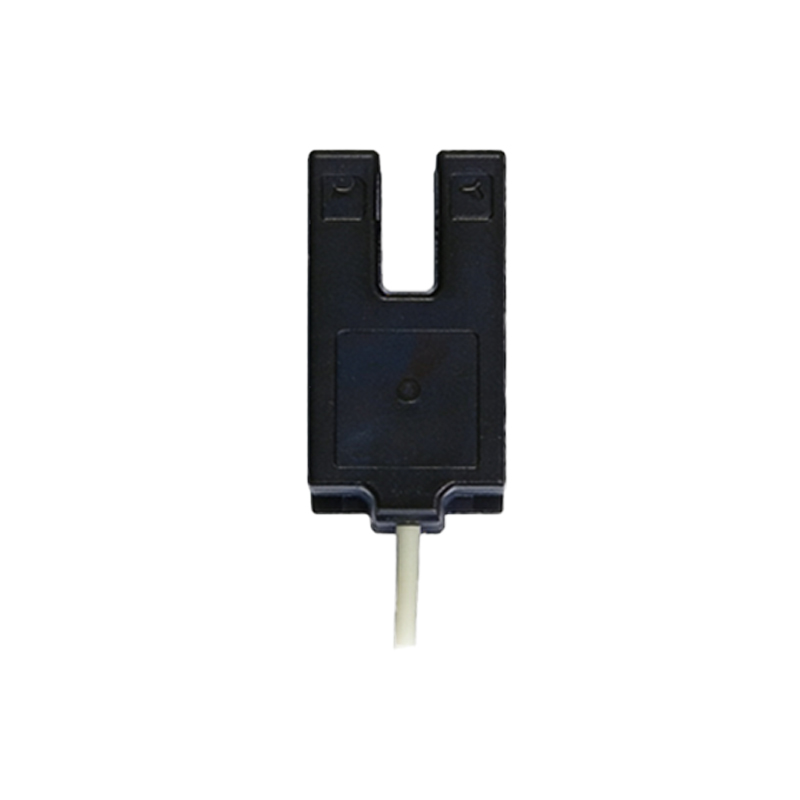
Retro-reflective sensors house both the emitter and receiver in a single unit. They operate by projecting a light beam towards a specially designed reflector, often a corner-cube retro-reflector, which bounces the light directly back to the receiver. Detection occurs when an object passes between the sensor and the reflector, blocking the returning beam. This design simplifies installation compared to through-beam sensors, as it requires wiring only on one side and avoids the need for precise alignment of two separate devices over long distances. However, they can be "fooled" by highly reflective objects that might bounce sufficient light back to the receiver, mimicking the reflector. Many modern retro-reflective sensors incorporate polarization filters to mitigate this; the emitter's light is polarized, and the receiver only accepts light with the opposite polarization, which is a property provided by the corner-cube reflector. These sensors are widely used in automated door systems, palletizing stations, and for detecting vehicles or large containers.
Diffuse Reflective Sensors (Proximity Mode)
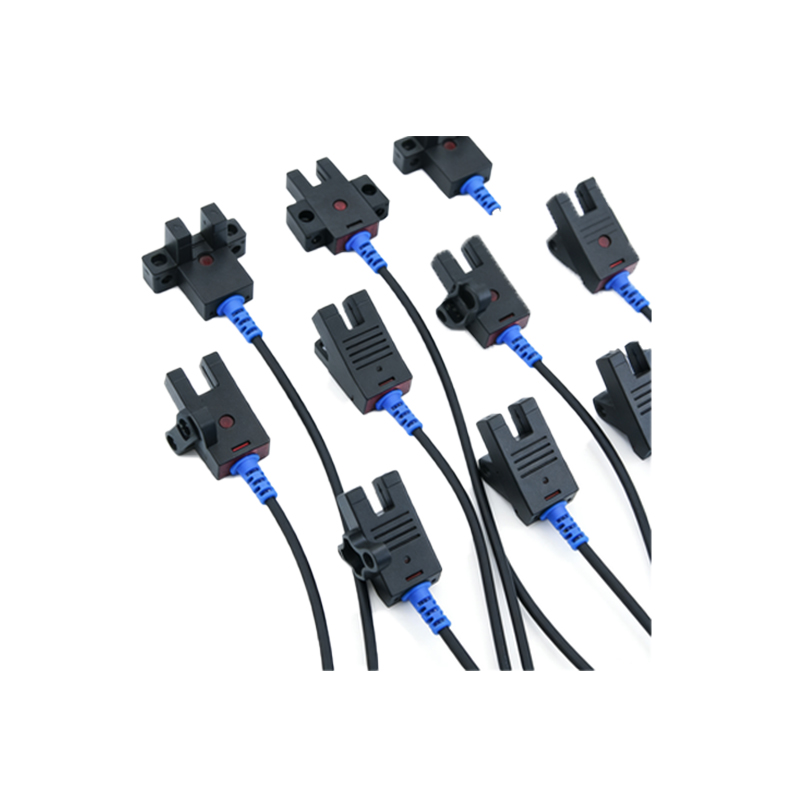
Diffuse reflective sensors, or proximity sensors, are the most compact and easiest to install, as they require only a single unit and no separate reflector. The emitter and receiver are housed together. The sensor detects an object when the emitted light beam strikes the object's surface and a sufficient amount of the diffusely reflected light is scattered back to the receiver. The effective sensing distance is heavily dependent on the object's size, color, and surface texture; light-colored, matte surfaces reflect more light and can be detected at greater distances than dark, shiny, or absorbent surfaces. To enhance performance, many diffuse sensors feature background suppression technology or fixed-field sensing, which uses triangulation to only accept reflections from a specific, defined distance, ignoring objects beyond that range. This makes them excellent for precise positioning tasks, such as detecting the fill level in transparent bottles, counting items on a conveyor, or controlling robot end-effector positioning.
Specialized Types: Background Suppression and Convergent Beam
Advanced variants of diffuse sensors offer enhanced capabilities for specific challenges. Background Suppression (BGS) sensors are designed to detect an object within a very precise range while ignoring any background surfaces behind it. They use optical triangulation; the emitted light spot on the target is viewed by the receiver from a different angle. Only objects at the exact focal point produce a sharp image on the receiver's position-sensitive detector. This allows for reliable detection regardless of the object's color or reflectivity and is perfect for applications like detecting a wafer in a cassette irrespective of the cassette's color. Convergent beam sensors, a subset of fixed-field sensors, create a very small, precisely focused beam at a fixed distance. They are ideal for detecting small parts, edges, or for applications requiring high positional accuracy, such as in electronic component assembly.
Fiber Optic Photoelectric Sensors
Fiber optic photoelectric sensors separate the sensing head from the amplifier unit using flexible fiber optic cables. The emitter and receiver light is channeled through these cables to a small, remote sensing tip. This configuration provides exceptional benefits in space-constrained, high-temperature, or highly corrosive environments, as only the rugged, passive fiber tip is exposed to the harsh conditions. The amplifier, containing the sensitive electronics, can be mounted in a safe, accessible location. Fiber optic sensors are available in through-beam, retro-reflective, and diffuse modes using different tip configurations. They are indispensable in applications like detecting minute components in microelectronics, monitoring hot glass bottles on a filling line, or sensing inside high-voltage equipment. Their small sensing spot size allows for extremely precise detection.
Laser Sensor Variants for Precision
Laser-based photoelectric sensors utilize a highly collimated, visible laser beam instead of standard LED light. This results in an extremely small, intense beam spot, enabling very long sensing ranges, exceptional accuracy, and the ability to detect tiny objects or precise edges. Laser sensors are commonly used in through-beam or diffuse modes with background suppression. Their coherent light allows for stable detection even on challenging surfaces like shiny metals or dark rubber. Applications include precise height measurement, edge guidance in web processing, detecting minuscule defects, and alignment tasks in semiconductor manufacturing. While offering superior performance, they require adherence to laser safety classifications (typically Class 1 or 2 for industrial sensors) to ensure eye safety.
Key Selection Criteria and Conclusion
Selecting the appropriate Boluo photoelectric sensor type requires a careful analysis of the application parameters. Key factors include the required sensing distance, the size and material properties of the target object, the environmental conditions (presence of dust, moisture, ambient light), the required response speed, and the available mounting space. Through-beam sensors offer maximum reliability for long-range detection, retro-reflective sensors provide a balance of range and easy installation, while diffuse sensors offer the simplest setup for close-range tasks. Specialized types like BGS and laser sensors solve specific precision challenges. By understanding the distinct operational principles and strengths of each photoelectric sensor type, engineers and system integrators can optimize automation systems for enhanced efficiency, reliability, and productivity, leveraging the full potential of Boluo's sensor technology in diverse industrial landscapes.