Introduction to Proximity Sensors
Proximity sensors are pivotal components in modern industrial automation, designed to detect the presence or absence of objects without physical contact. Among the diverse types available, inductive ring sensors stand out for their specialized applications. These sensors operate on the principle of electromagnetic induction, generating an oscillating magnetic field. When a metallic object enters this field, it induces eddy currents, causing a change in the sensor's oscillation amplitude. This alteration is detected and converted into an electrical signal, triggering an output. Inductive ring sensors are particularly valued for their durability, high switching frequency, and immunity to environmental factors like dust, oil, or moisture, making them ideal for harsh industrial settings such as manufacturing lines, automotive assembly, and packaging machinery.
How Inductive Ring Sensors Work
The core functionality of an inductive ring sensor revolves around its coil and oscillator circuit. Encased in a robust, ring-shaped housing, the coil generates a high-frequency electromagnetic field. As a metallic target—such as a bolt, nut, or tool—passes through the ring's aperture, it disrupts the field, leading to energy loss and a shift in oscillation. This change is processed by an evaluation circuit, which then activates a solid-state switch or relay output. Key parameters influencing performance include the sensor's sensing distance, which is typically limited to a few millimeters due to the ring's confined geometry, and the target material; ferrous metals like iron and steel yield stronger signals than non-ferrous ones like aluminum or copper. Additionally, factors like target size, shape, and speed must be considered to ensure reliable detection in applications like part counting, position verification, or safety interlocks.
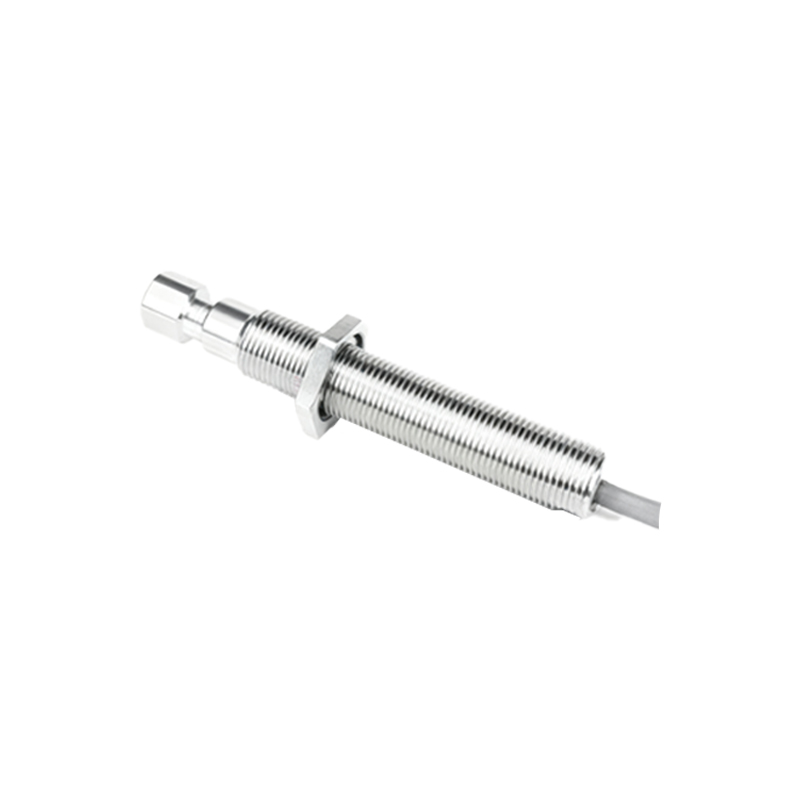
Advantages of Using Ring Sensors
Inductive ring sensors offer several distinct benefits that enhance operational efficiency. First, their non-contact nature eliminates mechanical wear, ensuring long service life and reduced maintenance costs. Second, they provide fast response times, often in the microsecond range, which is crucial for high-speed production processes. Third, the ring design allows for easy integration into conveyor systems or tubing, enabling seamless monitoring of objects in motion. Moreover, these sensors are highly resistant to interference from ambient conditions, such as vibration or temperature fluctuations, maintaining accuracy in demanding environments. For instance, in automotive manufacturing, ring sensors reliably detect pistons or valves on assembly lines, preventing jams and optimizing throughput. Their compact form factor also saves space, facilitating installation in tight layouts.
Common Applications in Industry
Inductive ring sensors find widespread use across various sectors due to their versatility. In the automotive industry, they are employed for tasks like detecting engine components during assembly or monitoring fastener presence in chassis systems. In packaging, these sensors verify the passage of metal caps or seals on bottles, ensuring quality control. The food and beverage sector utilizes them to count cans or detect metallic contaminants, enhancing safety compliance. Additionally, in machinery and robotics, ring sensors serve as end-position detectors or part presence verifiers, contributing to automated precision. For example, in CNC machining, they can identify tool breakage by sensing metal fragments, thereby preventing equipment damage. Their ability to function in oily or dusty conditions makes them a go-to choice for heavy industries like mining and construction, where reliability is paramount.
Selection and Installation Tips
Choosing the right inductive ring sensor requires careful consideration of application-specific factors. Start by determining the target material and size, as this affects sensing range and sensitivity. For small metallic items, a sensor with a narrow aperture and high frequency may be necessary. Next, evaluate environmental conditions; if exposed to extreme temperatures or chemicals, opt for sensors with IP67 or higher ingress protection ratings. Output type is another critical aspect—PNP or NPN transistor outputs should match the control system's requirements. During installation, ensure proper alignment of the ring with the object's path to avoid false triggers. Maintain adequate clearance from other metal objects to prevent interference, and follow manufacturer guidelines for wiring and power supply, typically 10-30V DC. Regular calibration and testing, especially in high-vibration settings, can prolong sensor life and maintain accuracy.
Future Trends and Innovations
The evolution of inductive ring sensors is driven by advancements in Industry 4.0 and smart manufacturing. Future models are likely to incorporate IoT capabilities, enabling real-time data transmission for predictive maintenance and process optimization. Enhanced materials, such as corrosion-resistant alloys or polymer composites, will expand their usability in aggressive environments. Miniaturization trends may lead to smaller rings with improved sensitivity, allowing for detection of microscopic metallic particles in pharmaceuticals or electronics. Additionally, integration with AI algorithms could enable adaptive sensing, where sensors self-adjust based on target variations. As industries prioritize