Introduction to Photoelectric Sensors
Photoelectric sensors are essential components in modern industrial automation, utilizing light beams to detect the presence, absence, or distance of objects. These sensors operate by emitting a light source—typically infrared, visible, or laser—and measuring the reflected or transmitted light to determine object characteristics. Common types include through-beam, retro-reflective, and diffuse reflective sensors, each suited for specific applications based on environmental conditions and detection requirements. Their reliability, speed, and non-contact nature make them ideal for manufacturing, packaging, and safety systems, where precision and efficiency are paramount. Understanding their functionality is crucial for selecting the right sensor in complex industrial setups.
Key Components and Working Principle
A photoelectric sensor consists of three main parts: an emitter, a receiver, and a signal processor. The emitter generates a focused light beam, which travels toward the target object. Depending on the sensor type, the receiver detects either the interruption or reflection of this beam. In through-beam sensors, the emitter and receiver are separate units; when an object blocks the light path, the sensor triggers an output. Retro-reflective sensors use a reflector to bounce light back to the receiver, while diffuse sensors rely on light scattering from the object itself. The signal processor interprets these changes, converting them into electrical signals for control systems. This principle ensures high accuracy in detecting various materials, including opaque, transparent, or shiny surfaces.
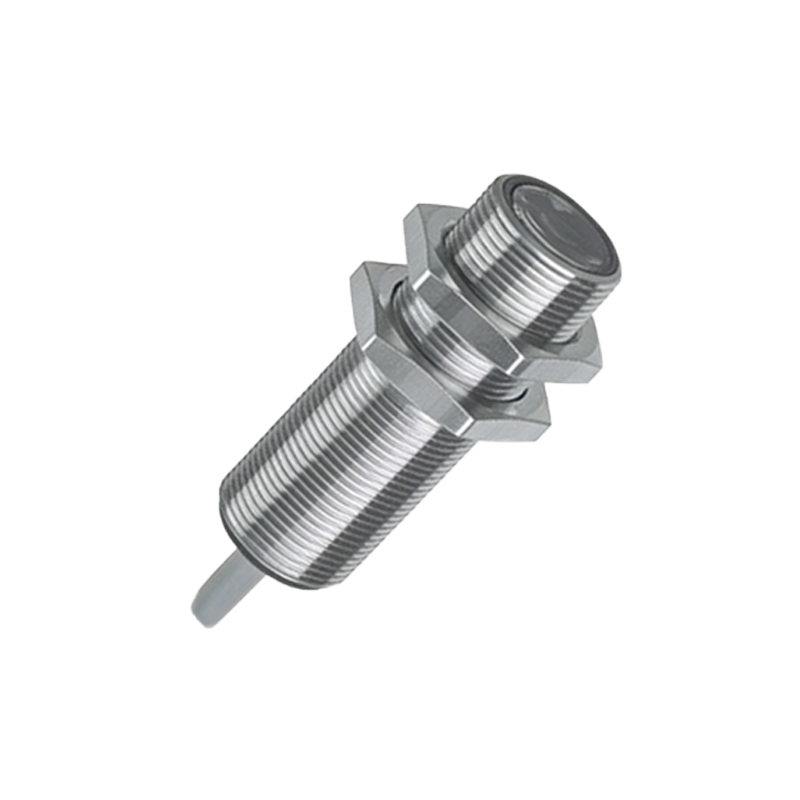
Common Photoelectric Sensor Images
Images of photoelectric sensors often depict their physical design and installation setups. Typical photos show compact, rugged housings made from materials like stainless steel or plastic, with LED indicators for status monitoring. Through-beam sensors appear as two separate units aligned opposite each other, emphasizing their long-range detection capabilities. Retro-reflective models feature a single housing with a built-in reflector, highlighting ease of installation in confined spaces. Diffuse sensors are illustrated with objects at close range, demonstrating their ability to detect without a separate receiver. These visuals aid engineers in identifying sensor types and planning layouts for conveyor belts, robotic arms, or assembly lines, ensuring optimal performance in real-world scenarios.
Symbol Diagrams in Circuit Design
Symbol diagrams for photoelectric sensors are standardized in electrical schematics to represent their function within control systems. The emitter is commonly denoted by a circle with an arrow pointing outward, symbolizing light emission, while the receiver is shown as a circle with a diagonal line or photodiode shape. In through-beam symbols, two separate icons are connected by dashed lines indicating the light path. Retro-reflective symbols include a reflector graphic, and diffuse symbols may incorporate a wave-like line to represent scattered light. These diagrams simplify circuit planning, helping engineers integrate sensors with PLCs, relays, or microcontrollers for automated processes. Accurate interpretation of symbols ensures correct wiring and reduces errors in industrial electrical designs.
Applications in Industrial Automation
Photoelectric sensors are widely used across industries due to their versatility. In manufacturing, they detect product presence on assembly lines, triggering robotic actions or quality checks. Packaging systems rely on them for counting items, monitoring fill levels, or verifying label positions. Safety applications include light curtains that halt machinery when objects enter hazardous zones. Additionally, they facilitate precision tasks like edge detection in printing or alignment in electronics manufacturing. Their ability to operate in harsh environments—resistant to dust, moisture, or vibration—makes them indispensable. Case studies often highlight reduced downtime and improved efficiency, underscoring their role in smart factories and Industry 4.0 initiatives.
Selection Criteria and Best Practices
Choosing the right photoelectric sensor involves evaluating factors such as sensing range, response time, and environmental conditions. For long-distance detection, through-beam sensors are preferred, while diffuse types suit short-range applications with varied surface textures. Consider the object's material: transparent objects may require polarized lenses, and dark surfaces might need high-intensity light sources. Electrical specifications, like output type (PNP/NPN) and voltage ratings, must match control system requirements. Installation best practices include aligning emitters and receivers precisely, avoiding ambient light interference, and regular maintenance to clean lenses. Adhering to these guidelines enhances sensor longevity and system reliability, minimizing false triggers in critical operations.
Future Trends and Innovations
Advancements in photoelectric sensor technology focus on miniaturization, enhanced connectivity, and smarter features. Emerging trends include IoT-enabled sensors with wireless communication for real-time data monitoring and predictive maintenance. Improved laser and LED sources offer higher precision in detecting minute objects or complex shapes. Integration with AI allows adaptive sensing, where sensors adjust parameters based on environmental changes. Additionally, energy-efficient designs reduce power consumption in sustainable industrial practices. These innovations promise to expand applications in areas like autonomous vehicles and smart logistics, driving further automation. Engineers should stay updated on these developments to leverage cutting-edge solutions for optimized performance.