Introduction to Proximity Sensing
Proximity sensors are a cornerstone of modern industrial automation, enabling the non-contact detection of objects within a defined sensing range. These devices operate without physical touch, making them ideal for applications requiring high reliability, fast response times, and minimal maintenance. By converting information about the presence or absence of an object into an electrical signal, they form a critical interface between the physical world and control systems. Their ability to function in harsh environments—resistant to dirt, oil, and vibration—sets them apart from mechanical limit switches and optical sensors in many demanding scenarios.
Fundamental Operating Principles
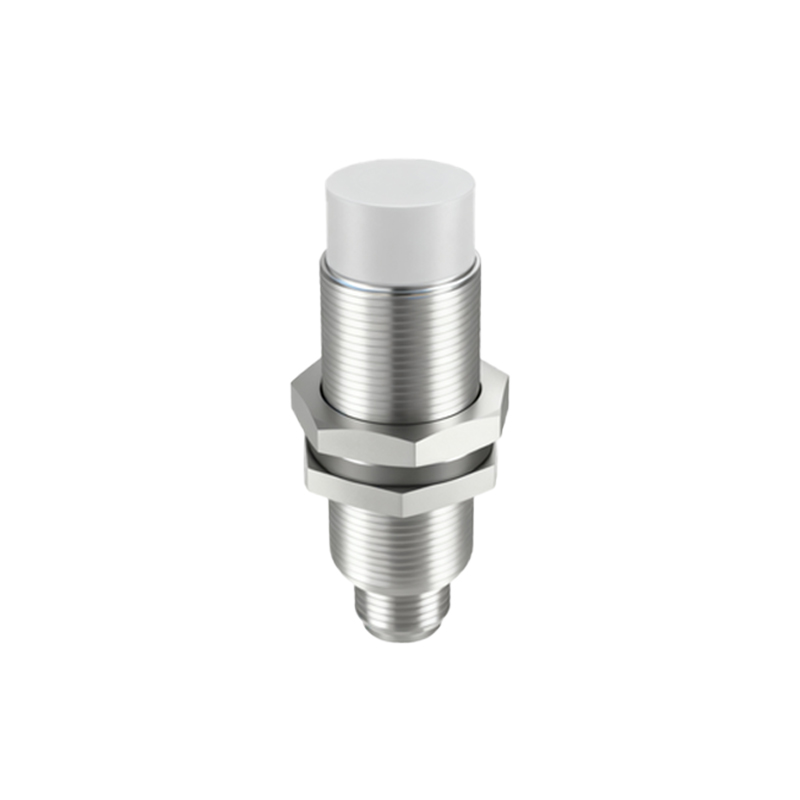
The core function of a proximity sensor is based on the disturbance of an electromagnetic field, acoustic wave, or light beam. Most common industrial types are inductive and capacitive. An inductive proximity sensor generates an oscillating electromagnetic field from its sensing face. When a metallic target enters this field, it induces eddy currents within the target, which in turn dampens the oscillator's amplitude. This change is detected by the sensor's circuitry, triggering a solid-state output switch. Capacitive sensors operate on a similar principle but can detect both metallic and non-metallic materials by sensing changes in capacitance caused by the target altering the dielectric constant of the space between the sensor and a ground plane.
Primary Types of Proximity Sensors
Several key technologies dominate the industrial landscape. Inductive proximity sensors are exclusively for detecting ferrous and non-ferrous metals, offering high switching frequencies and exceptional durability. Capacitive sensors detect a wider range of materials, including liquids, powders, and plastics, making them suitable for level detection and material handling. Ultrasonic proximity sensors use sound waves beyond human hearing; they measure the time-of-flight of an emitted sound pulse reflecting off a target, allowing for precise distance measurement regardless of color or material transparency. Photoelectric sensors, while often categorized separately, function as proximity devices using modulated light beams (visible, infrared, or laser) to detect object presence, excelling in long-range applications.
Key Performance Specifications
Selecting the appropriate sensor requires careful analysis of its specifications. The nominal sensing distance (Sn) is the theoretical range under standardized conditions, while the effective operating distance (Sr) accounts for manufacturing tolerances and temperature effects. Hysteresis is a crucial parameter that prevents output chattering when a target is at the sensing limit; it creates a differential between the switch-on and switch-off points. Repeatability defines the sensor's precision in consistently detecting a target at the same point. Other vital specs include switching frequency (response speed), temperature range, housing material (e.g., nickel-plated brass or stainless steel), ingress protection (IP) rating, and output configuration (NPN/PNP, NO/NC).
Wiring and Output Configurations
Industrial proximity sensors typically feature a 3-wire DC design, with two wires for power supply (brown for +V, blue for 0V) and one for the switched output (black). The output type is critical for integration with Programmable Logic Controllers (PLCs). NPN (sinking) outputs switch the negative (0V) line to the load, common in Asian and European designs. PNP (sourcing) outputs switch the positive (+V) line, often preferred in North America. The sensor can be normally open (NO), closing the circuit when a target is detected, or normally closed (NC), opening the circuit. Understanding these configurations is essential for proper circuit design and avoiding damage to controllers.
Advanced Features and Smart Sensors
Modern proximity sensors incorporate advanced features for enhanced functionality. Analog output versions provide a continuous voltage or current signal proportional to the distance to the target, enabling precise positioning tasks. Factor-1 cylindrical sensors offer the same sensing range from all sides, simplifying installation. IO-Link communication is a transformative development, turning simple binary sensors into intelligent devices. IO-Link sensors can transmit detailed diagnostic data (e.g., operating hours, temperature, signal strength) to the control system, enable parameter setting on-the-fly, and facilitate predictive maintenance, significantly reducing downtime.
Critical Applications in Automation
The applications are vast and integral to automated systems. On assembly lines, they verify part presence, count objects, and detect positional end points. In robotics, they are used for precise end-of-arm tooling detection and safe zone monitoring. Machine tools employ them for tool wear detection, spindle positioning, and chuck jaw monitoring. They are indispensable in material handling for pallet detection, conveyor jam prevention, and automated guided vehicle (AGV) navigation. In packaging, they control fill levels and detect labels or seals. Their robustness also makes them perfect for harsh environments like welding cells