In the world of automation and smart technology, proximity sensors are the silent, unseen workhorses that enable countless devices to interact with their environment without physical contact. These sensors detect the presence or absence of an object within a specific range, triggering an action or providing data to a control system. Their ability to operate reliably in harsh conditions, provide non-contact sensing, and deliver fast response times makes them indispensable in modern industrial, automotive, and consumer applications.
At its core, a proximity sensor is a device that emits a field or beam of electromagnetic radiation, or uses changes in a local field, to sense the presence of a nearby object. The sensor then converts this detection into an electrical signal. The key advantage is the lack of physical contact, which eliminates mechanical wear and tear, allows for detection of fragile objects, and enables high-speed operation.
Several primary types of proximity sensors dominate the market, each with distinct operating principles and ideal use cases. Inductive proximity sensors are one of the most common types. They generate an oscillating electromagnetic field. When a metallic object enters this field, it induces eddy currents within the object, which causes a change in the oscillation amplitude. This change is detected by the sensor's circuitry, signaling the presence of the object. Inductive sensors are robust, resistant to dirt and dust, and excel in industrial environments for detecting metal parts, such as in conveyor systems, machine tools, and robotic arms. However, they are limited to detecting ferrous and non-ferrous metals.
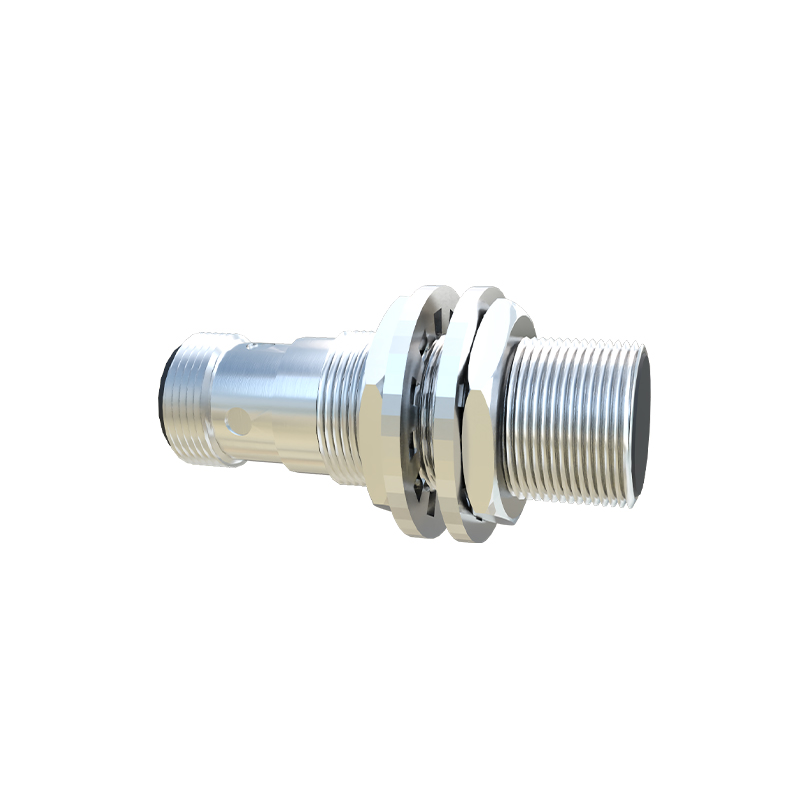
Capacitive proximity sensors, on the other hand, can detect both metallic and non-metallic objects, including liquids, powders, plastics, and wood. They operate by generating an electrostatic field. Any object that enters this field alters the capacitance of the sensor's circuit. This change in capacitance is measured to detect the object. This makes capacitive sensors highly versatile for applications like liquid level detection, material handling of non-metals, and touch-sensitive interfaces. They can even detect objects through certain non-metallic barriers.
For longer-range detection and applications requiring sensing of any material, photoelectric sensors are often the solution. These sensors use a light emitter (usually an LED or laser diode) and a receiver. They come in three main configurations: through-beam, retro-reflective, and diffuse. A through-beam sensor has separate emitter and receiver units; an object is detected when it breaks the light beam. This type offers the longest sensing range and highest reliability. Retro-reflective sensors house the emitter and receiver together, using a reflector to bounce the light back; detection occurs when the beam is interrupted. Diffuse sensors, or proximity-mode sensors, rely on light reflecting off the target itself back to the receiver. Photoelectric sensors are critical in packaging, material handling, and safety systems.
Ultrasonic proximity sensors use sound waves beyond the human hearing range. They emit high-frequency sound pulses and measure the time it takes for the echo to return from a target object. By calculating this time-of-flight, they can determine both the presence and distance of an object. Ultrasonic sensors are excellent for detecting objects regardless of color, transparency, or material, and they perform well in challenging environments with dust, smoke, or moisture. Common uses include distance measurement, level sensing in tanks, and obstacle detection for autonomous vehicles.
The applications of proximity sensors are vast and continually expanding. In the automotive industry, they are used for parking assistance, collision avoidance, and touchless trunk opening. In manufacturing, they provide precise position feedback, count objects, and control automated processes. Consumer electronics utilize miniature proximity sensors to turn off smartphone displays during calls to save power and prevent accidental touches, and in touchless faucets and soap dispensers for improved hygiene. In the realm of robotics, they are essential for navigation, object detection, and ensuring safe human-robot collaboration.
Selecting the right proximity sensor requires careful consideration of several factors. The nature of the target material (metal, plastic, liquid) is paramount. The required sensing distance, or range, must be specified. Environmental conditions such as temperature, presence of contaminants, or washdown requirements dictate the sensor's housing and ingress protection (IP) rating. The output type needed—digital (e.g., NPN/PNP transistor) or analog—depends on the control system. Finally, the response speed and installation constraints (size, shape) play a crucial role.
In conclusion, proximity sensors are fundamental components that bridge the physical and digital worlds. From ensuring the smooth operation of a high-speed production line to enabling the convenient features of a modern smartphone, their role is critical. Understanding the different types—inductive, capacitive, photoelectric, and ultrasonic—and their respective strengths allows engineers and designers to implement the most effective and reliable sensing solutions for any application, driving efficiency, safety, and innovation across all sectors of technology.