Introduction to Photoelectric Sensors
Photoelectric sensors are versatile devices widely used in industrial automation for detecting the presence, absence, or position of objects without physical contact. They operate by emitting a light beam, typically infrared, visible red, or laser, and measuring changes in the received light due to interruption or reflection. These sensors are valued for their high accuracy, long sensing ranges, and ability to function in harsh environments. Common types include through-beam, retro-reflective, and diffuse reflective sensors, each suited to specific applications based on factors like object material, distance, and environmental conditions. Their reliability makes them essential in manufacturing, packaging, and material handling systems, where they enhance efficiency and safety by enabling precise control and monitoring.
Conveyor Belt Object Detection
In conveyor systems, photoelectric sensors play a critical role in detecting items as they move along the belt. Through-beam sensors are often installed on opposite sides of the conveyor, with one unit emitting light and the other receiving it. When an object passes between them, it interrupts the beam, triggering a signal that can be used to count products, control sorting mechanisms, or initiate packaging processes. For example, in a bottling plant, these sensors ensure bottles are properly spaced and directed to filling stations, reducing jams and improving throughput. Their non-contact nature minimizes wear and tear, making them ideal for high-speed operations where durability is key.
Packaging Machine Positioning
Photoelectric sensors are integral to packaging machinery, where they ensure accurate positioning of materials such as boxes, labels, and films. Retro-reflective sensors, which use a reflector to bounce light back to the receiver, are commonly employed to detect the edges of packaging materials. In a carton sealing application, a sensor might detect when a box reaches the correct position, signaling a robotic arm to apply tape. This precision prevents misalignments and waste, optimizing production lines. Additionally, diffuse sensors can identify transparent or glossy surfaces by adjusting sensitivity, allowing for reliable detection even with challenging materials like plastic wraps or glass containers.
Safety Light Curtains in Machinery
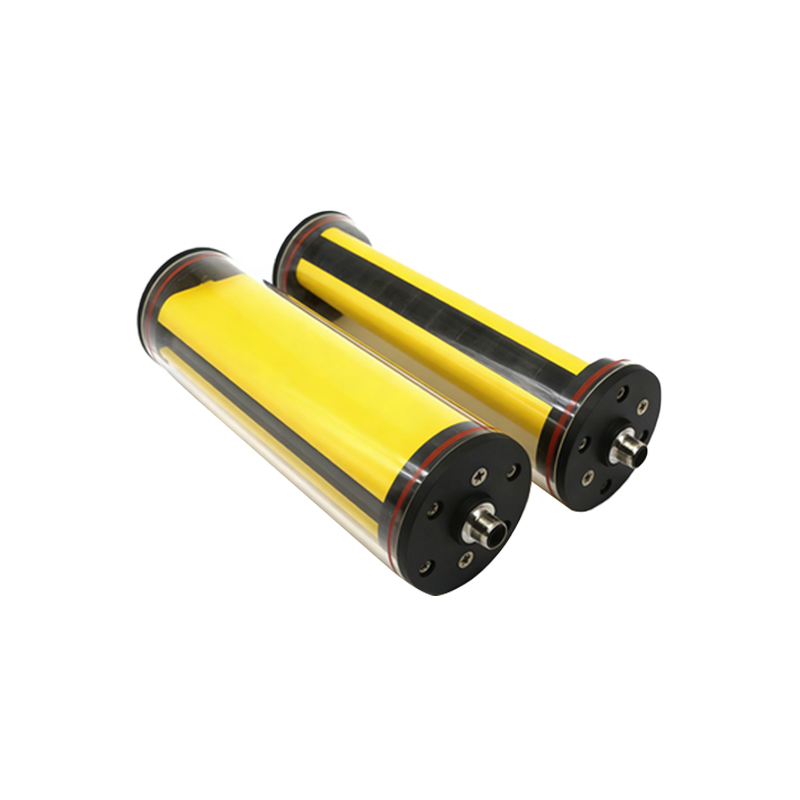
Safety light curtains utilize arrays of photoelectric sensors to create an invisible protective barrier around hazardous machinery, such as presses or robotic cells. When a person or object breaks the light beams, the system immediately halts machine operation to prevent accidents. These curtains are designed to meet stringent safety standards, offering fast response times and high resolution to detect even small intrusions. In automotive assembly lines, for instance, they safeguard workers while maintaining productivity by allowing quick resets after a breach. Their adaptability to various layouts and environments makes them a preferred choice for enhancing workplace safety without compromising efficiency.
Liquid Level Monitoring in Tanks
Photoelectric sensors are effective for monitoring liquid levels in storage tanks or processing vessels. By installing sensors at specific heights, they can detect when a liquid reaches or falls below a set point, triggering alarms or controlling pumps. In the chemical industry, for example, sensors with corrosion-resistant housings are used to manage aggressive fluids, ensuring safe levels and preventing overflows. Their ability to work with transparent or opaque liquids, coupled with minimal maintenance needs, makes them superior to mechanical floats in many applications. This reliability supports process automation and reduces the risk of spills or equipment damage.
Automated Guided Vehicle Navigation
Automated guided vehicles (AGVs) rely on photoelectric sensors for navigation and obstacle avoidance in warehouses and factories. Sensors mounted on AGVs emit light beams to detect reflective tapes or markers on floors, guiding the vehicles along predefined paths. They also scan for obstacles in their path, allowing AGVs to stop or reroute to prevent collisions. In logistics centers, this technology enables efficient material transport without human intervention, boosting productivity. The sensors' quick response and accuracy ensure smooth operations, even in dynamic environments with moving personnel or other equipment, highlighting their role in advancing smart manufacturing.
Quality Control in Electronics Assembly
In electronics manufacturing, photoelectric sensors contribute to quality control by verifying component placement and orientation on circuit boards. High-precision sensors can detect minute discrepancies, such as missing chips or misaligned connectors, during assembly processes. For instance, in surface-mount technology lines, sensors inspect boards after soldering to identify defects before further processing. This reduces rework and scrap, ensuring product reliability. Their non-invasive detection preserves delicate components, while their integration with vision systems enhances overall inspection capabilities, supporting the high standards required in the electronics industry.
Conclusion and Future Trends
Photoelectric sensors continue to evolve, with advancements in technology expanding their applications across industries. Trends include the integration of IoT connectivity for real-time data monitoring, miniaturization for compact spaces, and enhanced sensitivity for detecting smaller objects. As industries embrace automation and smart factories, these sensors will play an increasingly vital role in improving efficiency, safety, and quality. By understanding their diverse applications, engineers can leverage photoelectric sensors to solve complex challenges and drive innovation in industrial systems.