Introduction to Proximity Sensing
Proximity sensors are indispensable components in modern industrial automation, robotics, and consumer electronics. Their primary function is to detect the presence or absence of an object within a specified range without any physical contact. This non-contact detection capability is crucial for applications requiring high reliability, speed, and hygiene, or where the target object is fragile. The fundamental question—how do these sensors perform this task—is answered by exploring the underlying physical principles they leverage. Unlike limit switches that require mechanical contact, proximity sensors use various fields or beams to sense objects, making them wear-free and highly durable in demanding environments.
Core Detection Principles: An Overview
The detection mechanism of a proximity sensor is fundamentally based on the disturbance of a field or beam. The sensor generates a specific type of field—electromagnetic, electrostatic, or optical—from its active face. When a target object enters this field, it causes a measurable change in the field's properties. This change is then converted by the sensor's internal electronics into a clear electrical output signal, typically a switch ON or OFF state. The specific nature of the change depends entirely on the sensor's technology. The key is that the object itself alters the conditions the sensor is monitoring, whether it's the intensity of a reflected light beam, the capacitance of an electrostatic field, or the damping of an electromagnetic oscillation.
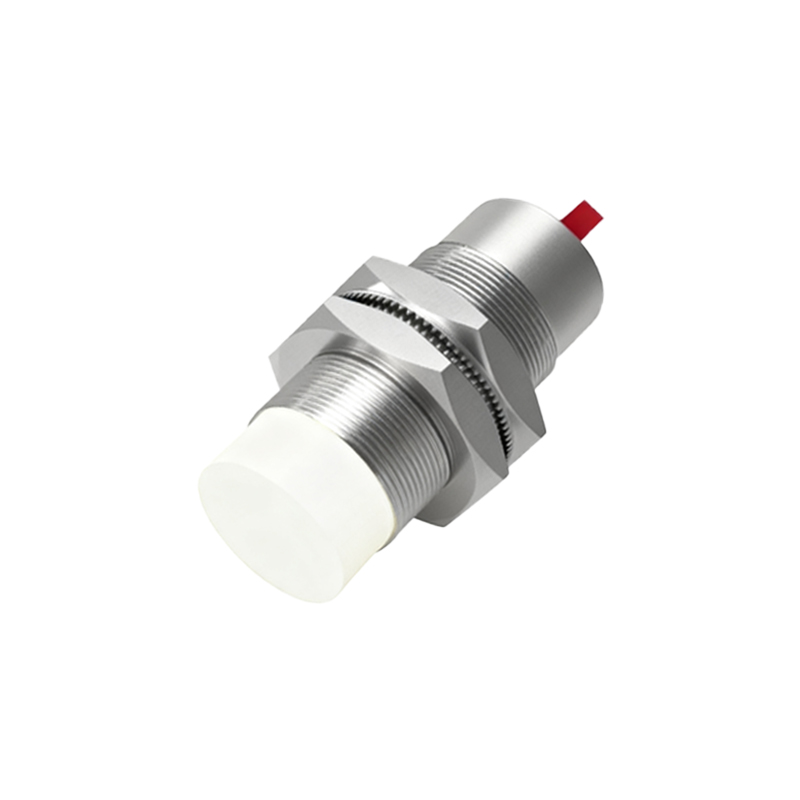
Inductive Proximity Sensors: Detecting Metals
Inductive proximity sensors are the workhorses for detecting metallic objects, primarily ferrous metals like steel and iron. Their operation is based on the principle of electromagnetic induction. The sensor contains a coil that is part of an oscillator circuit, generating a high-frequency electromagnetic field at its sensing face. When a conductive metal object enters this alternating field, eddy currents are induced on the surface of the metal. These eddy currents draw energy from the oscillator, causing a reduction in the oscillation amplitude. A threshold circuit monitors this amplitude drop and triggers a solid-state output switch when the change exceeds a set level. The sensing distance depends on the metal's conductivity, permeability, and size, with ferrous metals typically offering the longest range.
Capacitive Proximity Sensors: Versatile Material Detection
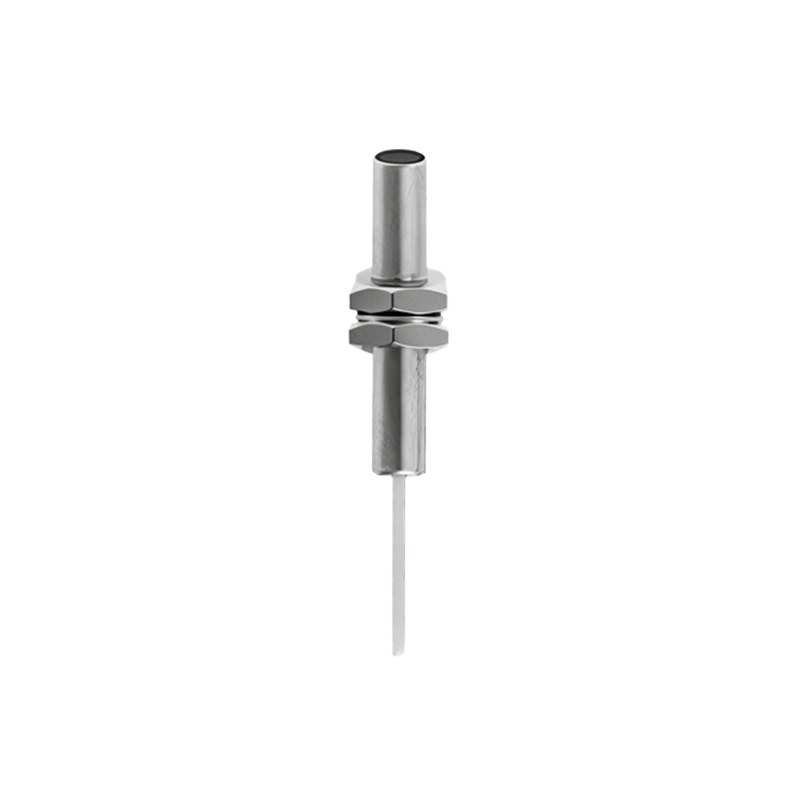
Capacitive sensors offer a broader detection capability, sensing both metallic and non-metallic materials such as plastics, glass, wood, liquids, and granules. They operate by generating an electrostatic field. The sensor's active face acts as one plate of a capacitor, with the ground potential or a separate reference electrode acting as the other. When any material with a dielectric constant different from air approaches, it alters the capacitance of this system. The sensor's circuitry is tuned to oscillate at a specific frequency related to this capacitance. The intruding object changes the dielectric constant, thus changing the capacitance and the oscillation frequency. This shift is detected, processed, and converted into an output signal. Sensitivity adjustments allow these sensors to ignore certain materials (like a container wall) to detect the contents inside.
Photoelectric Sensors: The Beam-Based Approach
Photoelectric proximity sensors, or photoelectric switches, use light to detect objects. They consist of a light emitter (usually an LED producing visible red, infrared, or laser light) and a receiver (a phototransistor or photodiode). Detection occurs when the target object interrupts or reflects this light beam. There are three main operating modes for proximity detection: Through-beam, Retro-reflective, and Diffuse (proximity) mode. In the Diffuse mode, most relevant for proximity sensing, the emitter and receiver are housed in the same unit. The sensor emits a light beam, and the target object reflects a portion of this light back to the receiver. The sensor triggers when the intensity of the reflected light exceeds a preset threshold. The detection range and reliability are influenced by the object's color, reflectivity, surface texture, and size.
Ultrasonic Proximity Sensors: Using Sound Waves
Ultrasonic sensors detect objects by using sound waves at frequencies above the human hearing range (typically 40-400 kHz). They operate on a principle similar to sonar. The sensor emits short, high-frequency sound pulses from a piezoelectric transducer. These pulses travel through the air, hit an object, and are reflected back as an echo to the sensor. An internal electronic timer measures the time interval between emitting the pulse and receiving the echo. Since the speed of sound in air is known, the distance to the object can be calculated precisely. For simple proximity detection, the sensor is set to switch its output when an object comes within a certain time-of-flight window, indicating it is within the preset sensing range. These sensors are excellent for detecting objects regardless of color,