Introduction to the OPU203 Forked Photoelectric Sensor
The OPU203 is a high-performance forked (or U-shaped) photoelectric sensor designed for precise and reliable object detection in demanding industrial environments. Unlike through-beam sensors that require separate emitter and receiver units, the OPU203 integrates both components into a single, robust housing. This design forms a "fork" or gap through which objects pass, interrupting the light beam. This configuration simplifies installation and alignment, as the optical axes are pre-aligned at the factory, ensuring optimal performance without tedious manual adjustment. The sensor is engineered to detect small objects, count items on high-speed production lines, verify part presence, and monitor edge positions with exceptional accuracy.
Key Technical Specifications and Operating Principle
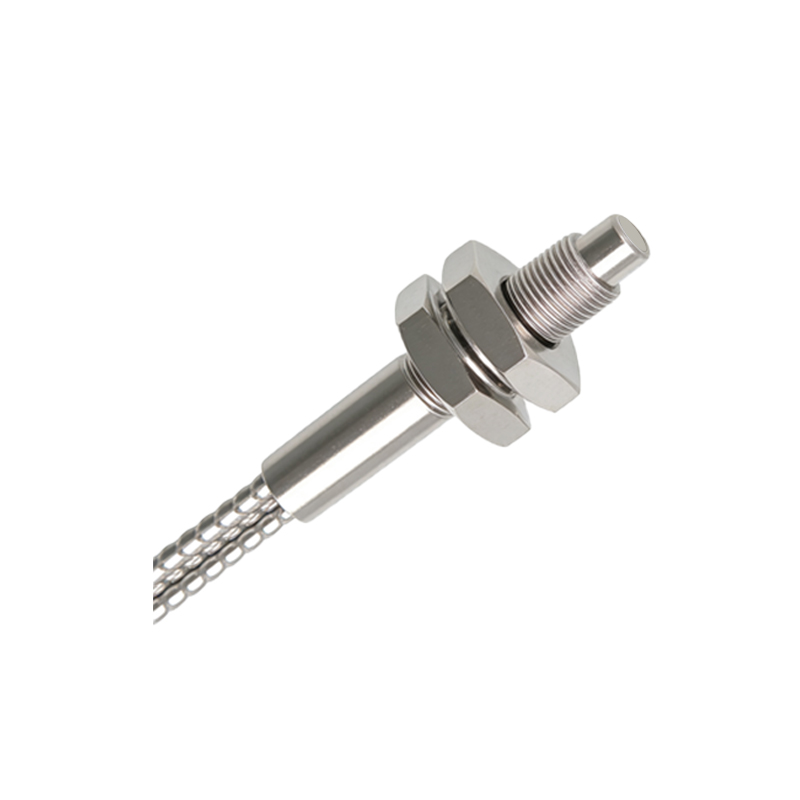
At its core, the OPU203 operates on the principle of modulated infrared light. The built-in emitter constantly transmits a focused beam of infrared light to the receiver directly opposite. When an object enters the sensing gap, it obstructs this beam. The receiver detects this interruption and triggers a switching output. Key specifications typically include a sensing gap width (the distance between the arms of the fork), which defines the maximum object size that can pass through. The OPU203 often features a fast response time, enabling it to detect objects moving at very high speeds. It commonly offers both light-on and dark-on operation modes, allowing the output logic to be configured based on application needs—whether the output is active when the beam is received or when it is blocked.
Superior Performance in Challenging Environments
Industrial settings present numerous challenges, including ambient light interference, dust, oil mist, and mechanical vibration. The OPU203 is built to withstand these conditions. It utilizes a modulated light signal, which makes it highly immune to ambient light from factory lighting or sunlight. The housing is typically constructed from durable materials like metal or high-grade industrial plastic, offering high ingress protection ratings such as IP67, making it resistant to water and dust. This robustness ensures stable detection performance in environments like packaging machinery, automotive assembly lines, material handling systems, and textile manufacturing, where reliability is non-negotiable.
Output Configurations and Electrical Integration
The OPU203 is designed for seamless integration into control systems. It is commonly available with various output types to suit different interface requirements. These include NPN (sinking) and PNP (sourcing) transistor outputs, which are standard for connecting to Programmable Logic Controllers (PLCs), counters, and other industrial controllers. Some models may also feature a digital output or an analog variant for distance-based measurement within the gap. The sensor operates on a wide range of DC voltages, such as 10-30V DC, providing flexibility in different electrical setups. A built-in LED indicator provides clear visual status of the power supply and output state, aiding in quick diagnostics and setup.
Critical Application Examples Across Industries
The versatility of the OPU203 makes it indispensable across sectors. In electronics manufacturing, it detects tiny components on pick-and-place machines or verifies the presence of semiconductor chips on carriers. On bottling and packaging lines, it accurately counts bottles, cans, or packages as they pass through the fork at high speeds. In the automotive industry, it is used to confirm the placement of small parts like screws or springs before assembly proceeds. In printing and paper processing, it serves as a precise paper edge sensor or sheet counter. Its ability to detect transparent objects, like glass or clear films, when equipped with appropriate optical filters, further expands its utility.
Installation Best Practices and Maintenance Tips
Correct installation is paramount for reliable operation. The sensor must be securely mounted so that the target object reliably passes through the center of the sensing gap. It is crucial to ensure that no part of the machinery or other objects can cause accidental beam interruption. Cabling should be routed away from high-voltage lines and motors to prevent electrical noise interference. While the OPU203 is largely maintenance-free, periodic checks are recommended. The lens surfaces on both the emitter and receiver should be kept clean from dust, dirt, or oil buildup using a soft cloth to maintain optimal light transmission. Regularly verifying the sensor's output under operational conditions helps prevent unexpected downtime.
Advantages Over Alternative Sensing Technologies
Compared to other sensor types, the OPU203 offers distinct benefits. Versus diffuse-reflective sensors, it provides much higher precision and is unaffected by the color, reflectivity, or surface texture of the target object—it only needs to interrupt the beam. Compared to through-beam sensors with separate units, it eliminates complex alignment procedures and is less susceptible to misalignment from vibration or shock. While inductive or capacitive sensors are excellent for metal or material-specific detection, the OPU203 can detect any opaque material, making it a more universal solution for object presence and counting tasks where material composition varies.
Conclusion and Selection Considerations
The OPU203 forked photoelectric sensor represents a reliable, precise, and rugged solution for a vast array of automated detection tasks. When selecting an OPU203 model, engineers must consider several parameters: the required sensing gap width, the minimum detectable object size, response speed needed for the application, the required output type (NPN/PNP), and the environmental protection rating. Understanding these factors ensures the chosen sensor delivers maximum efficiency and longevity, contributing to smoother, more reliable, and more productive industrial automation processes. Its simplicity, combined with advanced performance, solidifies its role as a fundamental component in modern industrial sensing.