Introduction to Mercury Capacitive Proximity Sensors
In the realm of industrial automation, the demand for reliable, non-contact sensing solutions is paramount. Mercury capacitive proximity sensors stand out as a versatile and robust technology designed to detect a wide range of materials, including metals, plastics, glass, wood, and liquids. Unlike inductive sensors, which are limited to metallic targets, capacitive sensors operate by generating an electrostatic field. When any object enters this field, it alters the sensor's capacitance, triggering a switching signal. This fundamental principle allows Mercury sensors to excel in diverse and challenging applications, from level detection in tanks to material handling and packaging.
Core Technology and Operating Principle
The operational heart of a Mercury capacitive proximity sensor lies in its ability to measure changes in capacitance. The sensor's active surface, or sensing face, forms one plate of a capacitor, with the target object acting as the other plate. The internal oscillator circuit generates an electrostatic field emanating from this face. As a target approaches, the dielectric properties between the plates change, causing a shift in the oscillator's amplitude. A subsequent evaluation circuit monitors this change. Once the amplitude reaches a predetermined threshold—set by the sensitivity adjustment—the output state of the sensor switches. This sophisticated yet durable design ensures consistent performance even in environments with dust, moisture, or varying material compositions.
Key Features and Design Advantages
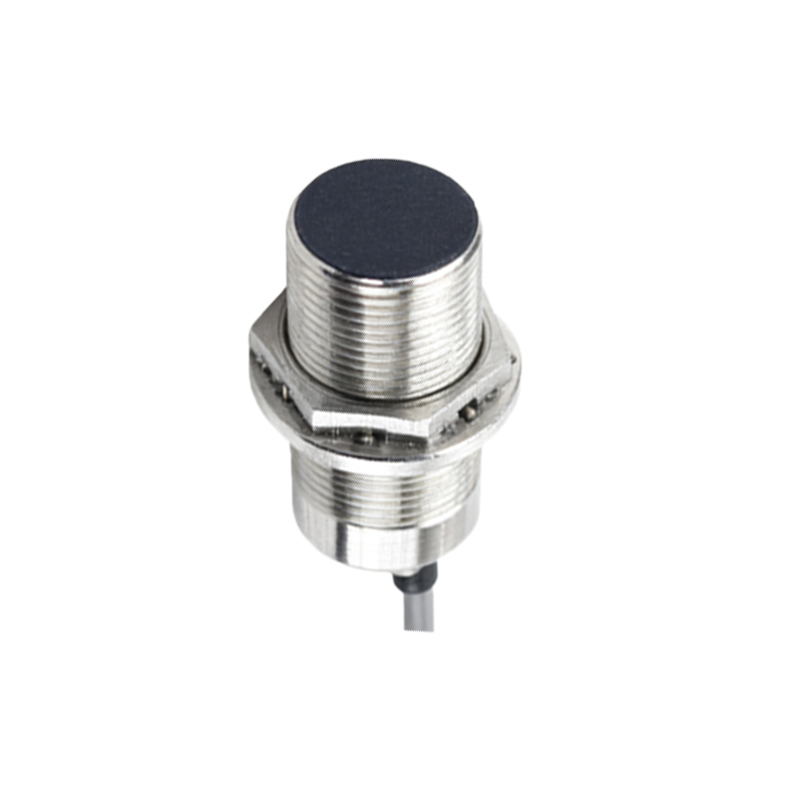
Mercury capacitive sensors are engineered for industrial durability and precision. A standout feature is their embedded sensitivity adjustment potentiometer, allowing fine-tuning on-site to ignore unwanted background objects or to detect specific materials through barriers. Many models are housed in robust, corrosion-resistant stainless steel or PBT plastic housings with IP67 or higher ingress protection ratings, making them suitable for washdown areas and outdoor use. They offer both analog and discrete output options (e.g., NPN, PNP, NO, NC) for seamless integration into PLC systems. Furthermore, their wide operating voltage range (typically 10-30V DC or 20-250V AC) and high switching frequency provide flexibility for various control architectures.
Application Spectrum in Modern Industry
The application versatility of Mercury capacitive sensors is a primary driver for their adoption. In packaging lines, they reliably detect the presence of plastic bottles, cardboard boxes, or foil wrappers. For liquid processing, they serve as excellent level controls for water, chemicals, or food products, even when sight glasses are fogged or tanks are opaque. In woodworking and semiconductor manufacturing, they detect non-metallic materials without physical contact, preventing product damage. They are also crucial in assembly verification, ensuring a gasket, label, or liquid is present before a process continues. Their ability to sense through non-metallic walls enables innovative mounting solutions for hygienic or sealed environments.
Installation and Configuration Best Practices
Correct installation is critical for optimal sensor performance. Installers must consider the sensor's flush or non-flush mounting capability, as specified in the datasheet. Ensuring a stable power supply with proper shielding and grounding minimizes electrical noise interference. The sensitivity adjustment should be calibrated with the actual target material at the desired sensing distance, typically starting at the lowest setting and increasing until reliable detection occurs. It is crucial to account for the dielectric constant of the target material; materials with higher constants (like water) are detected more easily than those with lower constants (like certain plastics). Adequate clearance from surrounding metal objects prevents false triggering.
Troubleshooting Common Operational Issues
Even with robust design, users may encounter issues. Intermittent operation often stems from unstable power, electrical noise, or an improperly adjusted sensitivity setting causing detection of background objects. No output may indicate wiring errors, a damaged sensor, or the target being outside the rated sensing range. False triggering can be caused by environmental factors like condensation, dust buildup on the sensing face, or nearby moving machinery. Systematic troubleshooting involves verifying power and wiring, cleaning the sensor face, re-adjusting sensitivity in the actual operating environment, and consulting the sensor's LED indicator for status codes as per the manual.
Future Trends and Integration with Industry 4.0
The evolution of Mercury capacitive sensors is closely tied to the advancement of Industry 4.0 and smart manufacturing. Future iterations are expected to feature enhanced digital communication protocols like IO-Link, which enables remote parameter setting, real-time condition monitoring, and predictive maintenance data. Miniaturization will allow integration into tighter spaces, while improved materials and coatings will extend service life in aggressive chemical environments. The convergence of sensing data with cloud analytics will facilitate smarter process optimization, where sensors not only detect presence but also contribute to data-driven decision-making for overall equipment effectiveness (OEE).