What is a Light Curtain Proximity Sensor?
A light curtain proximity sensor, often referred to as a safety light curtain or optical guard, is a non-contact electro-sensitive protective device (ESPE). It consists of a transmitter and a receiver unit that create an invisible curtain of synchronized, parallel infrared light beams. When an object, such as a hand or a tool, interrupts one or more of these beams, the sensor's control logic sends a stop signal to the guarded machinery. Unlike traditional mechanical guards or physical barriers, light curtains provide flexible, unobstructed access while ensuring a high level of safety for personnel working near hazardous moving parts on presses, robots, or automated assembly lines. Their primary function is to detect the presence of an object within a defined hazardous zone and initiate a protective action to prevent injury.
Core Components and Working Principle
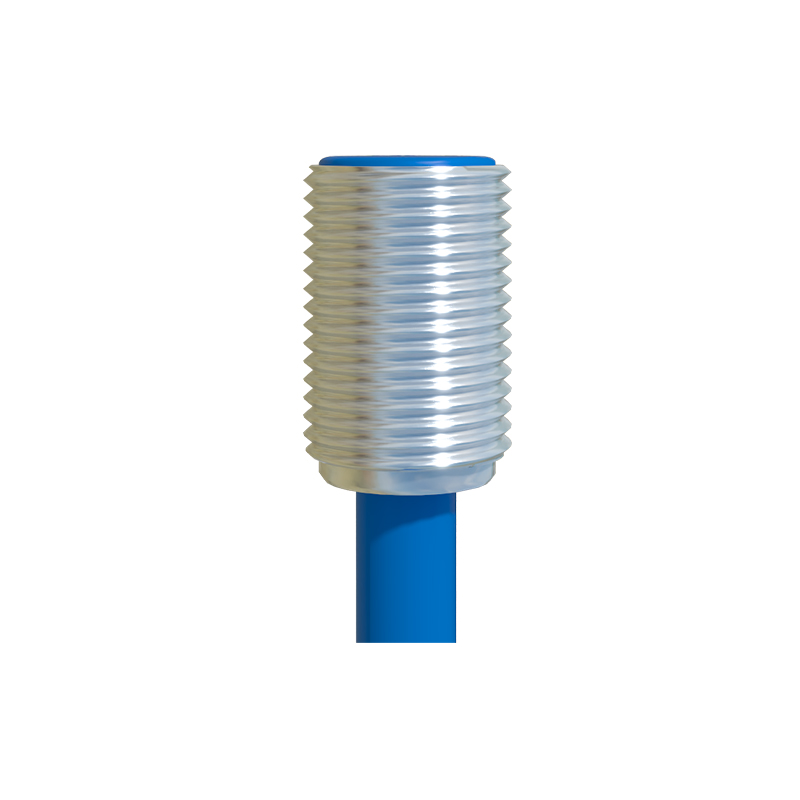
The system is fundamentally built around two aligned columns: the transmitter and the receiver. The transmitter column contains a series of light-emitting diodes (LEDs) that emit pulsed infrared light. The corresponding receiver column houses phototransistors precisely aligned to detect the light from each LED. A dedicated control unit synchronizes the pulsing of the LEDs and monitors the status of each beam. The working principle is based on the modulation of light. The LEDs are pulsed at a specific high frequency. The receiver is tuned to this same frequency, allowing it to distinguish the sensor's light from ambient factory lighting, thereby ensuring high immunity to optical interference. When the controlled machinery is in operation, the light curtain is active. Any interruption of the beam pattern is processed by the control logic, which typically triggers an immediate stop command (OSSD - Output Signal Switching Device) to the machine's safety relay or controller.
Key Types and Configurations

Light curtains are categorized mainly by their application: Type 2 and Type 4 according to IEC 61496 standards. Type 2 light curtains are used for personnel protection against minor injuries and require a shorter stopping performance. Type 4 offers higher reliability and is designed for protection against serious injuries from high-risk machinery; it incorporates redundancy and self-checking diagnostics. Furthermore, they are configured based on resolution (finger, hand, or body detection) and protective field height. Resolution, measured in millimeters, determines the smallest object the curtain can reliably detect. For finger protection, a resolution of 14mm is common, while 30mm is typical for hand detection. The protective field height is chosen to adequately cover the access point to the hazard.
Integration and Safety Considerations
Proper integration is critical for functional safety. The light curtain must be integrated into the machine's control system via a safety-rated interface, such as a safety relay or a safety PLC. The positioning (minimum safe distance) is governed by standards like ISO 13855. This distance calculation ensures that the machine comes to a complete stop before a person can reach the danger zone after breaking the light beam. It factors in the system's response time and the machine's stopping time. Regular testing and validation are mandatory. Most modern Type 4 curtains perform continuous self-tests, checking for faults like blocked lenses, misalignment, or internal failures. A comprehensive risk assessment of the specific application is always the first step in selecting and installing a light curtain system.
Advantages Over Traditional Safety Methods
Light curtains offer significant operational advantages. They enhance productivity by allowing easier and faster access to the machine for loading, unloading, and maintenance compared to fixed guards or gates. This leads to reduced cycle times. They provide greater flexibility as the protected area can be easily reconfigured by repositioning the columns, unlike permanent physical barriers. The visibility through the light curtain allows operators to monitor processes without obstruction. From a safety perspective, they offer highly reliable, non-contact detection that is not subject to mechanical wear and tear, ensuring consistent long-term performance when properly maintained and aligned.
Typical Applications in Industry
These sensors are ubiquitous in manufacturing environments. A prime application is on mechanical power presses and press brakes, where they protect operators' hands during the bending or stamping cycle. They are essential on robotic workcells, creating a safeguarded space around the robot's operational envelope. In automated packaging and palletizing lines, light curtains protect personnel from conveyors, wrappers, and moving arms. They are also used as presence-sensing devices for access control to hazardous areas, on machinery for injection molding, and on semiconductor manufacturing equipment. Any point-of-operation hazard where frequent access is required is a potential application for a light curtain proximity sensor.
Selection and Maintenance Guidelines
Selecting the right light curtain involves several parameters: the required safety performance level (PLr/SIL), the necessary resolution and protective height,