Introduction to the E3F-DS30C4
The E3F-DS30C4 represents a robust and reliable solution in the realm of industrial automation sensing. As a diffuse-reflective photoelectric sensor, it is engineered to detect objects without physical contact, thereby eliminating mechanical wear and ensuring long-term operational stability. This particular model is distinguished by its 30mm sensing distance and compact cylindrical housing, making it suitable for a wide array of applications where space is constrained and precise detection is paramount. Its design incorporates advanced optical components and a stable circuit to deliver consistent performance even in challenging industrial environments characterized by dust, vibration, or variable ambient light conditions.
Core Technical Specifications and Operating Principle
Operating on the diffuse reflection principle, the E3F-DS30C4 emits a modulated infrared light beam from its built-in LED. When an object enters the defined sensing range, a portion of this light is reflected back to the sensor's receiver. The internal circuitry processes this signal to trigger a solid-state NPN output. Key specifications include a sensing distance of 30cm, a response time of 1ms, and a light-on/dark-on selectable operation mode. It operates on a 10-30V DC supply voltage, featuring reverse polarity protection and a short-circuit protection mechanism. The housing is rated IP67, ensuring complete protection against dust ingress and temporary immersion in water, which is critical for washdown areas or outdoor installations.
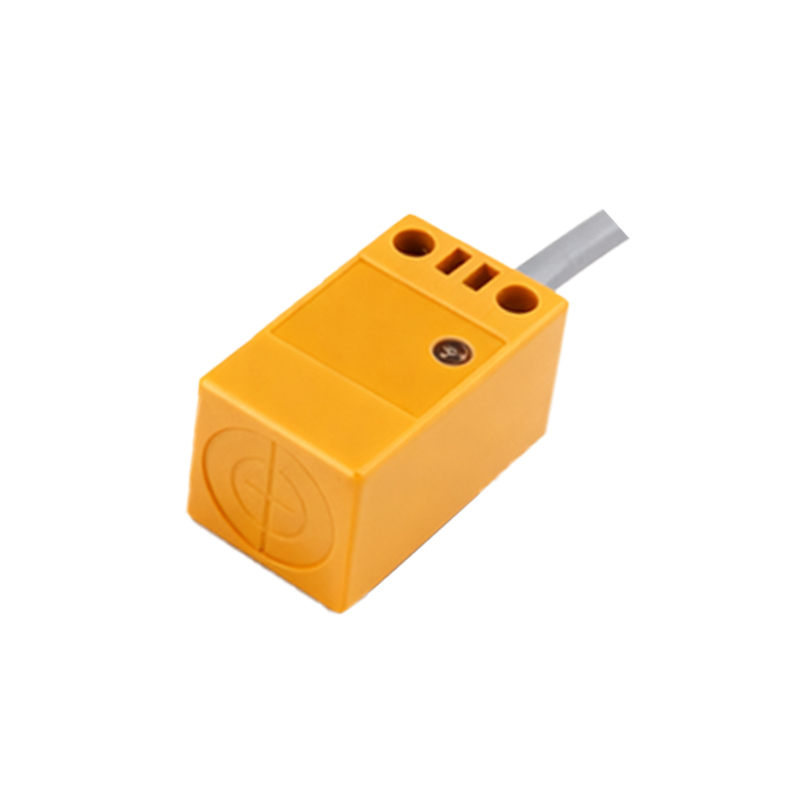
Wiring Configuration and Output Characteristics
The sensor utilizes a standard 3-wire configuration with a pre-attached 2-meter cable. The wire color coding is typically brown for DC positive (+V), blue for DC negative (0V), and black for the output signal. As an NPN output type, the black wire acts as a sinking output; it connects the load to the common ground (0V) when the sensor is activated. This configuration is widely compatible with programmable logic controllers (PLCs) and other control systems that accept sinking input signals. The output is in a normally-open (NO) state, but the function can often be switched between light-on and dark-on via an internal switch or wiring adjustment, providing flexibility for different logic requirements in control circuits.
Practical Installation and Alignment Guidelines
Proper installation is crucial for optimal performance. The cylindrical M18 housing allows for easy mounting using a standard locknut. It is vital to ensure the sensor's optical axis is perpendicular to the target surface for maximum reflectivity. For non-ideal surfaces (dark, shiny, or uneven), the effective sensing distance may reduce; therefore, conducting a practical test during commissioning is recommended. The sensor features a stable sensing field with minimal background interference, but it should be positioned away from highly reflective backgrounds or other strong light sources to prevent false triggering. The integrated LED indicators provide clear status feedback: a green LED for power and a red/orange LED for output activation, greatly simplifying alignment and troubleshooting.
Common Industrial Applications and Use Cases
The versatility of the E3F-DS30C4 makes it a staple across numerous industries. In packaging machinery, it is used for detecting the presence of boxes on a conveyor, controlling fill levels, or verifying label application. Within automotive assembly lines, it counts parts, confirms component placement, and monitors robotic end-effector positions. In material handling, it ensures proper stacking and retrieval by detecting pallet presence. Its IP67 rating also makes it ideal for food and beverage processing, where it can withstand frequent cleaning cycles while detecting bottles, cans, or product on washdown-resistant stainless steel conveyors.
Troubleshooting and Maintenance Best Practices
Despite its durability, occasional issues may arise. Common problems include failure to detect, intermittent operation, or constant output activation. A systematic approach to troubleshooting involves checking the power supply voltage and polarity, verifying the load connection, and inspecting for physical damage or contamination on the lens. Accumulated dirt or grease can attenuate the light beam, requiring regular cleaning with a soft cloth. Environmental factors such as extreme temperature, heavy steam, or intense ambient light should be evaluated against the sensor's specifications. Most failures are linked to improper wiring, power surges, or mechanical damage rather than internal component failure, highlighting the importance of correct installation and environmental consideration.
Comparison with Alternative Sensing Technologies
While the E3F-DS30C4 is highly effective, selecting the right sensor depends on the application. Compared to inductive proximity sensors, it can detect non-metallic objects like plastic, wood, and glass. Versus ultrasonic sensors, it offers faster response times but may be more affected by color and surface texture. For longer ranges or precise position detection, a through-beam sensor