Introduction to Proximity Sensing Technology
Proximity switches and sensors are fundamental components in modern industrial automation, enabling non-contact detection of objects. Unlike mechanical limit switches that require physical contact, proximity devices operate by sensing the presence, absence, or position of a target without any direct touch. This principle eliminates mechanical wear, increases operational speed, and enhances reliability in harsh environments filled with dust, moisture, or vibrations. The core function is to generate an electrical signal when a target object enters a specified detection range. These devices are categorized primarily by their underlying sensing technology, with inductive, capacitive, and photoelectric being the most prevalent types in industrial settings. Their application spans across countless processes, from assembly line object counting and machine tool positioning to safety interlocking and robotic guidance.
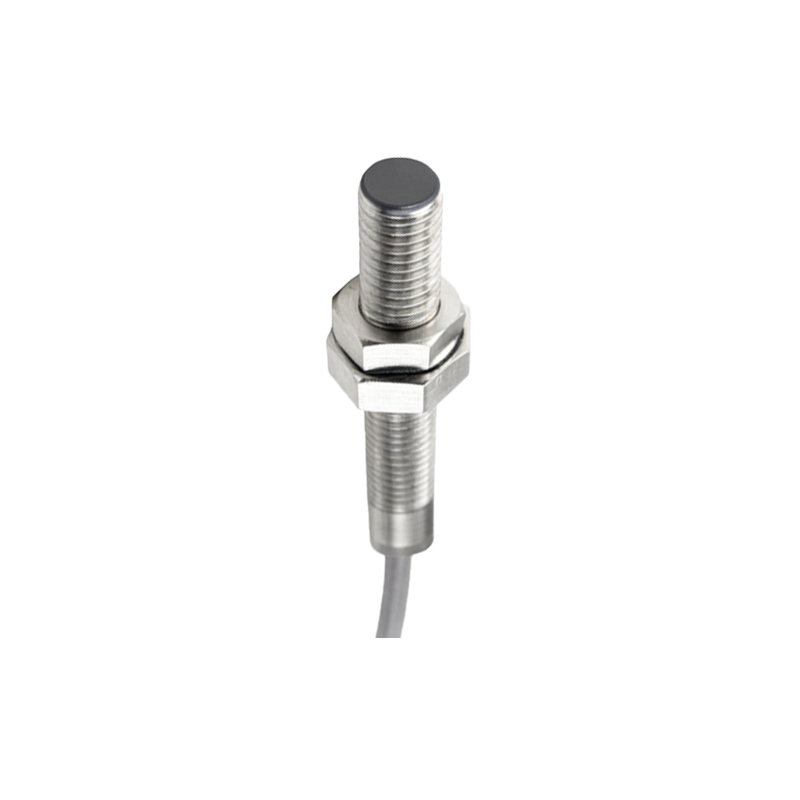
Operating Principle of Inductive Proximity Sensors
Inductive proximity sensors are specifically designed to detect metallic objects, primarily ferrous metals like iron and steel. The core of the sensor contains an oscillator circuit that generates a high-frequency electromagnetic field at its active face. When a conductive metal target enters this oscillating field, eddy currents are induced on the surface of the target. These eddy currents draw energy from the oscillator, resulting in a reduction of its oscillation amplitude. An integrated evaluation circuit continuously monitors this amplitude. Once the amplitude drop exceeds a predefined threshold—corresponding to the target being within the nominal sensing distance—the circuit triggers a state change in the sensor's output switch. This output typically controls a relay, PLC input, or other load. Key performance specifications include sensing distance, which is influenced by the target's material, size, and shape, as well as factors like hysteresis, which prevents output chattering when a target is at the edge of the detection zone.
Functioning of Capacitive Proximity Sensors
Capacitive proximity sensors operate on the principle of capacitance change and can detect a much wider range of materials, including metals, plastics, glass, wood, and liquids. The sensor's active face acts as one plate of a capacitor, with the target object acting as the other plate, and the intervening space as the dielectric. An internal oscillator is tuned so that it does not oscillate without a target present. As a target approaches the active face, the capacitance of the system increases. When the capacitance reaches a sufficient level, the oscillator begins to oscillate. Subsequent signal processing circuits convert this oscillation activity into a digital output signal change. The sensitivity of capacitive sensors is often adjustable, allowing them to be tuned for specific materials or to ignore certain interferences, such as a container wall, to detect the material level inside. This makes them ideal for applications like liquid level detection, bulk material handling, and non-metallic part presence verification.
Photoelectric Sensor Working Mechanism
Photoelectric sensors utilize light beams to detect objects. They consist of a light emitter (usually an LED producing visible red, infrared, or laser light) and a receiver. When the emitted light beam is interrupted or reflected by a target object, the change in light intensity at the receiver is processed to switch the output. There are three main operating modes: through-beam, retro-reflective, and diffuse reflective. In through-beam mode, the emitter and receiver are separate units; detection occurs when the target breaks the beam. This mode offers the longest sensing range and highest reliability. Retro-reflective mode uses a single housing containing both emitter and receiver, relying on a reflector to bounce the beam back; the target breaks this reflected beam. Diffuse reflective mode also uses a single unit, but the target itself reflects the light back to the receiver. Photoelectric sensors are highly versatile, capable of detecting objects of almost any material, color, or surface finish, and are essential for long-range detection, transparent object sensing, and precise positioning.
Output Configurations and Wiring
The sensing element's signal is converted into a usable electrical output through various switching technologies. The two primary output types are Digital (Discrete) and Analog. Digital outputs are simple on/off switches. Common digital output circuits include NPN (sinking) and PNP (sourcing) transistor outputs for DC sensors, and AC two-wire or DC three-wire configurations. Relay outputs are also used for switching higher power AC loads independently. Analog outputs, such as 4-20 mA or 0-10 V, provide a continuous signal proportional to the distance between the sensor and the target, enabling precise position monitoring. Wiring is critical for proper operation and noise immunity. Shielded cables are often recommended, especially for analog signals or in electrically noisy environments. Correct connection of the load, power supply, and ground according to the manufacturer's datasheet is paramount to ensure reliable switching and protect the sensor from damage.