Introduction to Amplifier Fiber Technology
Amplifier fiber, often integrated with rare-earth dopants like erbium, serves as a critical component in modern photoelectric sensing systems. This technology amplifies optical signals directly within the fiber, reducing signal loss and enhancing sensitivity in industrial environments. By leveraging principles of stimulated emission, amplifier fibers maintain signal integrity over long distances, which is essential for applications in manufacturing, automation, and safety monitoring. Their ability to operate in harsh conditions—such as extreme temperatures or electromagnetic interference—makes them a reliable choice for engineers seeking robust sensing solutions.
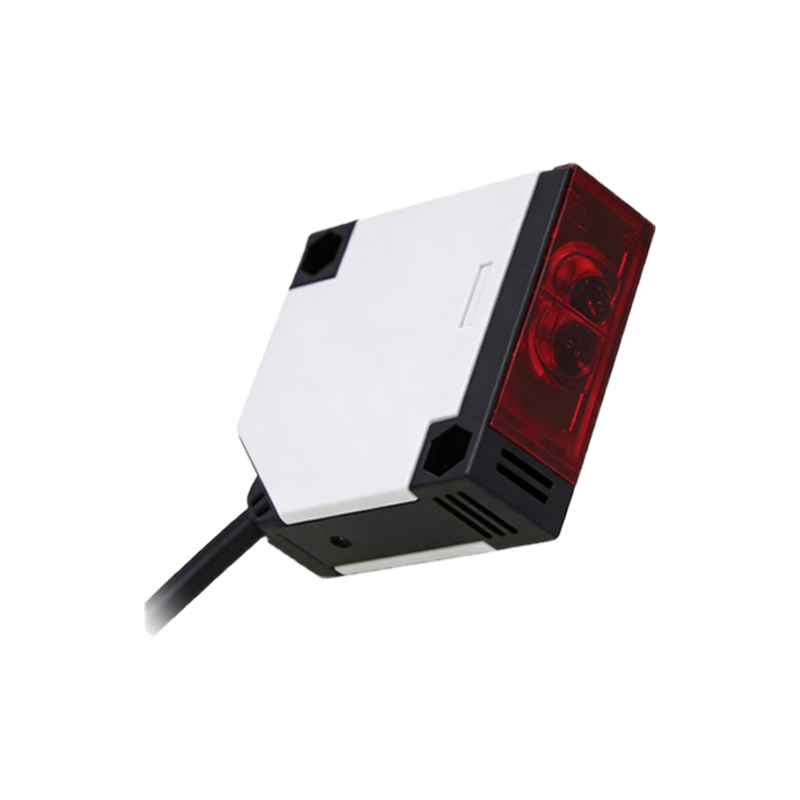
Fundamentals of Photoelectric Sensors
Photoelectric sensors detect objects, distances, or changes by emitting a light beam—typically from an LED or laser—and measuring the reflected or interrupted light. These sensors are categorized into three main types: through-beam, retro-reflective, and diffuse reflective. Through-beam sensors offer the longest sensing ranges and highest accuracy, while diffuse reflective sensors are compact and easy to install. In industrial settings, photoelectric sensors are valued for their non-contact operation, fast response times, and versatility in detecting various materials, including metals, plastics, and liquids.
Integration of Amplifier Fibers in Photoelectric Systems
The integration of amplifier fibers into photoelectric sensors significantly boosts performance. By embedding amplifier fibers in the optical path, systems can achieve higher signal-to-noise ratios and extended detection ranges. This is particularly beneficial in applications like conveyor belt monitoring, where sensors must detect small or low-reflectivity objects. Additionally, amplifier fibers enable multiplexing, allowing multiple sensors to share a single fiber line, which reduces wiring complexity and cost in large-scale industrial installations.
Key Applications in Industrial Automation
Amplifier fiber-enhanced photoelectric sensors are widely used in industrial automation. In automotive manufacturing, they ensure precise part positioning and quality control on assembly lines. In packaging industries, sensors with amplifier fibers detect label placement and fill levels with high accuracy. Moreover, these systems play a vital role in safety applications, such as intrusion detection in restricted areas or monitoring hazardous environments where human access is limited. Their durability and low maintenance requirements contribute to increased operational efficiency.
Advantages Over Traditional Sensing Methods
Compared to traditional inductive or capacitive sensors, amplifier fiber-based photoelectric sensors offer distinct advantages. They provide superior detection capabilities for non-metallic objects and can operate in dusty or wet conditions without degradation. The use of optical fibers eliminates electrical interference risks, ensuring stable performance in high-noise environments. Furthermore, their modular design allows for easy integration with PLCs (Programmable Logic Controllers) and IoT (Internet of Things) platforms, facilitating real-time data collection and predictive maintenance.
Future Trends and Innovations
The future of amplifier fiber and photoelectric sensors lies in advancements like smart sensing networks and AI-driven analytics. Researchers are developing fibers with higher gain coefficients and broader wavelength ranges to support diverse industrial needs. Innovations in miniaturization and energy efficiency will enable deployment in compact devices and remote locations. As Industry 4.0 evolves, these sensors will become integral to interconnected systems, enhancing automation precision and enabling adaptive manufacturing processes.
Conclusion: Driving Industrial Efficiency Forward
Amplifier fiber and photoelectric sensors represent a synergy of optical and electronic engineering, driving progress in industrial sensing. By combining signal amplification with reliable detection, they address challenges in accuracy, range, and environmental resilience. Engineers and industry professionals should consider these technologies for upgrading existing systems or designing new automation solutions. As demand for smarter, more efficient industries grows, amplifier fiber-enhanced sensors will continue to play a pivotal role in shaping the future of manufacturing and beyond.